Online Auction Apps: Master Estate Sales and Maximize Profits
Explore how online auction apps streamline estate sales, pick the right app, and boost profits with practical tips.

Think of an online auction app as having a professional auction house right in your pocket. These tools are built to manage the entire marathon of selling your stuff—from listing items and marketing them to handling payments and organizing pickups. It's the perfect solution for downsizing, managing an estate sale, or just turning valuable clutter into cash.
How Online Auction Apps Work for You

Imagine turning a packed garage, a dusty attic, or an entire house full of belongings into a smooth, profitable event—all without leaving home. That’s exactly what online auction apps deliver. They act as your project manager for a "virtual estate sale," breaking down a massive job into a simple, step-by-step process.
Instead of trying to juggle a dozen different services or hosting a chaotic weekend yard sale, these platforms give you one organized command center. You can reach thousands of interested local buyers who can browse, bid, and pay for your items right from their phones. This digital-first approach doesn't just make logistics easier; it gets your items in front of way more eyes than a sign on the street corner ever could.
To help you visualize how this works, we've broken down the key functions these apps manage. Think of this as your digital toolkit for a successful sale.
Core Functions of an Online Auction App at a Glance
| Core Function | How It Helps You | Example in Action |
|---|---|---|
| Digital Cataloging | Easily list items with photos, descriptions, and starting bids. | You snap a few pictures of a vintage armchair, write a quick description, and set a starting bid of $25. |
| Automated Bidding | The app runs the auction, tracks bids in real-time, and notifies users. | Bidders compete for the armchair, with the app automatically updating the price until the auction closes. |
| Secure Payments | All payments are processed through the app, eliminating cash and risk. | The winning bidder pays securely with a credit card, and the funds are held for you. |
| Coordinated Pickups | Manages a single, scheduled pickup event for all winning bidders. | You set a 3-hour window on a Saturday for everyone to collect their items. No more endless messaging. |
This table shows how each piece of the puzzle fits together, turning a complex process into a series of simple, manageable tasks.
The Modern Way to Manage Personal Assets
The move to digital platforms for buying and selling isn't just a niche trend—it's a massive shift in how we handle our assets. The global online auction market was valued at about USD 681.72 billion in 2024 and is expected to soar to USD 1,658.89 billion by 2035. This incredible growth, highlighted in industry reports, shows just how many people are embracing these tools for their convenience and power.
So, what does this technology really do for you? An online auction app does the heavy lifting by automating the most stressful parts of a sale. This frees you up to focus on what matters: getting your items ready. The app becomes your all-in-one:
- Digital Auctioneer: It manages the bids, sets the closing times, and keeps the whole process fair and transparent.
- Marketing Team: Your sale gets promoted to a built-in audience of local buyers who are actively looking for the kinds of things you’re selling.
- Secure Cashier: The app handles every single transaction. You never have to worry about dealing with cash, bounced checks, or awkward payment disputes.
- Event Coordinator: It organizes one simple, scheduled pickup day, saving you from the headache of coordinating with dozens of individual buyers.
In short, these apps provide a guided framework. They turn a huge undertaking into small, doable steps, giving you full control without needing to be a tech wizard or a seasoned auctioneer.
From Overwhelmed to Empowered
The real magic of online auction apps is how they put power back into your hands. Traditionally, running an estate sale meant hiring a company that would take a hefty commission, sometimes leaving you with just a fraction of what your items were truly worth.
These modern tools completely flip that script. By giving you the digital infrastructure, they empower you to run your own professional-grade auction. You set the rules, watch the bids roll in, and ultimately keep a much larger slice of the pie. It's a fundamental change that explains why so many people are now turning to platforms like these to manage big life events with confidence.
What Makes a Great Auction App?
So, what separates a good online auction app from a great one? It comes down to the tools—the specific features built to make your sale smooth, secure, and as profitable as possible. Don't think of these as complicated tech, but as your own specialized crew, where each member has a critical job to do.
A great app is really an all-in-one toolkit for turning a pile of stuff into a professional-looking sale. It’s the difference between a garage sale with handwritten price tags and a slick online storefront that brings in serious buyers. The right features make sure everything from listing your first item to getting paid runs like a well-oiled machine.
Building Your Digital Storefront
The first job for your crew is item cataloging. This isn't just about making a list; it's your chance to build a digital showroom that sells. A quality app makes it dead simple to upload multiple high-quality photos, write descriptions that pop, and set clear starting bids for every single item.
This is your sales pitch. Good photos from all angles and honest descriptions—pointing out both the good and the bad—build immediate trust with bidders. An easy-to-use cataloging system will save you hours of tedious work and make your items look their absolute best.
Your goal is to give bidders enough confidence to place a bid without ever seeing the item in person. A well-cataloged auction answers their questions before they even think to ask them.
Mastering the Art of the Bid
Next up is the engine of your whole operation: bidding management. The best online auction apps handle this whole process for you, keeping things fair while naturally driving up the final prices. Two functions are absolutely key here:
- Proxy Bidding: Think of this as a personal bidding assistant for your buyers. A bidder just enters their maximum price, and the app automatically bids for them using the smallest increments needed. This keeps them in the game without having to watch the auction like a hawk, which leads to more bids and better prices.
- Bid Extensions (Soft Close): This is your defense against "sniping," where someone swoops in at the very last second to win. If a bid comes in during the final few minutes, the auction for that item automatically extends. It mimics the energy of a live auction, giving everyone a fair chance to respond and helping items sell for what they're truly worth.
These tools create a competitive and fair environment, and that’s the secret sauce to getting the best possible results.
Securing and Simplifying the Final Steps
Once the final gavel falls (digitally, of course), the real work of closing out the sale begins. This is where built-in features for payments, marketing, and pickups become absolutely essential. The best online auction apps bake these right into the platform, taking major headaches off your plate.
A top-tier app will include:
- Secure Payment Processing: All the money is handled directly through the platform. That means no dealing with cash, no chasing down payments, and no worrying about bounced checks. The system just collects the funds from winning bidders for you.
- Automated Marketing Tools: A great app doesn’t just host your auction; it helps you find the right buyers. You want a platform that actively markets your sale to its own database of local bidders who are already looking for items just like yours.
- Fraud Prevention: Behind the scenes, the app should be verifying bidders and keeping an eye out for any funny business. This protects you from non-paying bidders and other scams, making sure every winning bid is a real one.
- Coordinated Pickup Scheduling: Instead of a chaotic free-for-all on pickup day, the app brings order to the process. It automatically gives winners the location, a set time to arrive, and their paid invoice, making the final step easy and stress-free.
Your Step-by-Step Guide to a Successful Online Auction
Jumping into your first online auction might feel like a huge undertaking, but it’s really just a series of small, manageable steps. The best online auction apps are designed to walk you through the process, turning a big project into a straightforward journey from start to finish.
This isn't just a niche trend; it's a massive and growing market. North America currently holds the largest slice of the global online auction market with a 28.60% share. To put that in perspective, the market here grew from $620.399 million in 2021 and is on track to hit $786.643 million by 2025, with the United States driving 83% of that activity.
Step 1: Create Your Auction Event
First things first, you need to set up the event itself inside the app. This is where you lay the groundwork for your sale—setting the start and end dates, defining the pickup location and schedule, and outlining any specific terms.
Think of this as planning a party. You have to lock in the date, time, and location before you can even think about sending invitations. Getting this foundation right ensures everything runs smoothly for both you and your bidders down the line.
Step 2: Catalog Your Items with Great Photos
With your event on the calendar, it's time to build your digital showroom. This is the cataloging phase, where you’ll take clear photos of each item and write honest, compelling descriptions. Quality is everything here. Good pictures from multiple angles and detailed descriptions give buyers the confidence to bid on things they can’t see in person.
To really get the most from your online auction, it's crucial to manage your inventory well. Learning about implementing efficient inventory management strategies can help keep your sale organized and professional. This step is arguably the most important—a well-presented item will always attract more competitive bids.
Pro Tip: Always be transparent about an item's condition. Pointing out both the best features and any minor flaws builds trust with bidders, and that trust often translates into higher final prices.
Step 3: Launch and Promote Your Sale
Once your catalog looks great, you hit the "launch" button. At this point, the best online auction apps get to work promoting your sale to a network of qualified local buyers. This built-in marketing is a massive advantage, putting your items directly in front of an audience actively looking for what you have.
This simple flow is at the heart of the modern auction process.
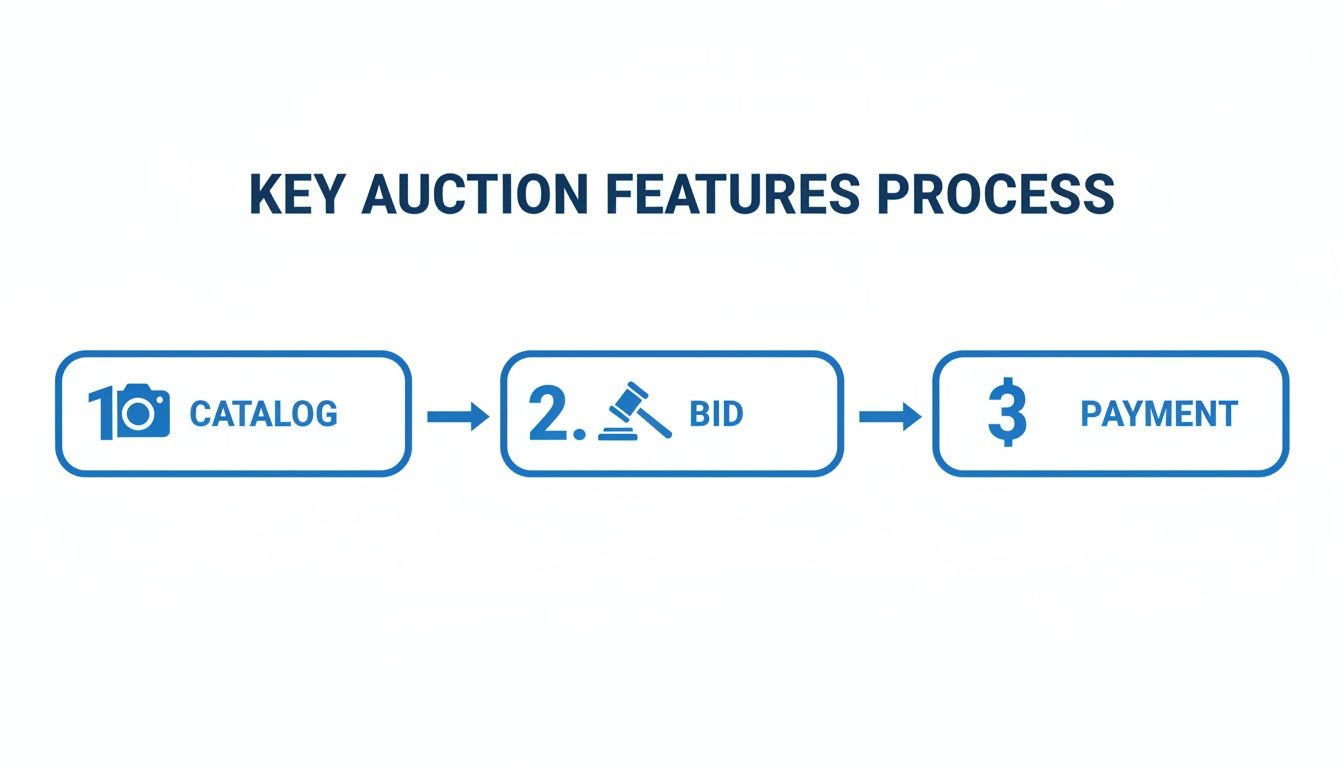
The infographic above shows how a good app weaves cataloging, bidding, and payments into one seamless experience for the seller.
Step 4: Manage the Live Auction and Payments
As soon as bids start rolling in, the app becomes your digital auctioneer. It handles all the action, sending outbid notifications and using features like proxy bidding and soft closes to keep things fair and competitive. You get a front-row seat, watching it all unfold from your dashboard.
When the auction clock runs out, the platform takes care of all the payments automatically.
- Invoices are sent to every winning bidder.
- Payments are collected securely through the platform via credit card.
- Funds are held for you, so you never have to deal with cash or chase down a buyer for payment.
Step 5: Coordinate a Stress-Free Pickup
The last piece of the puzzle is managing a single, organized pickup day. The app gives winning bidders their paid invoice and all the details they need, including the pickup address and timeframe. This turns what could be a logistical nightmare of coordinating with dozens of people into a simple, efficient event. For a deeper dive, check out our full guide on how to run your own online auction.
Navigating Fees, Security, and Trust on Auction Platforms
When you’re entrusting a platform with your personal belongings, confidence is everything. The best online auction apps are built on a bedrock of security and transparency, making sure you feel good about the process from the moment you list your first item to the day you get paid.
It all boils down to two critical things: understanding how the platform makes money and knowing how it protects yours.
Demystifying Common Auction Fee Structures
Let's be clear: running a high-quality auction platform isn't free, but the way they charge can vary dramatically. Getting a handle on the fee models is the first step to protecting your bottom line and avoiding any nasty surprises when the auction is over.
Most apps use a mix of a few common fees. Once you know the lingo, you can easily compare your options.
- Seller's Commission: This is the most popular model. The platform takes a percentage of the final sale price for each item. It’s a simple, straightforward approach that means they only make money when you do.
- Buyer's Premium: This is a percentage-based fee added on top of the winning bid, paid by the buyer. For example, with a 15% buyer’s premium, a $100 winning bid means the buyer actually pays $115. While you don't pay this directly as the seller, it can affect how high people are willing to bid.
- Flat Fees: Some platforms might charge a flat fee to list an item or a monthly subscription to use their software, whether your items sell or not. This is much less common for estate-style auctions.
To see how these numbers actually play out, you can run a few scenarios with a good auction fee calculator. It helps you project your real-world earnings based on different commission rates and estimated sale prices.
The Bedrock of a Secure Online Auction
Beyond the fees, rock-solid security is non-negotiable. A trustworthy platform invests heavily in features that protect both you and your buyers from fraud and financial headaches. Think of it as the digital equivalent of having a locked vault and a security guard for your sale.
The whole point is to create a safe marketplace where everyone can feel comfortable. Here’s what that looks like in practice.
- Integrated Payment Gateways: This is a big one. The platform absolutely must process all payments through its own secure, encrypted system. This way, you never have to deal with cash, give out your bank details to strangers, or worry about a check bouncing.
- Fraud Detection Systems: The best apps work behind the scenes with smart systems that watch for suspicious activity, like strange bidding patterns or sketchy accounts. It’s a proactive defense that nips problems in the bud.
- Bidder Verification: Good platforms often require bidders to register with a valid credit card before they can even place a bid. This one simple step weeds out non-serious bidders and dramatically cuts down on the risk of someone winning and then ghosting you—a common frustration on less secure sites.
Trust isn't just a buzzword; it's earned through strong, visible security. When a platform is open about its commitment to safety—with secure payments, verified bidders, and clear policies—it builds the confidence everyone needs for a successful, stress-free auction.
How to Choose the Right Online Auction App
Picking the right online auction app feels a lot like choosing the right partner for a big, important project. The platform you go with will have a direct impact on your workload, your stress levels, and—most importantly—your final profit.
Not all apps are created equal. Taking the time to ask the right questions upfront is the single best way to find a tool that actually fits your needs, whether you're handling a family estate, downsizing your own home, or selling a prized collection. It's about looking past the flashy marketing to find the practical features that will make your sale a success.
Key Questions to Ask Before Committing
Before you jump in and download the first app you find, it pays to do a little homework. A few minutes of evaluation now can save you from a world of headaches down the road.
Here are the make-or-break questions you should be asking:
- Is it actually easy to use? A good platform should feel intuitive, not like you need a degree in computer science to use it. If you can take a picture with your smartphone, you should be able to catalog your items. Look for a clean, simple interface and a process that guides you step-by-step.
- What’s the real cost? Fee transparency is a must. You need to know exactly how much you’ll pay in commissions and whether there are any hidden fees lurking in the fine print. An app that’s upfront about its pricing is one you can trust.
- How will it find local buyers? An auction is only successful if people show up to bid. Does the platform have a built-in network of active, local bidders ready to go? Strong, targeted marketing is one of the biggest advantages a great platform provides.
- What kind of support can I get? When you hit a snag—and it happens—you need to know help is just a click or a call away. Check for real customer support options, because having a real person to talk to can be a lifesaver.
- How much control do I really have? You should be the one setting your own auction dates, starting bids, and pickup schedule. The best apps empower you with full control over the most important details of your sale.
DIY Online Auction Apps vs. Traditional Estate Sale Companies
One of the biggest decisions you’ll face is whether to use a DIY platform or hire a traditional estate sale company. Both routes can get the job done, but they offer vastly different experiences when it comes to cost, effort, and control.
To make the choice a little clearer, here’s how the two approaches stack up against each other.
| Feature | DIY Online Auction App (e.g., DIYAuctions) | Traditional Estate Sale Company |
|---|---|---|
| Seller Commission | Typically 10% or less, often with a cap. You keep the vast majority of the profits. | Can range from 30% to 50%, taking a large portion of your earnings. |
| Control Over Sale | Full control. You set dates, prices, and manage the entire process on your schedule. | Limited control. The company dictates the schedule, pricing strategies, and sale logistics. |
| Effort Required | You are responsible for cataloging items and managing the one-day pickup event. | The company handles most of the physical labor, from staging to running the sale. |
| Marketing Reach | Leverages a large, built-in database of qualified local online bidders. | Relies on traditional methods like email lists, local ads, and street signs. |
| Transparency | Clear dashboard to track bids and sales in real-time. Full visibility into the process. | Often less transparent. You typically receive a summary and a check after the sale is over. |
The choice really boils down to a trade-off. A traditional company handles the heavy lifting but at the cost of your profits and control. A DIY app requires more of your time upfront but empowers you to maximize your earnings and run the sale entirely on your own terms.
Ultimately, the goal is to find a platform whose features and business model align with your personal goals. For a deeper dive into specific platforms, our guide to the best online auction software breaks down exactly what to look for.
Ready to Start Your First Online Auction?

Moving from theory to action is where the real magic happens. A modern platform like DIYAuctions pulls together all the critical features we’ve talked about, creating a clear, direct path for anyone managing an estate sale or downsizing project. It's about putting professional-grade tools right into your hands.
The best online auction apps are built to solve the biggest worries a first-time seller has. They give you a guided, step-by-step process that takes the guesswork out of the equation, so you never feel like you're going it alone. That structure is what gives you the confidence to get started, knowing every part of your sale is being handled correctly.
Your Checklist for a Winning Sale
As you get ready to launch, the platform you choose has to deliver on a few key promises. These are the non-negotiables that pave the way for a smooth, secure, and profitable auction from start to finish. Make sure your chosen solution provides:
- Transparent Fees: A simple commission model means no surprises, and you keep the lion's share of the profits. DIYAuctions works on a clear 10% commission, so you know exactly what to expect.
- A Guided Process: You don’t have to be an auction expert. The platform should walk you through everything, from cataloging your first item to scheduling your pickup day.
- Built-In Marketing: Your items need to find the right buyers. A platform with a built-in network of local, qualified bidders does the heavy lifting for you.
- Secure Payments: Automated, secure payment processing is a must. It protects you from fraud and saves you the headache of chasing down payments from winners.
Choosing the right app transforms what feels like a massive project into a series of simple, manageable tasks. You get the control and profitability of running your own sale, but with the security and reach of a professional platform backing you up.
Taking That First Step with Confidence
At this point, you understand the core features, the typical process, and how to spot the right tool for the job. You have what it takes to turn a house full of belongings into a successful, organized online event. The only thing left to do is begin.
With a platform like DIYAuctions, you have a partner that’s invested in making your first online auction a huge success. From transparent pricing that respects your bottom line to a support system that’s ready to help, every feature is designed to empower you.
Ready to see just how easy it can be? Start your auction today and discover the simplest way to manage your sale and maximize your returns.
Your Top Questions, Answered
Even with a solid plan, it's natural to have a few questions before diving into your first online auction. Let's tackle some of the most common ones we hear from sellers just like you.
Do I Need to Be a Tech Expert to Run an Auction?
Not at all. If you can snap a picture on your phone and write a quick email, you’ve got all the tech skills you need. You don’t have to be a computer whiz to succeed.
Modern platforms like ours are built for real people, not programmers. The whole process is guided, step-by-step. The app literally shows you where to upload photos, where to type descriptions, and how to pick your auction dates. It’s designed to feel intuitive from the moment you start.
What Actually Sells Well in These Auctions?
This is one of the best parts—nearly everything! The sheer variety of items that find new homes is what makes online estate auctions so powerful. There isn't one "magic" category that does well.
Buyers are on the hunt for everything from fine art and antique furniture to everyday tools and kitchen gadgets. We've seen it all sell: jewelry, collectibles, vehicles, you name it. This wide-ranging appeal is exactly why it's such an effective way to clear out an entire home's contents.
How Do You Handle Pickup Day Safely?
A smooth, secure pickup day is the key to a stress-free finish, and a good app helps you orchestrate it perfectly. The goal is a single, well-managed event that’s safe and efficient for everyone involved.
Here’s the typical game plan for keeping things secure and orderly:
- Scheduled Time Slots: Buyers sign up for specific pickup times. This simple step prevents a crowd from showing up all at once and keeps the flow of people completely manageable.
- Verified, Paid Buyers: Winners pay for their items through the secure platform before they ever arrive. When they get to your location, you just match their paid invoice to their ID. This ensures only legitimate, paid-up buyers are on the property.
- Staged & Ready: To make things even quicker, you can have items grouped together by buyer or lot number beforehand. This way, people can get in, grab their winnings, and get out in minutes. It’s the final, secure step to a successful sale.
More guides in Online Auction Platform
August 1, 2026
Online Auction Bidding Software: Profitable Estate Sales
Learn how online auction bidding software helps sellers run profitable estate sales, plus key features and DIYAuctions benefits.
Read guideJuly 24, 2026
The 7 Best Auctions in Winchester: 2026 Guide
Discover the top auctions in Winchester (VA & KY). Our 2026 guide covers auction houses, consignment details, and modern alternatives like DIY estate sales.
Read guideJuly 3, 2026
What Is an Online Auction: Your 2026 Guide for Estate
What is an online auction - Discover what an online auction is & how it helps estate sellers. Learn formats and maximize profit in 2026 with our comprehensive
Read guideGet the estate sale pricing guide
Enter your email for pricing ranges, planning notes, and a clearer path to launch.