Weller Pottery Wild Rose Pattern: An Expert Guide
Identify, value, and sell your Weller Pottery Wild Rose pattern. Our expert guide covers history, marks, condition, and tips for estate sale success.
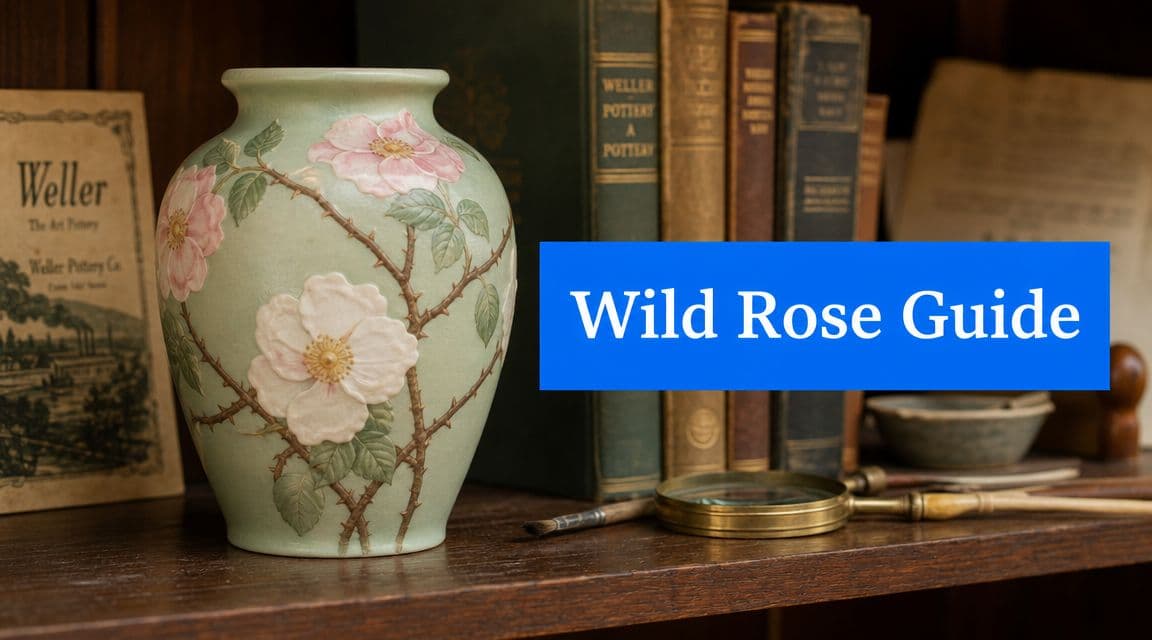
Sorting an estate often starts the same way. You're making keep, donate, and sell piles, then a vase stops you. It has a soft matte surface, hand-painted roses, and just enough age to feel important. You turn it over, hoping for a mark that tells you whether it's decorative household pottery or something worth listing carefully.
That's where many estate sellers lose money. They either assume all Weller is expensive and overprice it, or they see a few mixed online listings and price too low just to move on. With the Weller Wild Rose pattern, the better approach is more specific. You need to judge the exact form, the color presentation, and the condition, then match that to a realistic online estate-sale strategy.
Discovering a Timeless Treasure
A typical estate-sale moment goes like this. You pull a vase from a cabinet or basement shelf, wipe off the dust, and notice that it doesn't look mass-produced. The shape has balance. The floral painting has intention. Even if you know nothing about pottery, you can tell someone thought it was worth keeping.
That's often how Weller Wild Rose enters the conversation. It tends to attract attention because it feels softer and more decorative than heavier utilitarian pottery. The matte finish, floral decoration, and gentle color palette make it appealing to both collectors and buyers furnishing older homes.
For a first-time estate seller, the hard part isn't recognizing that the piece is attractive. The hard part is answering the practical questions fast enough to make good decisions. Is it authentic? Is the shape common? Does a small rim nick matter? Should you auction it, price it outright, or hold it back for a specialist buyer?
The right first question isn't “What's the highest asking price online?” It's “What, exactly, am I holding, and how complete and original is it?”
That shift matters. Estate sales reward clean decisions, not wishful pricing. If your piece is genuine, well photographed, and accurately described, you can usually position it well. If it's damaged, restored, or only vaguely identified as “old Weller vase,” buyers will hesitate, and the listing will drag.
The Story of Weller and the Wild Rose Pattern
Estate sellers often lose time and money at this stage. They see the Weller name, assume every piece belongs in the same price bucket, and list a Wild Rose vase too high or too low. The history matters because it gives you a pricing lane before you ever measure the piece or inspect the rim.
Weller Pottery was founded in 1872 by Samuel A. Weller, and the company developed from practical wares into one of the better-known names in American art pottery, with production that touched several major design periods, as noted by the Boylston Historical Society's Wild Rose vase documentation. If you sell estate property regularly, that range is both helpful and risky. Helpful, because the name gets buyer attention. Risky, because broad brand recognition leads many first-time sellers to blur early art pottery, later decorative lines, and common forms into one vague category.

Where Wild Rose Fits
The Wild Rose line belongs to Weller's later decorative output and is generally placed in the early to mid-1930s, based on the Boylston Historical Society documentation cited above. For estate-sale pricing, that date range gives you a practical starting point. You are not handling Weller's earliest utilitarian ware, and you are not automatically handling one of its most aggressively pursued art pottery lines either.
That distinction affects buyer behavior. Collectors who chase early forms, rare glazes, or top-tier studio names within Weller do not always bid the same way on later floral wares. Wild Rose attracts buyers who respond to decoration, color, and display appeal. In a time-sensitive online estate sale, that usually means your listing performs best when you identify the line accurately and price by form, surface, and condition instead of by brand name alone. If you want a broader method for sorting stronger pieces from ordinary ones, this guide on how to identify valuable antiques is a useful companion.
What the Design Tells You
Wild Rose looks like a later decorative line. The pattern usually features naturalistic roses, soft background color, and a matte surface that reads as decorative rather than severe or architectural. One documented example in the Boylston Historical Society record describes a vase with a pale green ground, large white roses, and a matte glaze, with proportions that fit a cabinet or side-table display piece.
Use that example as a reference point, not a template. In appraisal work, I treat a documented vase like this as a style anchor. It helps confirm what authentic decoration can look like, but it does not mean every genuine Wild Rose piece will match the same size, flower placement, or exact shade.
Why This History Helps You Sell
A correct historical description improves buyer confidence. “Vintage Weller vase” leaves too much unanswered. “Weller Wild Rose, late-period floral line, matte glaze, hand-painted rose decoration” tells a buyer what category the piece belongs in and signals that the seller has done the homework.
It also keeps expectations in line with the market. Wild Rose can sell well, especially when the form is attractive and the painting is clean, but inflated claims hurt more than they help. In online estate sales, accurate placement beats dramatic language. Buyers will forgive a modest piece with an honest description. They will not forgive a common floral vase presented as a rare museum object without support.
A Practical Guide to Identifying Weller Wild Rose
Identification starts with the front, not the base. Many sellers flip a piece over first, see a faint or partial mark, and stop there. That's backwards. You want the decoration, glaze, form, and mark to agree with each other.

Start With the Floral Decoration
On Wild Rose pieces, look for open roses rather than tight formal blooms. The stems often have a slightly thorny or linear look, with smaller leaves supporting the flower heads. The decoration usually feels hand-applied rather than mechanically repeated.
Don't expect every rose to look identical. Hand-decorated pottery varies. What you're checking is whether the painting feels consistent with period floral art pottery rather than modern hobbyist repainting or transfer decoration.
A few details deserve close attention:
- Petal handling often shows soft brushwork rather than sharply printed edges.
- Background color may blend gently instead of appearing flat and uniform.
- Surface finish should support the decoration rather than fight it. A matte surface and floral painting should feel like they belong together.
Check the Glaze and Surface
Wild Rose is strongly associated with a matte glaze presentation. That doesn't mean every piece will age the same way. Dirt, wax, old cleaning residue, and storage grime can all change the look.
What doesn't work is aggressive cleaning before identification. If a surface has been scrubbed, polished, or coated, you can make an honest old piece look suspicious.
Practical rule: Before you decide a glaze is “wrong,” examine it in natural light and look for residue, overcleaning, or a repair line.
Compare the Form, Not Just the Pattern
The pattern alone isn't enough. Shape matters. Wild Rose appears most often on decorative forms that suit floral display and mantle placement. In estate settings, vases are what turn up most often, but you may also encounter broader decorative shapes.
Here's a practical comparison table you can use while sorting:
| Form | Typical Height Range | Identifying Features |
|---|---|---|
| Vase | Varies | Upright display form, floral painting placed to face outward |
| Ewer | Varies | Decorative body with a spout and often a handle |
| Jardinière | Varies | Wider opening for plant display, often broader body |
| Console bowl | Varies | Low, open form intended for table or shelf display |
If you need a broader grounding in antique authentication before deciding whether your piece deserves closer review, this guide on how to identify valuable antiques is a useful companion.
Look at the Base Last
The base confirms. It doesn't rescue a piece that looks wrong everywhere else.
You may find an impressed, incised, or stamped Weller mark on pieces from this general era, but marks can be faint, partly worn, or hard to read under soil and shelf residue. Photograph the base dry before cleaning. Then photograph it again in angled light. A phone flashlight from the side often reveals more than overhead room light.
When examining the base, ask:
- Does the mark appear naturally aged with the rest of the piece?
- Does the foot show wear that matches the object's age?
- Is there any sign the base was ground, repainted, or altered?
A base with the right name but the wrong body is still a problem. A convincing Wild Rose piece with a faint mark may still be acceptable to many buyers if the photos are clear and the description is cautious.
Understanding the Value of Your Pottery
You list a Wild Rose vase on Friday night, copy a price from another seller, and by Monday the piece is still sitting there with no serious interest. I see that pattern often in online estate sales. The problem usually is not the pottery. It is the pricing method.
Wild Rose pieces do not price well from pattern name alone. Two authentic examples can sell very differently because buyers are judging three things at once: form, color, and condition. If you need the piece sold on a real timeline, that framework is more useful than scanning a page of unrelated asking prices.

Why Similar Pieces End Up Miles Apart
Online listings create noise. Sellers use the same words for very different pieces. “Excellent” may include glaze crazing, a nick at the rim, or old restoration that only shows under angled light. “Rare” often means the seller did not find another one quickly.
For a first-time estate seller, that makes the market look random. It is not random. It is poorly described.
A pricing framework solves that.
The Three Drivers That Matter Most
Condition
Condition sets the ceiling. Collectors may forgive honest age wear, but they discount damage fast, especially on decorative art pottery bought for display.
Inspect in strong light and turn the piece slowly. Focus on:
- Rim chips that break the outline
- Hairlines near the rim, handle, shoulder, or base
- Crazing that dulls the surface or distracts from the decoration
- Restoration such as overpaint, fills, or repaired cracks
- Uneven wear that suggests alteration or partial resurfacing
Placement matters. A small flaw on the back is easier for buyers to accept than damage cutting through the main rose decoration on the front.
Form
Form affects demand more than many sellers expect. In a time-sensitive online estate sale, pieces that read clearly in one photo usually sell faster than pieces that need explanation.
A balanced vase or an appealing cabinet form often attracts broader interest because buyers can picture it on a shelf or mantel right away. Larger, less flexible forms can still be desirable, but they narrow the buyer pool and usually need better photos, better measurements, and more patience.
Color and Visual Appeal
Many pricing mistakes arise in such instances. Two genuine Wild Rose pieces can be equally authentic and still bring different results because one looks better at first glance.
Buyers respond to clean floral painting, balanced color, and a surface that presents well in photos. A muddy palette, weak decoration, or heavy surface distraction lowers interest even before a buyer reads the description. For a quick estate sale, visual strength matters because scrolling buyers make fast decisions.
If your piece has average color, moderate wear, or a less desirable form, price it like a piece that needs a buyer's compromise.
For a broader explanation of how to compare antiques when sold examples are inconsistent, this antique price guide for online pricing is a useful reference.
A Simple Estate-Sale Pricing Framework
Use three buckets.
| Tier | What it looks like | Pricing approach |
|---|---|---|
| Strong | Attractive form, clean surface, solid floral presentation, no obvious damage, clear mark or convincing attribution | Start at the high end of your realistic range and leave room for negotiation |
| Middle | Good overall appearance with minor crazing, light wear, a faint mark, or a less popular shape | Price to attract early interest rather than waiting for a perfect buyer |
| Problem piece | Chips, cracks, repairs, heavy crazing, staining, or weak decoration | Price for disclosure and movement, not optimism |
This approach works because it matches how buyers shop. They are not buying a pattern name. They are buying a specific object in front of them, with its own strengths and weaknesses.
If you are unsure where your piece belongs, stay conservative. In estate sales, an honest price with clear photos usually outperforms an ambitious price attached to a vague description.
Simple Care for Lasting Value
If you haven't sold the piece yet, your job is preservation, not improvement. Antique pottery loses value when owners try to make it look “like new.”
Use a soft, slightly damp cloth for surface dust. If dirt sits in crevices, work slowly with a soft brush or cotton swab. Dry the piece fully before putting it back on a shelf or photographing the base.
Don't do any of the following:
- Don't soak it unless you know the surface is stable and free of repairs.
- Don't use abrasive cleaners that can scratch or dull the finish.
- Don't run it through a dishwasher. Heat, vibration, and detergent are hard on old pottery.
- Don't polish the glaze to make it shinier. Wild Rose pieces with matte character shouldn't be forced into a glossy look.
Display matters too. Put the piece where it won't be brushed by sleeves, cords, or cabinet doors. If it sits on an open shelf, museum putty can help keep it stable. Keep it away from direct sun and from spots with repeated temperature swings, such as near vents or windows.
Clean just enough to reveal the piece honestly. Stop before cleaning turns into alteration.
If a piece has visible damage or suspected restoration, leave it alone and disclose it. Buyers forgive age. They don't forgive surprise repairs.
How to Sell Weller Wild Rose in an Online Estate Sale
A time-sensitive sale rewards preparation more than optimism. If you're listing Weller Pottery Wild Rose pattern pieces online, focus on three things that buyers can evaluate quickly: price, photos, and description. If any one of those is weak, the others have to work too hard.

Price for Movement, Not Fantasy
Estate sellers often think a single collectible should carry the whole sale. That mindset causes stale listings. Your goal is to attract the buyer who has enough confidence to act during a limited selling window.
A practical pricing process looks like this:
- Place the piece into your own condition tier.
- Decide whether the form is easy or hard to sell visually.
- Ask whether the floral painting is average, strong, or weak.
- Set a price that leaves room for buyer enthusiasm, not buyer resistance.
If your vase is clean, attractive, and free of obvious damage, you can be firmer. If it has a small chip, faint mark, or moderate crazing, lower the number and say so plainly. Serious buyers would rather read “small rim nick shown in photo six” than decode euphemisms like “commensurate with age.”
Photograph Like an Appraiser, Not a Casual Seller
Most pottery listings fail in the camera roll. One dim overhead shot, one blurry base photo, and one angle from too far away won't sell a nuanced object.
Use indirect daylight or soft window light. Place the piece against a neutral background. Then shoot the same sequence for every pottery item so nothing gets missed.
Include:
- Full front view showing the main floral decoration
- Side angles to reveal shape and painting continuity
- Back view because buyers want to know whether decoration wraps around
- Top-down shot showing rim shape and interior
- Base photo with the mark or foot visible
- Close-ups of flaws including chips, cracks, crazing, or repairs
A common mistake is hiding damage in hopes of getting more clicks. That strategy usually backfires. Buyers of old pottery zoom in. If they suspect concealment, they leave.
Show the flaw before the buyer has to ask. Transparency shortens the sales cycle.
Write a Listing That Does Real Work
Your description should identify, describe, and disclose. It doesn't need purple prose. It does need specificity.
A workable template:
-
Title
Weller Wild Rose vase, matte floral art pottery, hand-painted rose decoration -
Opening line
Late-period Weller decorative pottery with Wild Rose floral motif and matte finish. -
Body details
Note the form, visible color palette, whether the decoration wraps fully or appears front-facing, and whether a maker's mark is present or faint. -
Condition line
State flaws directly. Mention chips, cracks, crazing, restoration, staining, or shelf wear. -
Measurements
Give height, width, rim, and base if useful for the form.
If you sell antiques regularly and also list handmade or vintage-adjacent merchandise elsewhere, it can help to study how product demand is framed across marketplaces. This guide to discover best Etsy products is useful for understanding how niche buyers respond to presentation, search language, and category fit.
Keywords That Help and Keywords That Hurt
Helpful terms are factual and searchable. Use phrases like Weller, Wild Rose, matte glaze, art pottery, hand-painted, and the object type such as vase or jardinière.
What doesn't help is stuffing in claims you can't support. Avoid words like “rare,” “museum quality,” or “investment” unless you can defend them. Those terms attract scrutiny, not trust.
Build Buyer Confidence With Disclosure
For online estate sales, confidence often matters more than polish. A buyer will tolerate a less dramatic photo if the seller clearly documents condition. They won't tolerate surprise damage at pickup.
Use a short disclosure checklist in the listing:
- Mark present or absent
- Any chip or hairline noted
- Crazing present or not observed
- Any repair suspected or not observed
- Dimensions included
- Pickup terms clearly stated
This kind of structure reassures buyers that they're dealing with a careful seller.
Choose a Selling Format That Matches the Item
For a stronger piece, a competitive auction format can work well if the photos and description are solid. For a middle-tier piece, a realistic fixed price often reduces hesitation. For damaged examples, a straightforward low start can pull in restoration-minded buyers and decorators.
The biggest mistake is mismatching the object and the format. A flawed piece with an aggressive opening number often gets ignored. A good piece with weak documentation may sell, but below what it deserved.
If you're planning a full estate event and want a framework for the process beyond just one pottery listing, this guide on the best way to sell antiques online is worth reviewing before you schedule the sale.
From Attic Find to Successful Sale
That vase from the shelf or attic isn't just another household object. It's a piece of American decorative pottery with a specific identity, and that identity affects how you should sell it.
The strongest results usually come from calm, methodical work. Identify the piece by pattern, glaze, form, and mark. Judge condition without wishful thinking. Price for the actual market, not the most ambitious listing you found. Then photograph and describe it so a buyer can make a decision without guessing.
That's the difference between a collectible that lingers and one that sells.
If you're ready to turn inherited pottery and other estate items into a managed online sale, DIYAuctions gives sellers a practical way to run the process, keep control, and connect with qualified buyers without the heavy cost of a traditional estate-sale company.
More guides in Estate Sale Basics
July 28, 2026
Revenue Reporting for Estate Sales and Auctions
Learn revenue reporting essentials for estate sales and auctions. Discover key metrics, templates, and best practices to simplify tracking and compliance.
Read guideJuly 26, 2026
Stamp Collection Valuation: A Practical Step-by-Step Guide
Stamp collection valuation made simple. Learn how to identify, grade, price, and sell your stamps with confidence for estate sales or consignment.
Read guideJuly 23, 2026
Estate Sales Brick NJ: Your 2026 Guide to Success
Planning your estate sales brick nj? Our guide covers permits, pricing, marketing, & running a safe sale with DIYAuctions.
Read guideGet the estate sale pricing guide
Enter your email for pricing ranges, planning notes, and a clearer path to launch.