What Is Consignment Selling and How Does It Work
Discover what is consignment selling and how it works. Our guide explains the process, pros, and cons to help you turn your items into cash the smart way.
So, what is consignment selling, really?
Think of it as a smart partnership. You have something valuable—maybe a designer handbag you no longer use or a piece of antique furniture—and you hand it over to a trusted third party, like a boutique or an online marketplace, to sell for you. They don't buy it from you upfront. Instead, they put their expertise to work, showcasing your item to their audience and handling the entire sales process. Once it sells, they take a pre-agreed commission, and you get the rest.
It’s a fantastic, low-risk way to tap into a professional sales team without spending a dime out of pocket.
A Partnership Built on a Shared Goal
At its core, consignment is about hiring an agent for your goods. Instead of trying to figure out the best way to sell a vintage watch on your own—dealing with photos, listings, and endless questions from potential buyers—you bring in an expert who already has a crowd of eager customers.
This flips the script on the traditional retail relationship. The shop isn't just a buyer; they become your sales partner. They’re responsible for everything from professional photography and marketing to managing customer service and processing the final payment. Your only job is to provide the great inventory. Their job is to find it a new home.
When a sale happens, everyone wins. It's a simple, effective model.
The Key Players Explained
To really get how consignment works, it helps to know who's who in the arrangement. Every deal has two main parties, and understanding their roles makes the whole process crystal clear.
Here's a quick breakdown of the main players involved in any consignment deal.
Key Roles in a Consignment Agreement
| Role | Who They Are | Primary Responsibility |
|---|---|---|
| The Consignor | That’s you—the owner of the item. | Providing desirable, authentic goods and agreeing to the terms of the sale. |
| The Consignee | The store, gallery, or platform selling your item. | Storing, marketing, and selling the item to the final customer. |
Knowing these two roles is fundamental to understanding the consignment world.
The real magic of consignment is that it’s a pay-for-performance model. The consignee is highly motivated to get the best possible price for your item because their commission depends on it. A bigger sale means more money for them and for you.
This partnership structure is what makes consignment so powerful. It lets you turn unused assets into cash without having to become a sales expert yourself. You provide the goods, they handle the sale, and you both share in the success.
How the Consignment Process Actually Works
So you understand the idea of consignment, but what does it actually look like day-to-day? Let's walk through the real-world journey your items take, from sitting in your home to finding a new one. It's a surprisingly straightforward path once you break it down.
It all starts with finding the right sales partner. This is probably the most important step. You wouldn't try to sell a vintage Fender guitar at a luxury handbag shop, right? The goal is to find a consignee who already has a built-in audience that's hungry for exactly what you're selling.
The Initial Steps From Agreement to Inventory
Once you’ve found the perfect shop, things get official. This is where you set the foundation for a smooth transaction, making sure both you and the consignee are on the same page and fully protected.
-
Review the Consignment Agreement: First things first, you'll get a contract. This legal document spells out all the critical details: the commission split, how long they'll try to sell your item (usually 30-90 days), what happens if something needs a markdown, and who’s responsible for theft or damage. Read every line carefully.
-
Prepare and Drop Off Your Items: After you’ve signed on the dotted line, it’s time to get your goods ready. That means cleaning them up, gathering any original boxes or authenticity cards, and getting them to the consignee. The shop will then formally log everything into their system.
-
Inventory and Pricing: This is where the consignee’s expertise kicks in. They'll take professional photos, write compelling descriptions, and catalog your items. They’ll use their knowledge of the market to set a fair but competitive price, which is often something you'll discuss and agree on together. Once priced, your items officially join their inventory. (If you want to dive deeper into how shops manage this, our guide on inventory management best practices is a great resource.)
This infographic gives you a simple visual of how your item moves from your hands, to the shop, and finally to a happy buyer.
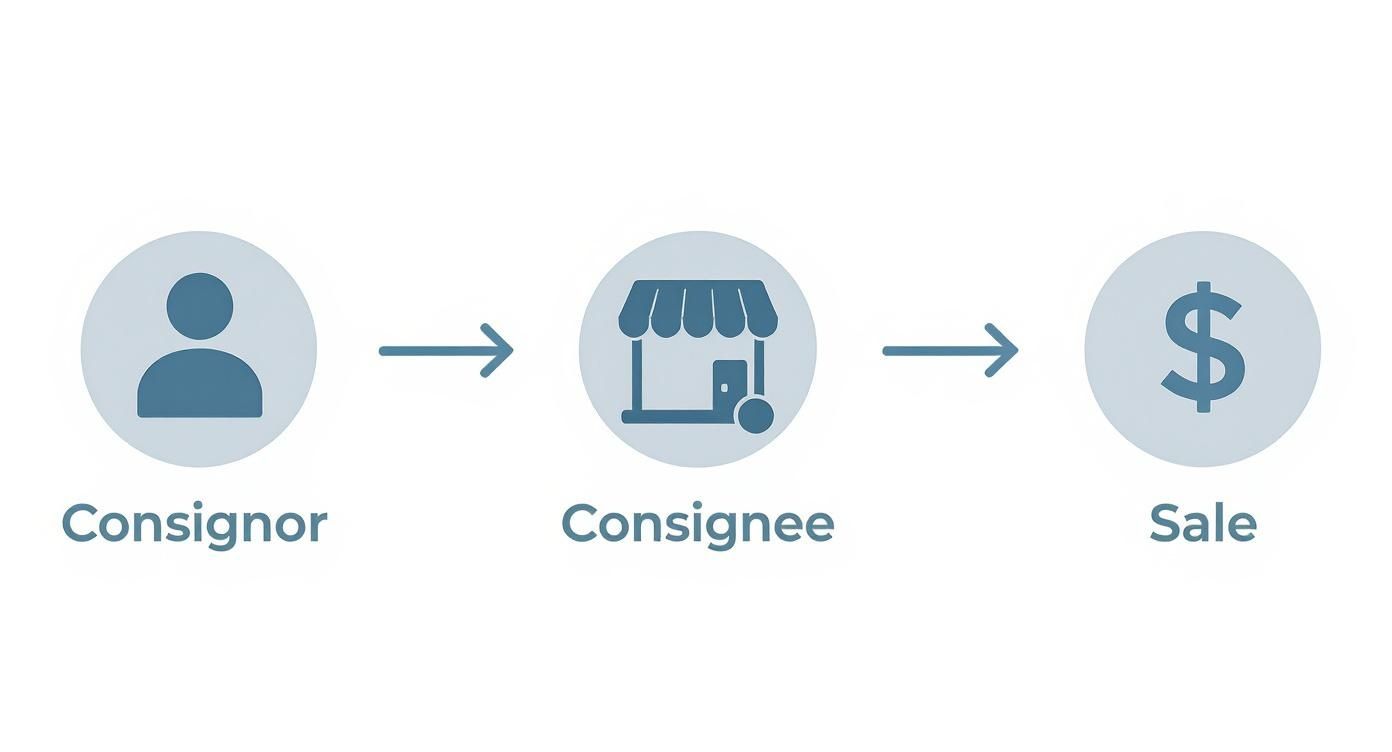
Think of it as a simple roadmap. You start the journey, and the consignee expertly navigates it to the final destination: a sale.
The Sale and Payout Phase
Now for the exciting part. The consignee puts on their marketing hat and gets to work. They handle all the customer questions, social media promotion, and sales logistics. Their main goal is to get the best price possible, because the more you make, the more they make.
Once someone buys your item, the consignee handles the entire transaction. This is a booming business—the global secondhand apparel market alone is expected to hit a staggering $350 billion by 2025. It's clear that more and more shoppers are choosing value and sustainability.
Your Final Payout: After the sale is complete, the consignee takes their agreed-upon commission—which can be anywhere from 20% to 60%—and sends you the rest. Your contract will specify exactly how and when you'll get paid, whether by check, direct deposit, or store credit.
Ultimately, the consignee takes on all the heavy lifting. You just supply a great product, and they handle the rest, delivering a sale and a check with your name on it.
The Pros and Cons of Selling on Consignment

So, is consignment the right move for you? Like any selling method, it’s a trade-off. You’re swapping some control and a cut of the profits for convenience and professional expertise.
It's a fantastic solution for some, but not a perfect fit for everyone. Getting a clear-eyed view of both the good and the bad is the only way to know if it aligns with what you need to accomplish.
The Advantages of Consignment
The biggest win with consignment is getting a professional sales team on your side without paying a dime upfront. You immediately tap into the consignee's storefront, their marketing efforts, and—most importantly—their built-in audience of eager buyers.
Imagine trying to sell a valuable piece of art or a designer handbag. A specialty consignment shop already has a list of clients looking for exactly that. They also have the experience to price it for what it's truly worth, which can often mean more money in your pocket than if you tried to sell it yourself.
Here's a quick rundown of the perks:
- No Upfront Costs: You don’t pay for photography, listings, or marketing. The shop covers all that.
- Expert Pricing and Marketing: Consignees know their market inside and out and will position your item to get the best price.
- Access to an Established Audience: You get your item in front of loyal, ready-to-buy customers from day one.
- Hands-Off Convenience: Drop off your item, and that’s it. They handle the entire selling process for you.
The Disadvantages to Consider
That convenience definitely comes at a price. The most significant drawback is the commission fee—this is how the shop makes its money. These fees can be a real gut punch, often ranging from 20% to as high as 60% of the final sale price.
A huge chunk of the selling price goes straight to the shop, not to you. You also hand over the reins. The consignee decides the final price, and that often includes marking it down if it sits on the shelf for too long.
Patience is an absolute must. Unlike selling something directly and getting cash in hand, consignment means you wait. It can take weeks, or even months, for your item to find the right buyer. If you need money fast, this isn't your solution.
Here’s what you need to watch out for:
- Significant Commission Fees: A large percentage of the sale belongs to the consignee.
- Lack of Control: The shop typically has the final say on pricing and discounts.
- Delayed Payment: You don’t see a penny until your item actually sells.
- Risk of Unsold Items: There’s no guarantee of a sale. If your item doesn’t move, you’ll have to go back and pick it up when the contract ends.
Decoding Your Consignment Agreement
 This is it—the most important document in the entire process. The consignment agreement is the formal contract that spells out every detail of your partnership. Its job is to protect both you and the shop.
While the legalese can feel a little intimidating at first, understanding the key pieces is absolutely essential before you sign anything.
Think of the agreement less as a hurdle and more as a roadmap for your item's journey. It clearly defines the rules of the road, making sure there are no surprise detours or bumps along the way. Let’s break down what you really need to look for, in plain English.
Core Terms You Must Understand
Every contract will be laid out a bit differently, but they all cover the same basic ground. You’ll want to pay close attention to these five areas, as they directly impact how you get paid, how long it all takes, and who is on the hook for what.
- Commission Split: This is the big one—the percentage of the final sale price the shop keeps for its services. Commission rates can swing wildly, from 20% to 60%, so make sure this number is front and center and you know exactly what it is.
- Consignment Period: This clause sets the clock. It defines how long the shop has to sell your item, which is usually somewhere between 30 to 90 days. You need to know what happens after that time is up. Do you take the item back, or does the agreement renew?
- Pricing and Markdown Policy: Your agreement needs to be specific about who sets the initial price. It should also outline a clear schedule for any potential markdowns. For instance, it might state the price gets reduced by 25% after 60 days on the floor.
A strong consignment agreement leaves no room for ambiguity. It should explicitly state what happens if an item is damaged, stolen, or doesn't sell, protecting your assets and setting clear expectations for everyone involved.
Protecting Your Items and Your Payout
Beyond the sale itself, a good contract acts as your safety net. What happens if that antique vase gets knocked over or a designer jacket goes missing? This is where liability clauses come in, and they are completely non-negotiable.
The agreement must state that the shop is responsible for your items while they are in their possession. The liability clause is your guarantee—it should confirm that if an item is lost, stolen, or damaged, you will be paid the agreed-upon amount, just as if it had sold.
Finally, the Item Reclaim process details how you get your unsold stuff back. Look for a clear timeline for when you need to pick up your items after the consignment period ends. Understanding these terms, which are just as critical as knowing the details of estate sale fees, means you can walk into any consignment partnership with total confidence.
When Is Consignment Selling the Right Choice?
https://www.youtube.com/embed/VZhjvKRHxYc
So, how do you know if consignment is the right move for your stuff? It’s definitely not a one-size-fits-all answer. The real value of consignment depends entirely on what you're selling, how fast you need to sell it, and what you’re hoping to get out of the deal.
Consignment really shines in a few specific situations.
It's the perfect choice when you have high-value, sought-after items but don't have the time, the know-how, or the right audience to sell them yourself. Think about things like designer handbags, fine art, rare collectibles, or high-end furniture. In these niches, a good consignment shop brings deep market knowledge and a ready-made base of eager buyers—something you just can't build overnight.
You also need to be okay with prioritizing convenience over squeezing every last penny out of the sale. While consignors can often land great prices, their commission means your final payout will be less than if you sold it directly. If a hands-off, professionally managed process sounds better than maximizing your profit, consignment is a fantastic option.
A Quick Gut-Check for Consignment Success
The decision to consign really boils down to a few practical questions. The resale market is booming, especially online. The secondhand market in the U.S. and Canada is already valued at $24.8 billion, and online sales are on track to blow past $45 billion by 2029. With the average online shopper of used apparel spending $788 a year, it's a profitable place to be if your items are a good fit.
When you're weighing your choices, it’s always smart to compare consignment with other methods, like looking into different options for selling your coins and notes.
Run through this quick checklist to see if you and your items are a good match for the consignment model:
- Is my item worth over $100? Most consignment stores have a minimum value because the commission on cheaper items just isn't worth their time and effort.
- Do I care more about convenience and expertise than getting top dollar? If you want a pro to handle the photos, listing, and customer service, consignment is your best friend.
- Can I wait up to 90 days (or even longer) to get paid? The cash only comes after your item sells, and that can take a while.
- Is my item in fantastic, ready-to-sell condition? Consignors are picky. They only take items they know their customers will be excited to buy.
If you found yourself nodding "yes" to these questions, you’re probably a perfect candidate for consignment. You've got the right kind of product and, just as importantly, the right mindset to make the partnership work for you. It’s a smart, strategic way to turn your quality goods into cash without all the usual selling headaches.
Common Questions About Selling on Consignment
When you're thinking about selling on consignment, a few practical "what if" questions are bound to pop up. Getting those questions answered upfront is the best way to feel confident about the process and avoid any surprises down the road.
Let's walk through some of the most common concerns we hear from new consignors.
What Happens If My Item Does Not Sell?
This is easily the biggest worry for most people. What if you hand over your prized possession and it just... sits there? If your item doesn't find a new home within the consignment period—usually 60 to 90 days—you typically have two choices.
Your first option is simple: you can just go pick it up. Alternatively, some contracts specify that unsold items become the property of the shop, which they can then liquidate or donate. Always, always check the reclaim policy in your agreement so you know exactly what happens if an item doesn't sell.
Who Is Responsible for Theft or Damage?
Your items are valuable, and you need to know they’re safe. Any reputable consignment store will take full responsibility for your inventory from the moment you drop it off.
Look for a "risk of loss" clause in your contract. This is critical. It should clearly state that if your item gets lost, stolen, or damaged, the shop owes you the same payout you would have received if it had sold.
If an agreement doesn't offer this basic protection for your property, that's a major red flag. Don't sign it.
How Are Prices for My Items Determined?
This is where the shop's expertise really comes into play. Consignment store owners are pros at pricing. They'll look at the brand, its condition, what it originally sold for, and what buyers are willing to pay for it right now. You and the shop will generally agree on a starting price before it hits the floor.
Your contract should also lay out a markdown schedule. This is just a timeline that shows when an item's price will be reduced to attract a buyer. It's a key detail to understand, much like knowing what transaction fees are in other selling models, because it directly affects how much money you'll end up with.
More guides in Selling Antiques & Collectibles
July 31, 2026
Ceramic Christmas Tree Atlantic Mold Seller's Guide
Identify, value, and sell a Ceramic Christmas Tree Atlantic Mold piece with confidence. Covers markings, rarity, condition, pricing, and listing tips.
Read guideJuly 30, 2026
Nurre Mirror Value: How to Identify and Sell for Profit
Learn to assess nurre mirror value with our step-by-step guide. Identify authentic pieces, estimate price, and sell profitably on DIYAuctions.
Read guideJuly 29, 2026
Distinction Deluxe Stainless Steel by Oneida HH: A Complete
Learn to identify, assess, and price your distinction deluxe stainless steel by oneida hh set for maximum profit.
Read guideGet the estate sale pricing guide
Enter your email for pricing ranges, planning notes, and a clearer path to launch.