Hand Painted Meito China: A Seller's Guide to Value & Sale
Selling inherited hand painted Meito china? Our guide helps you identify marks, assess value, and sell your collection for the best price with DIYAuctions.
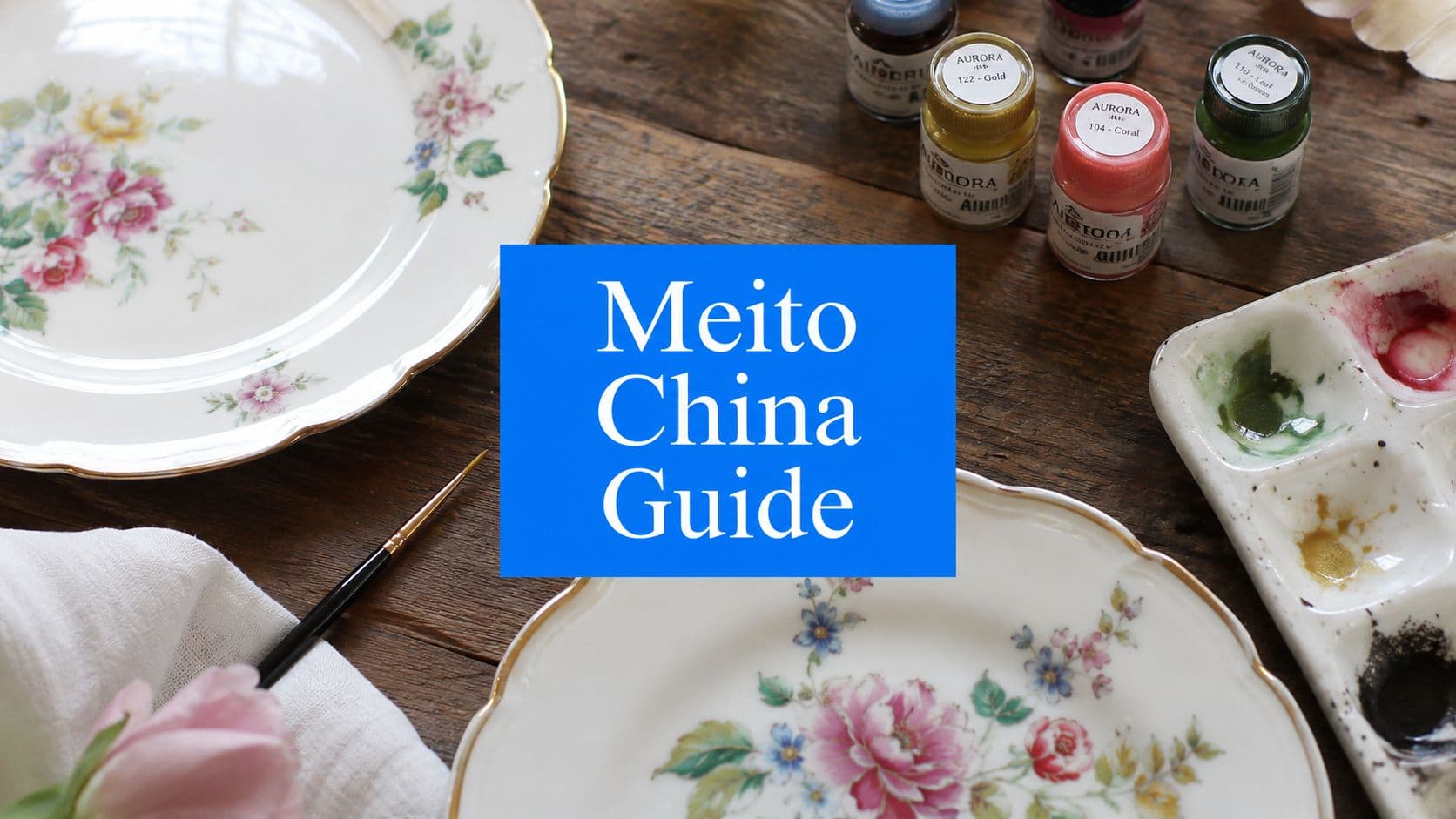
You open a cabinet, lift out a stack of plates, and see the words “Meito China” stamped on the back. The pattern is pretty. The gold trim still catches the light. Someone in the family says it might be old Chinese porcelain, and someone else says to check if it's hand painted because that must mean it's valuable.
That's usually where the confusion starts.
When I help families sort inherited dinnerware, the first job isn't pricing. It's clearing away bad assumptions so nobody wastes a week chasing the wrong market. With Meito, that matters more than usual. These pieces can absolutely sell, but the best outcome usually comes from good identification, realistic expectations, careful photos, and a selling method that doesn't turn your dining room into a shipping station for a month.
The Story Behind Your Meito China Collection
Most families meet Meito the same way. It comes out of an attic box, a sideboard, or a full estate cleanout with tissue paper between the plates and a note that says “good china.” The mark sounds misleading, and that's the first important point. Meito China is Japanese porcelain, not Chinese porcelain.
That misunderstanding is common because in this context “china” refers to the material, not the country of origin. If you've been searching for “hand painted Meito china” and finding fragmented answers, you're not imagining it. There's a real information gap.
The biggest problem for sellers isn't usually pattern names. It's authentication. As noted in this discussion of Meito identification frustration among collectors and sellers, pattern databases may show thumbnails of known designs, but there isn't a dedicated, widely accepted guide that clearly teaches people how to separate genuine hand painting from factory-applied decoration.
Practical rule: Treat inherited Meito as a manageable resale project, not a hidden-lottery discovery.
That mindset makes every later decision easier. You're not trying to prove that every plate is rare. You're trying to sort what you have, identify the better pieces, avoid overpricing, and move the collection with the least stress.
Why families get stuck
Two things trip people up:
- The name creates false expectations. “China” sounds older, rarer, and more geographically important than it is in this case.
- The decoration creates false certainty. A floral design with gilt trim can look hand painted even when parts of it were printed or factory-applied.
What usually works
For estate sale purposes, the cleanest path is straightforward:
- Identify the mark and origin
- Separate true hand-painted details from printed decoration
- Check condition piece by piece
- Photograph the set clearly
- Choose a selling format that fits the collection
That process protects your time. It also keeps family conversations calmer, because you can point to visible evidence instead of wishful thinking.
How to Identify Authentic Hand Painted Meito China
The best way to identify hand painted Meito China is to stop looking at the set as one big heirloom and start reading each piece like an object with clues. The backstamp matters. The surface matters. The decoration method matters.

Read the backstamp first
Turn every piece over. Don't assume all pieces in a cabinet match. Families often combine replacements over time, and mixed sets are common.
Use the backstamp to sort pieces into groups.
| Backstamp Description | Mark Details | Approximate Era |
|---|---|---|
| Meito Company mark | Usually includes the Meito name and export-style marking associated with Japanese porcelain | Post-1947 production |
| Nagoya Seito Sho line mark | Includes mark #64 associated with the Nagoya Seito Sho line | Circa 1908 |
| Country-of-origin export marking | “Made in Japan” or similar wording consistent with Japanese export porcelain | Export-era Japanese production |
The point of this table isn't to pretend every mark gives you a perfect date. It won't. The point is to separate broad production groups and avoid the most common mistake, which is assuming all Meito pieces are from the same period.
If you want a broader framework for reading marks and spotting stronger antiques, this guide on how to identify valuable antiques is useful for building the habit of checking labels, construction, and wear patterns together.
Look for evidence of the painting process
Some hand-painted Meito lines were finished with a third firing after overglaze decoration. In that process, the artist first sketches with a china marker, then applies the decoration, and the firing burns away the sketch medium while the color bonds to the softened glaze, creating a glossy permanent finish, as described in this reference on Meito marks and porcelain firing methodology.
That technical detail explains what your fingers and eyes should notice.
Signs that usually point toward hand painting
- Slight variation between pieces. Petals, leaves, or border details may repeat the same motif without being mechanically identical.
- Brush-led edges. A painted line often has a softer start or finish than a decal border.
- Layering you can see under light. Overglaze decoration may show subtle relief or variation where color was applied by hand.
- Small human inconsistency. One cup may have a slightly fuller flower or a narrower gold accent than the next.
Signs that usually point toward printed decoration
- Repeated motifs that are too exact
- Flat-looking color fields with no visible brush character
- Pattern alignment that appears mechanically uniform from piece to piece
If every rose on every plate looks exactly cloned, assume a factory process until proven otherwise.
Don't confuse hand painted with hand embellished
Many sellers accidentally oversell a set. A piece can have a transfer-printed base pattern and still include hand-applied touches, especially on trim or accent color. That doesn't make it worthless. It just changes how you describe it.
A safer listing phrase is often “hand-painted accents” or “appears hand decorated” unless the evidence is strong across the whole pattern. Absolute claims invite returns, disputes, and price resistance.
Use touch, light, and comparison together
Set three or four plates side by side under bright indirect light. Run a finger lightly across decorative areas. Compare edge details, not just the center motif.
Collectors do this instinctively. Sellers should too.
Assessing Condition and Realistic Market Value
This is the part families often resist, because the collection is attractive and has been cared for. Attractive doesn't always mean expensive. In the resale market, Meito usually falls into the category of sellable but moderate-value dinnerware.
Auction records show that over 95% of individual Meito pieces sell for $5–$25, and hand-painted examples rarely top $50 unless part of a complete, pristine dinner service, according to this review of Meito auction value trends. That's not bad news. It's useful news. It tells you the money is usually made through smart handling of the whole collection, not through fantasy pricing on one plate.

A simple triage system
When I sort china for sale, I divide it into three practical groups.
Excellent
No chips, no cracks, no visible crazing, strong paint, clean gloss, and minimal utensil wear. These pieces belong in your primary lot or your best individual listings.
Good
Light utensil marks, mild trim wear, or small signs of age that don't affect function or display. These still sell well when grouped accurately.
Damaged
Any chip, hairline crack, stained crazing, repaired break, or obvious loss to decoration. These pieces may still have use as fillers, replacements, or add-ons, but they should never carry the value of cleaner examples.
What to inspect on every piece
- Rims and foot rings for chips
- Handles on cups, creamers, and serving pieces
- Surface glaze for crazing or dullness
- Gold trim for rubbing or loss
- Pattern clarity for fading, washed-out areas, or discoloration
A single chip on a dinner plate might move it from “sell individually” to “bundle with matching pieces.”
What hurts value most
Cracks matter more than light wear. Buyers who want replacements for a set will tolerate modest utensil marks more readily than structural damage. A complete service with a few honest signs of use can still outperform a scattered group of immaculate but mismatched pieces.
That's why condition assessment should be done as a set decision, not just a piece decision. A family may have twelve dinner plates, but if three are chipped and two are from a different pattern variation, the best listing strategy changes immediately.
Photographing and Cataloging Your Collection for Sale
Good china photos don't require a studio. They require consistency, honest lighting, and enough detail that a buyer doesn't have to guess. With Meito, buyers want to see pattern, gloss, backstamp, and flaws without sending three follow-up messages.

Set up a repeatable photo station
Use a white poster board, a neutral tabletop, or a plain sheet near a window with indirect daylight. Avoid direct sun. It creates harsh glare and hides fine details in the glaze.
Take the same core shots for each listing group:
- Front view showing the full pattern
- Back view with the mark readable
- Angle shot to show gloss and surface character
- Close-up of decoration so buyers can judge whether it looks hand painted
- Close-up of any flaw with no attempt to hide it
A lot of sellers underdo the flaw photos. That's a mistake. Clear flaw photos build trust and reduce negotiation after the auction ends.
Photograph what knowledgeable buyers check
Porcelain decoration can show quality problems when paint is uneven. In overglaze work, uneven application can lead to pooling and discoloration during firing, which experienced buyers often notice, as explained in this overview of china painting methods and common decoration issues.
That means your close-ups should include border work, floral clusters, and any area where color looks thicker, softer, or irregular. Don't just photograph the prettiest plate. Photograph representative detail.
If your images are slightly dim or soft, light editing can help, but keep it honest. This guide to ecommerce product image optimization is useful for improving clarity without changing what the item looks like.
Write descriptions like an inventory sheet
A strong Meito listing reads more like a careful estate catalog than a sales pitch.
Include:
- What the item is. Dinner plate, teacup and saucer, serving bowl, platter.
- How many pieces are included. Count everything.
- Backstamp wording. Transcribe it as it appears.
- Pattern notes. Floral, gilt trim, color palette, notable motif.
- Condition summary. Be plain and complete.
- Any variation within the set. Mention if some pieces differ.
This practical guide on how to photograph items to sell online is worth keeping open while you work because it mirrors the kind of documentation buyers respond to best.
A short video can also help if you've never photographed resale items before:
A description format that works
Try this structure:
- Item group
- Piece count
- Mark on underside
- Pattern and decoration notes
- Condition disclosures
- Pickup or shipping terms
That format keeps you from forgetting the details that matter later.
Setting the Right Price for a Successful Sale
Pricing inherited china is emotional when it comes from a parent or grandparent. The market doesn't care about that history, but buyers do care about completeness, condition, and convenience. A good price is one that gets the set sold without dragging the process out.
Three pricing paths
The right method depends on how complete the collection is and how much effort you want to spend.
Whole collection as one lot
This is usually the least stressful option. One buyer takes the entire group, including serving pieces, cups, saucers, and extras. It saves time, reduces handling, and avoids being left with orphaned pieces.
The trade-off is obvious. A single-lot buyer expects room for resale margin or replacement risk.
By place setting or functional group
This works well when the set is reasonably complete but not museum-clean. Group dinner plate, salad plate, bowl, cup, and saucer together. Put serving pieces in separate companion lots.
This approach often feels fair to buyers because they can see exactly how the set would work at a table.
Individual pieces
This is the highest-effort path. It makes sense for scarce serving pieces, unusual forms, or replacement demand, but it creates the most listing work and the most packing problems if you're shipping.
Sentimental value belongs in family decisions. Selling price should come from condition, completeness, and buyer demand.
How to decide
Use this quick comparison:
| Selling Format | Best For | Main Advantage | Main Drawback |
|---|---|---|---|
| Entire lot | Full or mostly full collections | Fastest cleanup | Lower per-piece return |
| Grouped place settings | Usable mixed completeness | Balanced effort and return | More sorting required |
| Individual listings | Special forms or strongest pieces | Highest control | Most labor |
Research without getting trapped by retail listings
Check sold-market comparables, not asking prices alone. Retail replacement sites can be helpful for identifying patterns and seeing how pieces are categorized, but estate sellers often make the mistake of copying retail numbers into an estate liquidation context.
Retail businesses have storage, customer service systems, and time. Most families selling inherited Meito don't want to spend months piecing out cups and salad plates one at a time.
Start where buyers can engage
If you're using an auction format, don't set the opening so high that nobody bids. Interest matters. A realistic starting point brings in watchers and competitive bidders, especially when the lot is clean, well photographed, and easy to pick up.
In practical terms, the best price is rarely the one that proves a point to relatives. It's the one that converts a cabinet full of china into cash and empty shelf space.
How to Sell Your Meito China with DIYAuctions
Many families encounter a significant hurdle at this point. They've done the sorting, the photos, and the pricing. Then they realize they still have a fragile collection spread across a dining table and no desire to wrap, box, label, and ship it piece by piece.
For a collection like Meito, local estate-style selling is usually the easier path.

Why this format fits moderate-value china
Meito often sits in the middle ground. It has enough value to deserve proper cataloging, but not so much value that most families want a high-fee estate company or the hassle of endless individual shipping. That's where DIYAuctions makes sense.
The platform lets you create a professional-style sale yourself, upload the catalog you already built, choose pricing, and market to local buyers. Instead of juggling boxes and carrier claims, you can organize a single pickup day.
What the process looks like
A practical sale flow looks like this:
- Group the collection into a full lot, place-setting lots, or serving-piece groups.
- Upload your photos and descriptions using the work you've already done.
- Set your prices or auction terms based on condition and completeness.
- Choose a pickup window that works for the household or estate.
- Let local buyers compete and purchase, then hand off the collection on pickup day.
That structure is especially helpful when the goal is estate cleanout, downsizing, or settling a house on a timeline.
Why sellers keep more of the result
DIYAuctions uses a 10% commission model, capped at $1,000, which is outlined in its publisher information. For moderate-value collections, that matters. You don't want fees eating up the same careful margin you created by sorting, photographing, and pricing the china properly.
If you want the broader how-to before listing, this guide on how to sell antiques online is the best place to start.
The smoothest china sales are the ones where the seller controls the catalog, the buyer sees exactly what's included, and pickup happens once.
For inherited hand painted Meito China, that's the ultimate win. Not a dramatic appraisal. Not a mythical rarity story. A clean, organized sale that respects the pieces, protects your time, and turns a stored collection into usable proceeds.
If you're ready to move the collection instead of just researching it, DIYAuctions is the simplest way to do it professionally. You keep control of the pricing and catalog, the platform markets to qualified local buyers, and you avoid the worst part of china selling, which is managing fragile piece-by-piece shipping. For families handling an estate, downsizing a home, or clearing inherited cabinets, it's the most practical way to get Meito sold with less stress and more money kept in your pocket.
More guides in Selling Antiques & Collectibles
July 31, 2026
Ceramic Christmas Tree Atlantic Mold Seller's Guide
Identify, value, and sell a Ceramic Christmas Tree Atlantic Mold piece with confidence. Covers markings, rarity, condition, pricing, and listing tips.
Read guideJuly 30, 2026
Nurre Mirror Value: How to Identify and Sell for Profit
Learn to assess nurre mirror value with our step-by-step guide. Identify authentic pieces, estimate price, and sell profitably on DIYAuctions.
Read guideJuly 29, 2026
Distinction Deluxe Stainless Steel by Oneida HH: A Complete
Learn to identify, assess, and price your distinction deluxe stainless steel by oneida hh set for maximum profit.
Read guideGet the estate sale pricing guide
Enter your email for pricing ranges, planning notes, and a clearer path to launch.