Chargeback Prevention: Estate Seller's Guide
Master chargeback prevention for estate sale sellers. Learn actionable strategies: clear policies, proof of pickup, and dispute templates to protect profits.
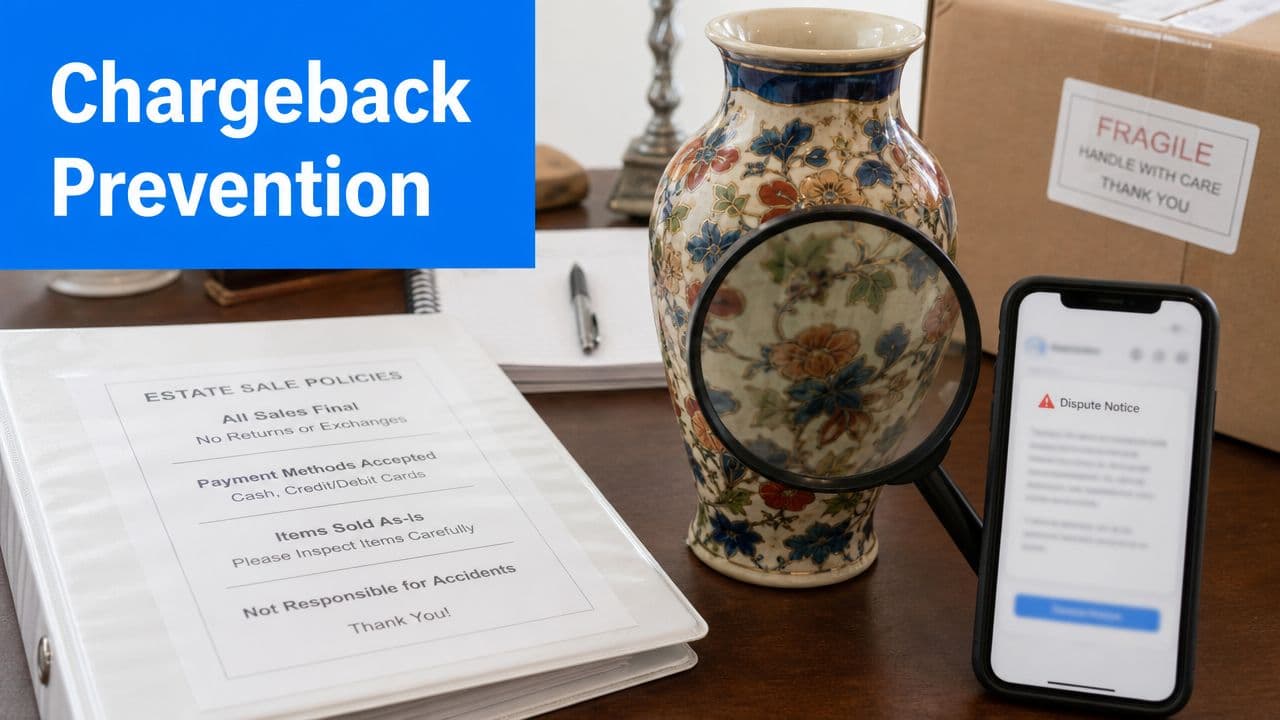
You've done the hard part. The auction closed, the bids were strong, and pickup day is on the calendar. Then a different kind of worry shows up. What if a buyer takes home a vintage watch, a signed print, or a sterling flatware set, then calls their bank and says the item wasn't as described?
That's the part many estate sellers don't plan for.
Most chargeback advice is written for boxed shipments, tracking numbers, and warehouse returns. Estate auctions are different. You're selling one-of-a-kind, second-hand property. Buyers usually pick up in person on a single day. Condition varies. Provenance may be partial. And once an item leaves the house, you usually don't get a clean second chance to document what happened. Good chargeback prevention in this setting isn't about fancy payment jargon. It's about clean listings, tight pickup procedures, and records you can use.
Understanding Chargebacks in Online Estate Sales
A chargeback is a card payment dispute started by the buyer through their bank. The bank pulls the funds back while it reviews the claim. For an estate seller, that can feel brutal because the item is already gone, the sale happened days ago, and the property was often unique enough that you cannot readily replace it.

The two disputes you'll see most often
Some chargebacks are true fraud. That usually means the cardholder says they didn't authorize the purchase at all.
Others are what sellers call friendly fraud, though there's nothing friendly about it. The buyer did place the bid, did pay, and often did pick up the item. Later they claim they didn't receive it, didn't recognize the charge, or that the item wasn't what they expected. In estate sales, buyer's remorse often gets dressed up as a bank dispute.
A common example looks like this. A bidder wins an antique sideboard. The photos showed wear. The description mentioned age, surface marks, and visible repairs. The buyer arrives on pickup day, loads it, and leaves happy enough. A week later, they dispute the card charge, saying the piece had damage not disclosed in the listing. At that point, the question isn't whether the item was old or imperfect. The question is whether you can prove what you disclosed and what the buyer accepted.
Practical rule: Banks review documents, not your memory.
Why estate sales need a different mindset
With normal e-commerce, a merchant can point to shipment scans, carrier signatures, return windows, and restocking procedures. Estate sellers often have none of that. You're dealing with in-person handoff, short timelines, and inventory that may include antiques, collectibles, tools, jewelry, artwork, and household goods from different eras and conditions.
That changes the job. Chargeback prevention starts before the first bid. It lives in your terms, your photos, your lot descriptions, your invoices, and your pickup paperwork.
What actually protects your profit
Sellers often assume payment processing alone will shield them. It helps, but it doesn't replace seller discipline. The best protection comes from a simple chain:
- Clear terms that set expectations before bidding
- Accurate listings that disclose flaws plainly
- Buyer communication that confirms pickup details and sale conditions
- Pickup verification that shows who collected the item and when
- Signed acceptance when the buyer inspects and takes possession
If one of those steps is weak, the dispute gets harder. If all of them are solid, you're no longer arguing. You're submitting evidence.
Set Up Your Sale for Success with Clear Policies
If your terms are vague, buyers fill in the blanks with their own assumptions. That's where trouble starts. In estate auctions, the policies that prevent chargebacks are usually simple. The hard part is putting them where buyers will see them and writing them in plain language.

The three policies that matter most
You don't need a wall of legal text. You need the right terms repeated in the right places.
-
As-is, where-is
This tells bidders that items are sold in their present condition and current location, with no later expectation of refurbishment, adjustment, or relocation help unless you state otherwise.
-
All sales final
This removes the assumption that pickup day works like a retail return counter. Estate auctions are liquidation events, not trial purchases.
-
Pickup rules
This spells out the exact pickup window, who can collect, what identification or invoice is required, and what happens if the buyer misses the pickup deadline.
Copy you can adapt
Use direct wording. Don't try to sound like a law office.
As-is, where-is policy
All items are sold as-is, where-is, with no warranties or guarantees expressed or implied. Photos and descriptions are provided to assist bidding, but buyers are responsible for reviewing all available information before placing bids. Normal age-related wear, repairs, imperfections, and signs of prior use should be expected on second-hand items unless otherwise noted.
Final sale policy
All sales are final. No returns, refunds, exchanges, or credits will be issued for any reason except where required by law or where the seller explicitly agrees in writing before item removal.
Pickup policy
Buyers must pick up items during the scheduled pickup window and present identification and invoice confirmation. Items not collected by the end of the pickup period may be treated as abandoned if your sale terms allow it. Buyers are responsible for bringing appropriate labor, tools, packing materials, and vehicle space for safe removal.
Where to place policies so they actually work
A hidden policy is a weak policy. Put your terms in multiple places buyers naturally encounter them.
Use this placement checklist:
- Auction terms page where bidders agree before participating
- Sale description at the top, not buried at the bottom
- Lot descriptions for higher-risk items such as jewelry, art, furniture, and electronics
- Invoices and pickup instructions sent after the auction closes
- Printed pickup signage at the door and checkout table
That repetition matters. When a buyer later claims they didn't know an item was final sale or required same-day pickup, you want to show that the condition was stated more than once.
Policies should prevent surprises, not create them
The best terms are strict and fair. Overreaching policies can backfire if they sound evasive or hostile. Don't use “as-is” as cover for sloppy descriptions. Don't rely on “all sales final” if you failed to mention a major flaw visible in person but absent from the listing.
A solid policy does one job well. It sets expectations before the bid.
Here's what doesn't work:
- Tiny fine print nobody reads
- Contradictory wording between your sale page and invoice
- Soft language like “generally no returns” or “usually final”
- Missing pickup consequences when buyers fail to show up
- No contact path for pre-pickup questions
Buyers are less likely to run to their bank when the rules were clear before they clicked Bid.
Create Bulletproof Item Listings That Win Disputes
When a buyer claims an item was not as described, your listing becomes your evidence file. That means your job is not to make the item sound appealing. Your job is to make the item provable.
Document, don't decorate
Vague sales language creates argument space. Specific descriptions close it.
A weak listing says:
“Beautiful vintage chair in good condition with minor wear.”
A stronger listing says:
“Vintage wooden armchair with carved back. Finish wear on both arms, surface scratches on seat, and a visible chip at the rear left leg. Upholstery shows fading and light staining. See close-up photos of seat, left leg, and back rail.”
The second version does two important things. It names the flaws and tells the buyer where to verify them in the photos. If there's a later dispute, you can point to exact disclosures instead of broad adjectives.
What every high-risk listing should include
For valuable second-hand items, include details buyers and banks care about:
-
Material and construction
Say “solid wood,” “plated metal,” “ceramic,” “glass,” or “mixed materials” if known. If you're unsure, say that. -
Measurements
Give dimensions for furniture, framed art, rugs, mirrors, and anything where size affects value or fit. -
Condition notes
List chips, cracks, repairs, missing parts, warping, stains, tarnish, looseness, scratches, or tested and untested status. -
Markings and labels
Show signatures, stamps, maker's marks, serial plates, and labels in close-up photos. -
Known limits
Use wording like “untested,” “appears complete but not verified,” or “working status not confirmed” when that's the truth.
Photo habits that save sellers later
You're not creating a catalog for a glossy retail site. You're building a record.
Use this pattern for every important lot:
- Overall views from multiple angles
- Detail shots of corners, edges, backs, undersides, and interiors
- Flaw photos taken close enough that the issue is obvious
- Scale reference through measurement photos or visible ruler/tape
- Label photos for maker marks or signatures
If you sell artwork, the same discipline applies. These effective artwork cataloging tips from Colorado Art Services are useful because they emphasize consistent recordkeeping, dimensions, condition notes, and image organization. That's exactly the kind of structure that helps when a dispute lands on your desk later.
A practical before and after example
Here's a listing that invites trouble:
- “Silver tea set, antique, excellent condition.”
Here's one that protects the seller:
- “Four-piece silver-tone tea set including teapot, sugar bowl, creamer, and tray. Surface tarnish throughout. Scratching visible on tray center. Denting on lower side of creamer. Hallmarks photographed but metal content not verified. Sold as decorative and unpolished estate property.”
That wording doesn't kill bids. It filters out the buyers who were going to expect retail perfection from estate property.
For sellers who want a stronger listing workflow, this estate sale listing guide is a practical place to tighten descriptions and photo order before a sale goes live.
If a flaw feels too small to mention, mention it anyway. The details that seem minor before pickup often become the center of the dispute afterward.
Master the In-Person Pickup Process
Pickup day is where many estate sellers either protect the sale or accidentally weaken it. The item changes hands in person. That means you have one clean opportunity to verify identity, confirm condition, and record acceptance before the buyer drives away.

Treat pickup like controlled transfer
A casual handoff causes avoidable problems. The best pickup setups feel organized, calm, and a little boring. That's a good thing.
Start with physical order. Group lots by invoice or buyer name. Keep high-value items behind a staffed table until identity is confirmed. If helpers are loading vehicles, make sure one person owns the sign-out process so items don't leave before paperwork is complete.
For sellers handling jewelry, coins, watches, art, or compact valuables, documented transfer matters even more. A simple chain-of-custody mindset keeps disputes from turning into guessing games. This chain of custody procedures guide is worth reviewing if your sale includes items that can be easily swapped, pocketed, or misidentified during a busy pickup window.
The pickup flow that works
Run buyers through the same sequence every time:
-
Check identity
Match the person to the invoice, confirmation email, or authorized pickup note. -
Pull the items
Bring out the correct lots and keep them together until review is complete. -
Allow inspection
Give the buyer a brief chance to look over what they purchased. Don't rush this part. -
Address issues on the spot
If a buyer says a lot is missing a piece or looks different than expected, stop and resolve it before the item leaves. -
Get written acknowledgment
Have the buyer sign for receipt and acceptance before loading is complete. -
Mark the order released
Note the pickup time and staff initials on your side.
What the sign-off should say
A pickup receipt doesn't need to be complicated. It needs to be clear enough that a third party can understand what happened.
Use language like this:
Buyer Name: ____________________
Invoice Number: ____________________
Pickup Date: ____________________I acknowledge that I have received the items listed on my invoice. I had the opportunity to inspect the items at pickup and accept them in their present as-is condition. I understand that all sales are final according to the auction terms I agreed to before bidding.
Signature: ____________________
Printed Name: ____________________
Staff Initials: ____________________
If you use tablets, an electronic signature works if your system preserves the record clearly. If paper is easier on a hectic day, use paper. The format matters less than the consistency.
How to handle objections without creating a bigger problem
The worst response to a pickup complaint is defensiveness. The second worst is improvising a promise you won't remember later.
If a buyer objects, slow the process down. Pull up the listing photos and description. Compare the lot in front of them to the listing record. If the issue is legitimate, solve it before release if your terms and judgment allow. If the issue is really a misunderstanding, explain it calmly and document the conversation.
Use simple responses:
-
If the flaw was disclosed
Point to the description and photo that showed it. -
If the buyer brought the wrong expectation
Reinforce that estate items are second-hand and sold as described, not as new. -
If the lot was staged incorrectly by your team
Correct it immediately and note what changed. -
If the buyer refuses the item
Follow your written policy, and document the refusal in writing.
A clean pickup record beats a perfect memory every time.
Small habits that prevent big headaches
These details sound minor until you need them:
- Use buyer names on staging tags so items don't get mixed during rush periods
- Photograph grouped lots before pickup for especially valuable invoices
- Initial corrections on paper receipts instead of scribbling changes with no explanation
- Keep one communication channel for pickup questions so messages don't scatter across texts and voicemails
- Train helpers not to promise exceptions on refunds, holds, or alternate terms
Single-day pickup is fast by nature. That's why the process has to be slower on paper than it feels in the driveway.
Recognize and Act on Fraud Indicators
Most buyers are fine. A small number create most of the chaos. You don't need to become suspicious of everyone, but you do need to notice patterns early enough to act.
Common Fraud Red Flags in Online Auctions
| Red Flag | What It Could Mean | Your Action |
|---|---|---|
| A brand-new account jumps straight to one expensive lot | The bidder may be testing stolen payment details or targeting a high-resale item | Review the account closely, document the behavior, and flag it for platform review |
| The buyer asks to pay outside the platform | They may be trying to avoid platform controls and leave you without clean records | Decline and keep all payment activity inside the approved system |
| The buyer pushes for third-party pickup with vague details | They may be setting up an item not received claim or making identity verification harder | Require written authorization, matching invoice details, and ID at pickup |
| The buyer sends aggressive messages right after winning | Pressure can be a tactic to get exceptions, rushed release, or off-policy handling | Keep communication written, brief, and tied to your posted terms |
| The shipping or pickup name doesn't match the payer and the explanation keeps changing | The transaction may involve unauthorized card use or a fabricated story | Pause, ask for clarification in writing, and do not release the item casually |
| The bidder ignores listing details but later asks questions already answered in the description | They may be building a future claim that the item was unclear | Reply by pointing them back to the listing and save the message thread |
| The buyer asks you to alter the invoice description | They may want paperwork that supports a later dispute or resale scheme | Refuse and keep records accurate |
| The buyer misses pickup, then suddenly disputes the charge | This can signal buyer's remorse repackaged as non-receipt or misrepresentation | Preserve your no-show records, communication history, and pickup terms |
Why these patterns matter
Fraud rarely arrives with a label on it. It usually shows up as inconsistency. The name changes. The pickup person changes. The payment request changes. The urgency rises. The buyer wants an exception that leaves you with less proof than normal.
That doesn't mean every odd request is criminal. Estate sales involve family members, movers, and schedule changes all the time. What matters is whether the story stays consistent and whether you can document it.
For a broader view of how merchants think about suspicious transaction patterns, this AI Image Detector guide on fraud is useful background reading. The examples are broader than estate sales, but the core lesson applies well: unusual behavior makes sense only when the record around it is clear.
What to do when your gut says slow down
Don't accuse. Don't argue. Tighten the process.
- Keep communication in writing
- Refuse off-platform payment or side deals
- Require matching pickup authorization
- Escalate concerns through your review process using a checklist such as this fraud prevention checklist
- Document every exception request instead of handling it casually by phone
Sellers get into trouble when they override their own process to be “helpful.” Helpful is good. Untraceable is not.
How to Professionally Respond to a Chargeback
Even careful sellers get chargebacks. When that happens, speed and organization matter more than emotion. The bank isn't looking for outrage. It's looking for a clean record that answers the claim.
What to gather first
Before you write anything, collect the full file:
- Auction terms that the buyer accepted
- Item listing with photos and description
- Invoice and payment record
- Pickup confirmation including signature, date, and receiving party
- Message history related to questions, complaints, or pickup arrangements
- Any photos from pickup day if you took them for release documentation
The strongest dispute response is chronological. It shows what the buyer agreed to, what you disclosed, what happened at pickup, and why the claim doesn't match the record.
Keep your tone plain and factual
Don't attack the buyer's motives. Don't guess why they filed. Don't write a novel.
A useful response usually does three things:
- Names the transaction
- States the dispute is contested
- Points to attached evidence in a simple sequence
Here's a template you can adapt:
To Whom It May Concern,
I am disputing the chargeback for the transaction associated with invoice __________ and buyer __________.
The buyer placed a winning bid in an online estate auction and agreed to the posted sale terms before bidding. Those terms stated that all items were sold as-is, where-is, and that all sales were final.
The item listing accurately described the lot and included photographs showing its condition. The attached listing record reflects the disclosures provided before purchase.
The buyer, or the buyer's authorized representative, collected the item in person on __________. At pickup, the buyer had the opportunity to inspect the item and signed an acknowledgment confirming receipt and acceptance of the item in its present condition. A copy of that signed pickup record is attached.
Based on the attached terms, listing documentation, communication records, invoice, and signed proof of pickup, the transaction was valid and fulfilled as agreed.
Please review the attached evidence and reverse the chargeback.
Sincerely,
What sellers often do wrong
The most common mistakes are avoidable:
- Submitting too little because the seller assumes one document is enough
- Writing an emotional rebuttal instead of an evidence-based one
- Missing the deadline
- Sending blurry screenshots with no labels
- Forgetting the pickup record, which is often the key piece in estate sales
Label every attachment clearly. “Listing photos,” “signed pickup receipt,” and “buyer messages” is better than a pile of unnamed files.
A chargeback response should read like a tidy file folder, not a debate. If your prevention steps were solid from the start, the response is mostly an assembly job.
Chargeback prevention gets much easier when the sale itself is built on clean records, consistent terms, and a pickup process that documents possession clearly. If you want a platform that supports professional estate auctions with secure payments, organized workflows, and seller-friendly tools, take a look at DIYAuctions.
More guides in Estate Sale Basics
July 28, 2026
Revenue Reporting for Estate Sales and Auctions
Learn revenue reporting essentials for estate sales and auctions. Discover key metrics, templates, and best practices to simplify tracking and compliance.
Read guideJuly 26, 2026
Stamp Collection Valuation: A Practical Step-by-Step Guide
Stamp collection valuation made simple. Learn how to identify, grade, price, and sell your stamps with confidence for estate sales or consignment.
Read guideJuly 23, 2026
Estate Sales Brick NJ: Your 2026 Guide to Success
Planning your estate sales brick nj? Our guide covers permits, pricing, marketing, & running a safe sale with DIYAuctions.
Read guideGet the estate sale pricing guide
Enter your email for pricing ranges, planning notes, and a clearer path to launch.