Delta Disc and Belt Sander: A Complete Guide for 2026
Our complete 2026 guide to the Delta disc and belt sander. Learn how it works, safety tips, maintenance, and how to value a used model for an estate sale.
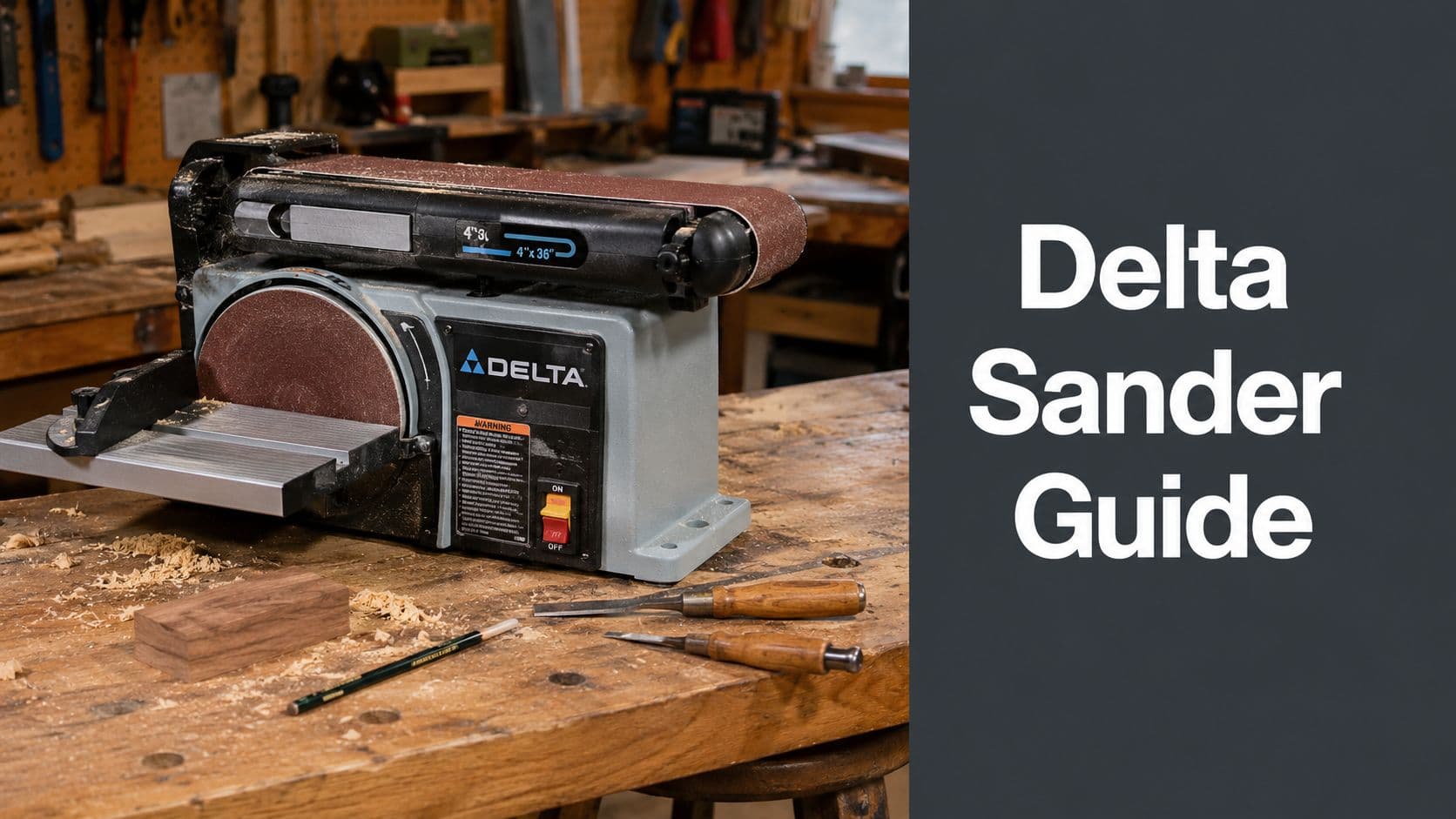
You're cleaning out a garage, trying to decide what stays, what goes, and what's worth the trouble to list. In the back corner sits a heavy Delta machine with a sanding disc on one side and a belt on the other. It looks serious, probably old, and definitely too well-built to toss in a scrap pile without asking questions first.
That instinct is usually right. A Delta disc and belt sander is one of those tools that often looks rougher than it really is. Dust, surface rust, and worn abrasives can make a perfectly useful machine seem worn out. At the same time, missing parts, table damage, bearing noise, or bad tracking can turn a promising estate-sale item into a project. The difference matters if you're trying to price it fairly and move it without headaches.
That Old Sander in the Garage
You pull a tarp off a bench in the garage and find a Delta sander with a cast-iron base, a tired sanding disc, and a belt that may have been on there for years. Before you call it scrap or slap a high price on it for the estate sale, it helps to know what kind of machine you're looking at.
On one motor, these sanders give you two working surfaces that solve different shop problems. The disc is the controlled side for trimming, squaring, and cleaning up curves. The belt is the faster side for edge work, shaping, and removing material without much fuss. That combination is why these machines stayed in service for decades, and why an older Delta can still be worth real money if it is complete and runs properly.
For an estate seller, age is only part of the story. Buyers care more about whether the platen is straight, the tables are present, the tracking adjusts correctly, and the motor comes up to speed without squealing, smoking, or shaking across the bench.
That is where asking the right questions pays off.
A dirty machine can still be a good machine. I've seen plenty of old Delta sanders that looked rough because they sat in a damp garage, yet needed little more than fresh abrasives, a careful cleaning, and minor adjustment to become useful again. I've also seen clean-looking examples with bent tables, frozen fasteners, bad bearings, or homemade parts that cut the selling price in half.
If the garage is packed wall to wall and you need to sort the whole space before dealing with individual tools, this guide on how to declutter a garage can help you put the job in order.
Dust collection also affects how a buyer reads the machine. A shop that managed sanding dust usually leaves equipment in better condition over time, and the broader topic is covered well in Expert insights on dustless refinishing.
Practical rule: Price the machine by completeness, smooth operation, and repair cost. Dust and surface rust matter far less than missing parts and mechanical noise.
A good listing starts with a clear-eyed inspection. Identify what is there, what is missing, what works, and what the next owner will need to spend on day one. That approach gets you closer to a fair price and saves everyone from guessing at a heavy old tool in the corner.
Anatomy of a Workshop Workhorse
At an estate sale, this is the point where a casual buyer sees a dusty benchtop tool and keeps walking. A careful buyer starts checking whether the machine is complete, straight, and worth bringing back to life.

A used Delta disc and belt sander earns its value through condition, not appearance. Surface rust, faded paint, and old abrasive usually mean cleanup. Missing hardware, bent castings, or a shaky spindle usually mean money, time, and sometimes parts hunting that outweighs the sale price.
The parts buyers check first
Before you plug it in, confirm that the machine is physically complete.
-
Motor
Check the motor tag if it is still readable. Look for oil seepage, burned smell, cracked wiring, loose mounts, or a pulley that does not line up cleanly. A motor can run and still be a liability if it growls, gets hot fast, or struggles to reach speed. -
Disc assembly
Inspect the disc plate for flatness and damage around the center. Old adhesive and worn paper do not matter much. Side-to-side wobble does. If the plate is bent, accurate sanding becomes difficult and replacement may cost more than a bargain buyer expects. -
Belt assembly
Look at the rollers, platen, belt tracking hardware, and tension mechanism. Rollers should turn freely without rough spots. The platen should be flat and solid. Missing tracking parts or a frozen tension arm can turn a simple cleanup job into a parts search. -
Work table and trunnion These components often reveal significant hidden value loss. A table with light rust usually cleans up well. A cracked trunnion, stripped lock handle, or table that no longer holds an angle knocks the price down quickly because accuracy is the whole point of this machine.
-
Miter gauge and slot
The machine can still sell without the gauge, but it stops feeling complete. Buyers looking for a ready-to-use shop tool notice that right away. -
Guards, backstops, and covers
Check that guards are present, mount correctly, and have not been cut, bent, or bypassed. Homemade shields and missing covers make buyers assume other repairs were handled the same way. -
Power switch and cord
A proper switch matters. Brittle insulation, taped repairs, or a switch that feels sticky tell you the machine needs electrical attention before it should be sold as usable. -
Dust port
A dust port full of compacted debris is common on older sanders. Cracks, broken fittings, or improvised adapters suggest rough treatment. For context on why sanding dust control matters in real finishing work, these Expert insights on dustless refinishing are worth a look.
Quick condition check
This simple split helps when you are pricing the machine for an estate sale listing:
| Part | Usually a cleanup issue | Usually a value issue |
|---|---|---|
| Abrasive disc or belt | Worn out, loaded with dust | Incorrect size setup that hides missing parts |
| Table | Surface rust, old finish residue | Warp, crack, broken trunnion |
| Guards and covers | Paint wear, grime | Missing, bent, altered |
| Motor | Dusty housing, old belt residue | Noise, heat, weak startup, bad wiring |
| Rollers, pulleys, bearings | Dirt, old rubber dust | Play, misalignment, rough rotation |
What sellers often miss
Small hardware matters more than sellers expect. Tracking knobs, belt tension parts, table lock handles, miter gauge knobs, and mounting bolts do not look important sitting in a coffee can on a shelf. On sale day, though, those missing pieces change the machine from complete to questionable.
Check the platen too. Buyers often inspect the disc and table first, then miss the wear surface behind the belt. If the platen is heavily grooved, loose, or burned from metal work, the machine may still run fine but it will not sand cleanly without repair.
A fair listing should mention that kind of condition plainly. "Runs" is not enough. "Runs smoothly, table locks, belt tracks, miter gauge missing" is the sort of description that gets serious buyers to show up with cash.
A used sander sells on completeness, alignment, and mechanical soundness. Dirt is cheap to fix. Missing parts are not.
Safe Operation and Core Techniques
A Delta disc and belt sander is straightforward once you respect what the abrasive is trying to do. It wants to pull material across its path. Safe use comes down to making that force predictable.

The non-negotiable rules
On machines such as Delta's 31-460 4-inch belt and 6-inch disc sander, the manual instructs users to sand on the downward side of the disc and keep the gap between the table or backstop and the abrasive surface at 1/16 inch or less, as shown in the 31-460 owner's manual. Those two details tell you almost everything about safe setup.
If you sand on the wrong side of the disc, the machine can lift or throw the work. If the table gap is too wide, a thin edge can get pulled into the opening.
Use this checklist before any test run:
-
Wear eye protection
Abrasive grit, metal dust, wood fibers, and old adhesive can all come loose. -
Use respiratory protection
Old sanders often come with stale abrasives and packed dust. You don't want that in your lungs. -
Set the table close
That small clearance matters more than beginners think. -
Hold the work firmly
If the piece feels too small to control, it probably is. -
Stand slightly off line
Don't put your face directly in front of the disc or belt.
Disc work versus belt work
The disc is usually the better choice for shaping curves, trimming ends, and squaring a small part against the table. It's controlled, visible, and easy to read. The belt is better for long edges, smoothing a profile, or removing stock from a larger surface where the disc would feel cramped.
What doesn't work is treating both surfaces the same way. New users often push too hard on the disc and round over edges they meant to square. They also let the belt do too much unsupported work, which makes a piece chatter or dip.
The machine should cut because the abrasive is sharp and the setup is right. If you have to lean on it, something's off.
A useful demonstration, especially if you're selling the machine, is to show one clean pass on a scrap block. That proves the motor runs, the disc tracks true enough to work, and the table is usable.
For a visual walkthrough of machine handling, this video gives a practical reference point:
What buyers notice during a live test
A knowledgeable buyer won't care whether the abrasive is fresh. They will care whether the machine starts without drama, runs without ugly vibration, and sands predictably.
If you're using it for finer finishing work, dust control becomes part of surface quality as much as safety. On broader sanding and refinishing jobs, people often look for cleaner dust management because it helps preserve a superior hardwood floor finish and reduces contamination in the work area. The same principle carries over here, even on a smaller shop sander.
Essential Maintenance and Troubleshooting
A used Delta sander usually earns its value back through boring things done right. Belt installed correctly. Pulleys aligned. Table squared. Dust cleaned out. Nothing dramatic, just proper setup.
Belt tension and tracking
One Delta manual states the belt is correctly tensioned when it can be deflected about 1/4 inch with moderate pressure, and it specifically says the belt doesn't need excessive tension to work properly. The same manual also calls for aligning the drive and arbor pulleys with a straightedge before tensioning, because pulley misalignment affects tracking and wear, as shown in Delta's instruction manual.
That matters because owners often try to “fix” a wandering belt by cranking tension tighter. That usually makes things worse. A belt that won't stay centered may have a tracking issue, a pulley-alignment issue, worn rollers, or a damaged belt. More tension isn't a magic cure.
A practical tune-up routine
If I'm evaluating a used machine, I want these maintenance steps done before I decide what it's worth:
- Remove packed dust from the housing, belt area, and around the disc.
- Inspect the belt and disc abrasives. Worn abrasives are normal. Torn or badly glued discs suggest neglect.
- Check pulley alignment with a straightedge if the machine uses that arrangement.
- Set belt tension correctly instead of overtightening.
- Run the machine briefly and watch whether the belt settles into a stable track.
- Square the table to the sanding surface if the machine is being demonstrated for sale.
Common problems and likely causes
| Problem | Likely cause | What to do |
|---|---|---|
| Belt walks to one side | Misalignment, poor tracking adjustment, worn belt | Align pulleys, reset tracking, try a known good belt |
| Excess vibration | Bad abrasive, loose fasteners, worn bearings, bent parts | Remove and inspect abrasive, tighten hardware, listen at bearings |
| Disc sands unevenly | Table out of square, disc wobble, damaged backing plate | Check table setting and inspect disc plate |
| Weak cutting | Glazed abrasive, light motor issue, poor support | Replace abrasive first, then reassess |
| Burning wood | Dull abrasive, too much pressure, lingering in one spot | Use fresh abrasive and keep work moving |
What helps and what doesn't
Abrasive cleaning sticks can help if the belt or disc is loaded with resin and still has life left. They won't fix torn paper, bad adhesive, or a disc that was applied crooked. Sellers sometimes waste time polishing a machine while ignoring the one thing a buyer tests first, whether it tracks and sands properly.
Another common mistake is replacing abrasives before checking mechanical basics. Don't start by dressing the machine up. Start by making sure it runs straight, quiet, and stable.
Cleanliness helps a sale. Correct adjustment closes it.
If you're restoring one for your own shop, spend your effort on alignment, tables, switches, and hardware. Those are the things that make an old machine pleasant to use instead of just old.
How to Inspect and Value a Used Sander
Pricing a used Delta disc and belt sander for an estate sale isn't about guessing what it “should” be worth. It's about reducing uncertainty for the next owner. The more clearly you can answer “Does it work, is it complete, and what would I still need to buy?”, the easier pricing becomes.

Start with the cast iron and the moving parts
A quick glance tells you very little. Start with the structure.
Check the body, belt arm, table mounts, and trunnions for cracks or repairs. Surface rust is common and often harmless. A cracked casting is different. That can turn a useful machine into a parts unit.
Then spin what you can by hand with the machine unplugged. You're feeling for roughness, looseness, and resistance that doesn't make sense. The goal isn't to diagnose every internal fault on the spot. It's to separate “stored dirty” from “mechanically compromised.”
Use this inspection sequence:
-
Frame and castings
Look for cracks, drilled modifications, broken ears, or weld repairs. -
Tables and supports
Check that the table sits flat, locks properly, and doesn't sag or shift under light pressure. -
Rollers and disc plate
Watch for visible wobble and listen for bearing noise when the machine runs. -
Switches and cord
A machine can still be useful with an old cord, but frayed wiring makes buyers back off. -
Guards and hardware
Missing covers, knobs, and lock handles don't always stop function, but they always affect price.
Completeness affects value more than sellers think
Older Delta machines often survive mechanically because they were built stout. What drags down value is incompleteness. A missing miter gauge, a broken table lock, or absent belt guards may sound minor, but buyers start adding hassle in their heads.
One of the most overlooked issues is parts availability. As noted in this Delta-related manual context from UWM's PDF archive, an older unit's value can depend more on whether belts, discs, pulleys, and adjustment hardware are still reasonably obtainable than on the original horsepower. That lines up with how experienced buyers think. A machine with standard consumables and intact hardware often sells more confidently than a more powerful machine missing odd proprietary pieces.
If the next owner can't easily buy what wears out or what's missing, the machine is worth less no matter how heavy it feels.
A simple grading method for estate-sale pricing
You don't need fake precision. A practical grading system works better.
| Condition tier | What it looks like | Pricing posture |
|---|---|---|
| Parts or project | Missing major pieces, untested, noisy, cracked, poor tracking | Price to move and describe faults clearly |
| Usable as-is | Runs, sands, mostly complete, ordinary wear | Mid-range asking price with honest notes |
| Clean and ready | Complete, tuned, stable, good table action, demonstrated running | Stronger asking price and better buyer confidence |
Notice what's not in that table. Sentimental value, old-shop nostalgia, or “they don't make them like this anymore” talk. Buyers may appreciate old Delta cast iron, but they still buy on condition, usability, and completeness.
How to present the machine so buyers trust the listing
Photos matter because buyers want proof, not adjectives. Show the full machine, the tables, the belt side, the disc side, the motor tag if readable, the switch, and any included accessories laid out clearly. If there's wear, photograph it directly. Hiding flaws only wastes everyone's time.
This guide on how to photograph items to sell online is useful for getting those practical detail shots right, especially on heavy tools where scale and condition can be hard to capture.
For the written description, include:
-
What the machine is
Say Delta disc and belt sander, plus any visible model number. -
What works
State whether it powers on, tracks, sands, and whether the table adjusts. -
What's missing or uncertain
Be direct. Missing gauge, no dust fitting, older cord, belt worn, disc needs replacement. -
What's included
Extra abrasives, stand, manual, gauges, wrenches, spare hardware.
That kind of listing brings better buyers. Not because it sounds polished, but because it sounds real.
Key Accessories That Add Value
A bare machine can sell. A complete, usable package sells easier. The best accessories aren't random add-ons. They solve the buyer's first problems.

The accessories worth bundling
Start with the obvious consumables. A selection of sanding belts and adhesive discs in a few common grits gives the next owner a reason to put the machine straight to work. They don't need to stop and order basics before testing it in their own shop.
An abrasive cleaning stick is another smart include. It's inexpensive, useful, and tells a buyer the machine was maintained by someone who understood sanding setup instead of just running paper until it burned.
A stand or mobile base can help too, especially with heavier Delta units. These machines are awkward to move, and a proper base turns “where am I going to put this thing?” into a smaller concern.
Why support accessories matter
Some Delta models are built so the 6-inch belt can run vertically, horizontally, or at angles in between, according to the Delta belt sander manual. That flexibility is useful, but the same manual warns against sanding workpieces shorter than 7 inches and stresses proper support. In practice, that means accessories that improve support and control often matter more than flashy extras.
Useful support items include:
-
A solid table and locking hardware
If the machine already has these intact, that's value by itself. -
Miter gauge
Buyers like having it, even if they'll upgrade later. -
Extra backstops or fences
Anything that improves repeatable positioning gets attention. -
Dust collection adapter
Not glamorous, but practical.
What doesn't add much
A random box of worn discs and half-dead belts doesn't impress anyone. Neither does a homemade attachment that only its original owner understood. If you're bundling, keep it honest and useful.
A good accessory package removes friction. It doesn't add mystery.
If you're buying rather than selling, spend your money first on abrasives, support, and dust control. Those improve the machine immediately. Fancy extras can wait.
A Workshop Asset Worth Your Attention
That old Delta sander in the garage usually isn't scrap. It's a compact, durable workshop machine with a job people still need done. The trick is seeing past the dust and judging the things that matter, condition of the castings, completeness of the hardware, smooth operation, accurate tables, stable tracking, and whether parts and consumables are still practical to source.
For an estate sale, that makes it a strong candidate for separate listing instead of lumping it into a generic “shop tools” lot. Buyers looking for a Delta disc and belt sander know what they're after. They want clear photos, a truthful condition report, and enough evidence to tell whether the machine is ready to work or ready for restoration.
If you've inspected it properly, cleaned it, confirmed what's included, and photographed it well, you're already ahead of most sellers. You're not offering “an old sander.” You're offering a specific machine with known condition and a believable description.
That's what gets serious buyers to show up.
Use that knowledge when you sort, catalog, and list the tool. If you're preparing a larger estate or downsizing sale, DIYAuctions makes it easier to package specialty tools alongside the rest of the household by giving you a structured way to present items clearly and reach local buyers. Their guide on how to sell household items online is a solid next step when you're ready to turn that garage find into an actual sale.
Ready to move a shop full of tools, household contents, or an entire estate sale online? DIYAuctions helps you catalog items, set pricing, and connect with local buyers without handing over the whole process to a traditional estate-sale company.
More guides in Estate Sale Basics
July 28, 2026
Revenue Reporting for Estate Sales and Auctions
Learn revenue reporting essentials for estate sales and auctions. Discover key metrics, templates, and best practices to simplify tracking and compliance.
Read guideJuly 26, 2026
Stamp Collection Valuation: A Practical Step-by-Step Guide
Stamp collection valuation made simple. Learn how to identify, grade, price, and sell your stamps with confidence for estate sales or consignment.
Read guideJuly 23, 2026
Estate Sales Brick NJ: Your 2026 Guide to Success
Planning your estate sales brick nj? Our guide covers permits, pricing, marketing, & running a safe sale with DIYAuctions.
Read guideGet the estate sale pricing guide
Enter your email for pricing ranges, planning notes, and a clearer path to launch.