Distinction Deluxe Stainless Steel by Oneida HH: A Complete
Learn to identify, assess, and price your distinction deluxe stainless steel by oneida hh set for maximum profit.
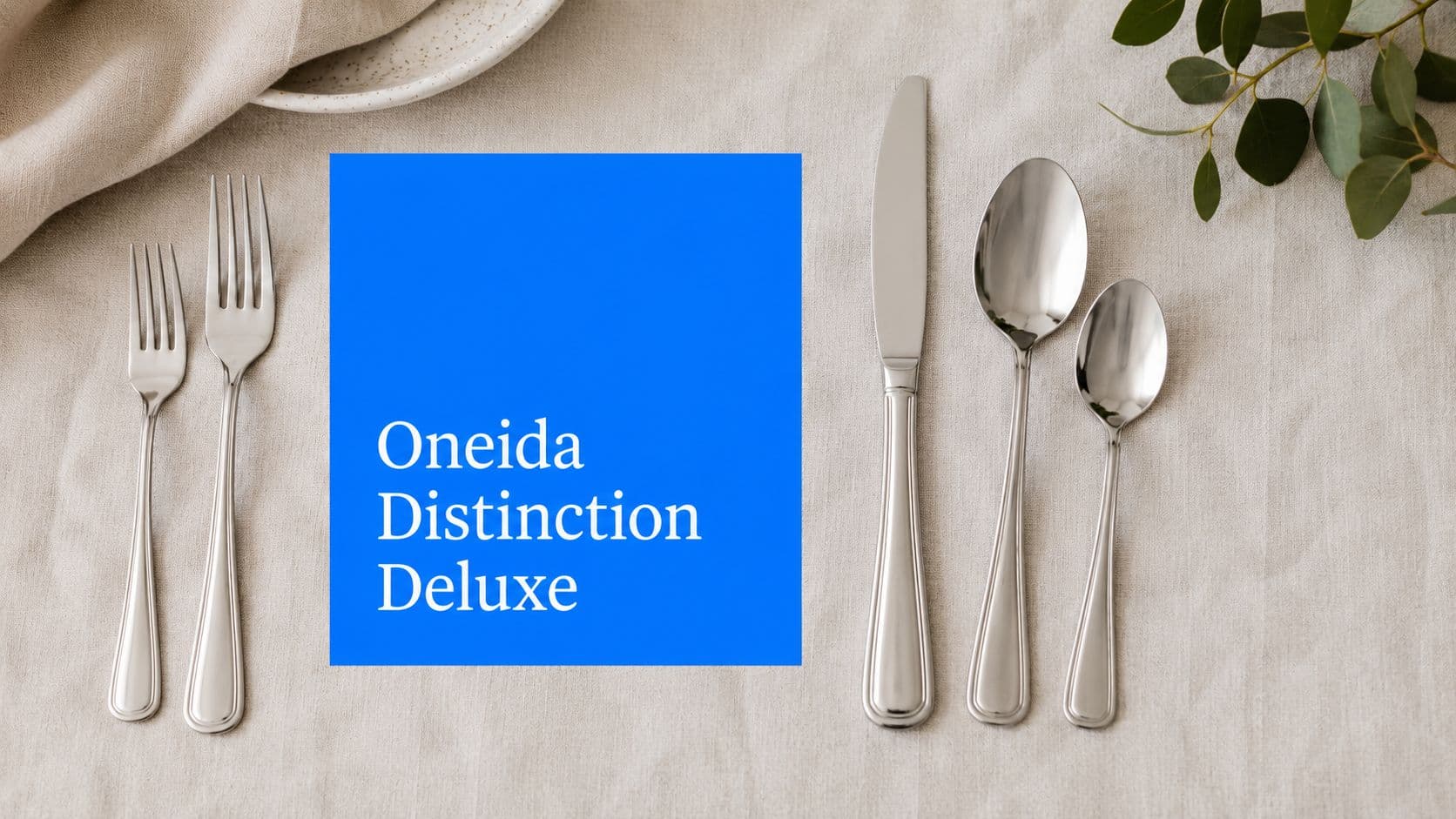
You're standing over a kitchen drawer full of mismatched forks, spoon piles, and one lonely serving knife, trying to decide whether the whole mess is worth the time it'll take to list. That's exactly where Distinction Deluxe Stainless Steel by Oneida HH earns its keep, because the pattern can look ordinary in a quick glance, but the right set, identified correctly, deserves more than a bulk-lot shrug. The trick is simple, treat it like a cataloging job, not a guessing game.
Spotting a Distinction Deluxe Set in the Pile

A seller usually gets this wrong in the first 30 seconds. They see Oneida on a handle, notice the floral look, and assume every similar fork in the drawer belongs to the same value tier. That's how good sets get dumped into a generic stainless pile.
The better move is to treat Distinction Deluxe Stainless Steel by Oneida HH as a discontinued vintage line, not current retail stock. Replacements, Ltd. lists the related Rembrandt (Stainless, Distinction Deluxe) entry as “Discontinued” with an active production window of 1991– in its catalog entry, which tells you the naming belongs to a defined era rather than a current mainstream line. Independent marketplace listings reinforce that vintage identity, with Chairish describing a 43-piece set from the 1990s and Etsy listing similar pieces as vintage flatware. Replacements, Ltd. catalog entry
Practical rule: If the set looks like estate silverware and the name matches a discontinued Oneida pattern family, stop treating it like kitchen clutter.
That distinction matters because discontinued tableware tends to move through secondary markets and estate circulation, not normal retail channels. In plain terms, you're not pricing against Walmart-style replacement stock. You're pricing against what collectors, replacement buyers, and estate shoppers can find.
The selling decision is binary. If the pieces are clearly patterned, matched, and reasonably complete, list them as a set. If they're a random assortment with weak pattern confidence, break them into a drawer lot and move on.
Reading the Backstamp and Confirming the Pattern

Flip every piece over before you do anything else. The backstamp is your anchor, and on vintage Oneida stainless you want the company name, the stainless marking, and the pattern attribution to line up cleanly before you start assigning value.
What the handle should tell you
Distinction Deluxe sits in that ornate Oneida zone where floral and scroll details can make several sub-patterns look cousins at a glance. That's exactly why you don't trust a quick visual match from the front of the handle. Look at the handle shape, the neck transition, and where the decorative work sits on the body of the piece.
A lot of sellers get lazy here and say, “It looks like Oneida, so it must be the same pattern.” That's a mistake. In the antique and vintage market, similar doesn't mean identical, and slight differences in handle form or ornament placement can change how a buyer reads the set.
Use this fast check on each piece:
- Brand name first: confirm Oneida is stamped on the back.
- Stainless marking second: look for Stainless or Stainless Steel.
- Pattern attribution third: verify the handle style matches Distinction Deluxe rather than a look-alike Oneida floral pattern.
- Hollow-handle knives: treat the HH mark as part of the identification process, not a decorative afterthought.
- Repeat the sample check: compare one dinner fork, one teaspoon, and one knife before you assume the whole lot matches.
The reason this matters is simple. A lot that feels “probably Oneida” can still be misfiled if the pattern attribution is off. Oneida-style flatware can be ornate enough to fool the eye, so pattern verification has to come before photos, pricing, or listing titles.
If the backstamp and the handle profile agree, you've got a real candidate. If they don't, don't force the identification. Move the questionable piece aside and price it separately.
Counting Pieces and Mapping the Set Configuration
A Distinction Deluxe set isn't valuable because it has a familiar name. It's valuable because the piece mix tells buyers how useful it is, how complete it feels, and whether it fits a real table. Two lots with the same pattern name can land in very different buckets depending on what's in the box.
Sort by utensil type, not by pile
Start by separating everything into categories. Dinner knives go in one row, dinner forks in another, teaspoons in another, salad or dessert forks in another, and tablespoons in their own group. If the lot includes soup spoons, iced tea spoons, cocktail forks, or serving pieces, put those aside and count them separately.
Here's the practical reason. A mixed inherited set often looks substantial, but a buyer wants to know whether it forms a usable table service or just a partial inheritance bundle. Chairish's 43-piece Distinction Deluxe example includes 11 dinner knives, 9 dinner forks, 5 teaspoons, 7 salad or dessert forks, and 11 table spoons, which is clearly a mixed estate-style assortment rather than a neat boxed retail set. A separate listing for Oneida Colonial Artistry Distinction Deluxe HH shows a 28-piece configuration for service for 4, with 4 dinner knives, 4 dinner forks, 4 teaspoons, 4 soup spoons, 4 salad forks, 4 iced tea spoons, and 4 cocktail forks. 43-piece set example
| Distinction Deluxe Set Configurations Compared | Total Pieces | Dinner Knives | Dinner Forks | Teaspoons | Salad/Dessert Forks | Soup Spoons | Specialty Pieces |
|---|---|---|---|---|---|---|---|
| 43-piece mixed set | 43 | 11 | 9 | 5 | 7 | Not listed | Table spoons, mixed assortment |
| 28-piece service for 4 | 28 | 4 | 4 | 4 | 4 | 4 | Iced tea spoons, cocktail forks |
Sellers often overstate the lot. They might call a mixed drawer “service for 8” because the total count feels large. This approach is unwise. Buyers notice the gap between a true matched place setting and a pieced-together estate lot, and they will quickly discount a sloppy description.
Buyer-facing truth: completeness beats raw count every time, because collectors buy inventory they can use, replace, and sort.
Write the set map down by hand before you list anything. If the counts don't line up cleanly, say so. That honesty protects your price and cuts down on post-sale complaints.
Grading Condition and Documenting Wear
Vintage stainless lives or dies on condition truth. Buyers will forgive ordinary drawer wear. They will not forgive a listing that hides rust streaks, bent tines, knife damage, or sloppy wording that makes a mixed lot sound cleaner than it is.

What matters in vintage stainless
Start with a bright light and a clean towel. Inspect each piece one by one. Look for pitting, the tiny holes that form in the surface. Check for rust spots or discoloration, especially around the neck, the blade edge, and any hidden seam. On knives, inspect the blade for wear and the hollow handle area for damage. On forks, check the tines for bends, tip wear, and rough edges.
Light surface scratches are normal. Do not overplay them. That kind of wear comes with vintage tableware and usually does not scare off a buyer who knows what they are looking at. Corrosion, dark spotting, and shape damage are the problems that drag a set down because they make the lot feel neglected.
Show the truth in your photos. Take one overhead shot of the whole group, then add close-ups of the worst flaw, the cleanest piece, and one sample of each utensil type. If a knife has a stain inside the handle or a fork has a bent tine, show it instead of burying it in the description. If you need a quick reference for how to measure and describe pieces consistently, use measurement standards for item listings.
A clean condition vocabulary keeps your catalog useful:
- Very good condition: light age wear, clean presentation, no major defects.
- Good condition: visible use, but still solid and presentable.
- Flawed condition: noticeable corrosion, spotting, or shape damage that needs disclosure.
- Mixed condition: some pieces cleaner than others, which is common in estate sets.
Mixed condition matters more than sellers admit. A lot with a few bright, sharp pieces and a few tired stragglers is not the same as a fully matched, clean set, and buyers price that difference immediately. Treat the whole lot as a group, then call out the best pieces and the weak ones so no one feels surprised at pickup.
If you want a fast reality check before listing, check your online property value and use that same no-nonsense mindset here. Say what is clean, say what is worn, and say what is damaged. That is how you protect your price and keep complaints down.
Pricing Realistically in the Vintage Flatware Market
Estate sale buyers do not pay for the word “discontinued.” They pay for a clean, usable, correctly matched set, and Distinction Deluxe only earns stronger money when the count is tidy and the finish still looks honest. Treat it like vintage stainless steel, not silver, and price it like household goods with a collector following, not precious metal.

Stainless is valued for wear resistance and appearance. Oneida notes stainless construction with 18% chromium for corrosion resistance and food or cleaning chemical resistance, while 18/10 stainless adds 10% nickel for a softer silver-like luster and extra durability. That is the right frame for pricing. Buyers do not shop these sets like sterling, and they should not be asked to.
A clean Oneida catalog stainless details reference helps keep the listing grounded. Oneida catalog stainless details
Price the set by what is actually there
Start with the piece map, then price the exact lot in front of you. A full matched set with clear backstamp, clean handles, and useful serving pieces deserves a better number than a partial pile with mixed wear. Missing pieces matter more than sellers want to admit, because buyers subtract for every gap before they ever make an offer.
Mixed-count sets need the bluntest pricing. A tray with strong forks and spoons but a thin knife count is not a complete table setting, so do not ask complete-set money. If the lot includes extra serving pieces or duplicate utensils, group them straightforwardly and let the contents drive the price instead of forcing one tidy story.
If you want a fast reality check before listing, check your online property value and apply the same discipline here. Say what is complete, say what is worn, and say what is missing. Buyers respect that kind of listing, and it keeps your negotiation room intact.
Use the market, but use it the right way. For a broader pricing framework on collectibles, the collectible pricing guide is a useful reference when you need to compare condition, completeness, and resale demand without guessing.
Here is the filter I use at the table:
- Strong set: matched pattern, clear backstamp, clean condition, and a useful count.
- Middle set: mostly matched, some wear, and a missing piece or two.
- Weak lot: incomplete, mixed condition, or uncertain pattern confidence.
- Too ambitious: priced like stainless is sterling, which drives buyers away.
The ceiling is limited. These are common estate goods, not rare luxury silver. Price with restraint, keep the description precise, and let the condition and count do the work.
Photographing and Cataloging a Flatware Lot
A mixed tray of Distinction Deluxe can fool a seller fast. The shiny pieces look interchangeable until you slow down and check the count, the backstamp, and the wear. That is where the money sits, especially in lots with strong forks and spoons but a weak knife count.
Set the lot up cleanly before you ever write the listing. A neutral cloth surface beats a busy countertop, and a single overhead shot should show the full group without hiding the odd pieces at the edges. Line the utensils up by type, keep the handles straight, and use side lighting so the pattern stays readable instead of getting washed out by glare.
Then shoot the proof. Take a clear close-up of the backstamp, one representative knife, fork, and spoon, and any mark that affects value, like spotting, bend, or heavy surface wear. For the handling and angles, use the same discipline you'd bring to how to photograph items to sell online. Flatware is small and reflective, so sloppy photos make the whole lot look weaker than it is.
Build the listing around facts buyers can check
Start with the pattern name, then state the count. Put Distinction Deluxe Stainless Steel by Oneida HH in the title once, and leave it there. Do not pad the title with extra keywords. Buyers want the pattern, the count, and the condition, not a search-engine soup.
Your description should read like a clean catalog entry, not a sales pitch. Lead with what the pieces are marked, then spell out the utensil mix, then note wear, missing pieces, and anything that keeps the lot from being called complete. If it is a mixed-count set, say that plainly. If it is a partial service, say that too.
Use the description to separate the strong pieces from the filler. A lot with matched backstamps, clean handles, and useful counts deserves more confidence than a random stainless grab bag, even if both came out of the same estate. The buyer needs to see why this set stands on its own.
For the listing photos, keep the layout simple and orderly. Show the full spread first, then the backstamp, then the best examples of each utensil type, then the flaws. If you are staging the table for a cleaner look, the same habits behind staging for designer photo shoots help here, especially the part about clearing away clutter so the pattern and condition read at a glance.
A good flatware lot should feel easy to verify. The count is clear, the condition is honest, and the buyer can tell right away whether this is a strong Oneida group or just another stainless pile.
Maximizing Returns and Avoiding Common Pitfalls
The quickest way to lose money on Distinction Deluxe is to treat every Oneida piece like it belongs in the same bucket. It doesn't. A well-matched set with the HH knives deserves its own listing if the count is strong, but a partial or uneven lot often performs better as part of a larger Oneida stainless grouping.
Don't misidentify from memory. Don't skip the backstamp close-up. Don't call a mixed 43-piece lot a service for 8 unless the pieces support that claim. And don't ever claim silver plating on a stainless set. Buyers who know the difference will walk immediately.
What to do before you hit publish
- Verify the backstamp: confirm the pattern on the handle and the stamp on the reverse.
- Count by type: separate knives, forks, spoons, and specialty pieces before writing the listing.
- Disclose condition clearly: note rust, wear, scratches, and handle issues in plain language.
- Use honest grouping: bundle partial sets if that creates a stronger overall lot.
- Set the starting price with restraint: high enough to respect the set, low enough to invite bids.
If you're doing video for the listing, keep the script short and concrete. Show the pattern, the counts, and the worst flaw. That's the same discipline used in scripting product videos that convert, except here the goal is trust, not hype.
The best sellers don't try to make vintage stainless sound rare when it isn't. They present it cleanly, price it fairly, and let the right buyer find it. That approach gets the lot sold, keeps pickup day smooth, and avoids the embarrassment of a relisted drawer full of forks.
If you've got a box of Oneida stainless waiting to be sorted, start with the backstamp, count every piece, and photograph the set before you touch the price field. Then list it with the exact pattern name, the actual piece count, and an honest condition note on DIYAuctions, because that's the fastest way to turn inherited flatware into cash without guessing wrong.
More guides in Selling Antiques & Collectibles
July 31, 2026
Ceramic Christmas Tree Atlantic Mold Seller's Guide
Identify, value, and sell a Ceramic Christmas Tree Atlantic Mold piece with confidence. Covers markings, rarity, condition, pricing, and listing tips.
Read guideJuly 30, 2026
Nurre Mirror Value: How to Identify and Sell for Profit
Learn to assess nurre mirror value with our step-by-step guide. Identify authentic pieces, estimate price, and sell profitably on DIYAuctions.
Read guideJuly 27, 2026
How to Price Sports Memorabilia for Maximum Returns
Learn how to price sports memorabilia using real sold comps, grading multipliers, and auction strategies. A practical guide for estate sellers and collectors.
Read guideGet the estate sale pricing guide
Enter your email for pricing ranges, planning notes, and a clearer path to launch.