Nurre Mirror Value: How to Identify and Sell for Profit
Learn to assess nurre mirror value with our step-by-step guide. Identify authentic pieces, estimate price, and sell profitably on DIYAuctions.
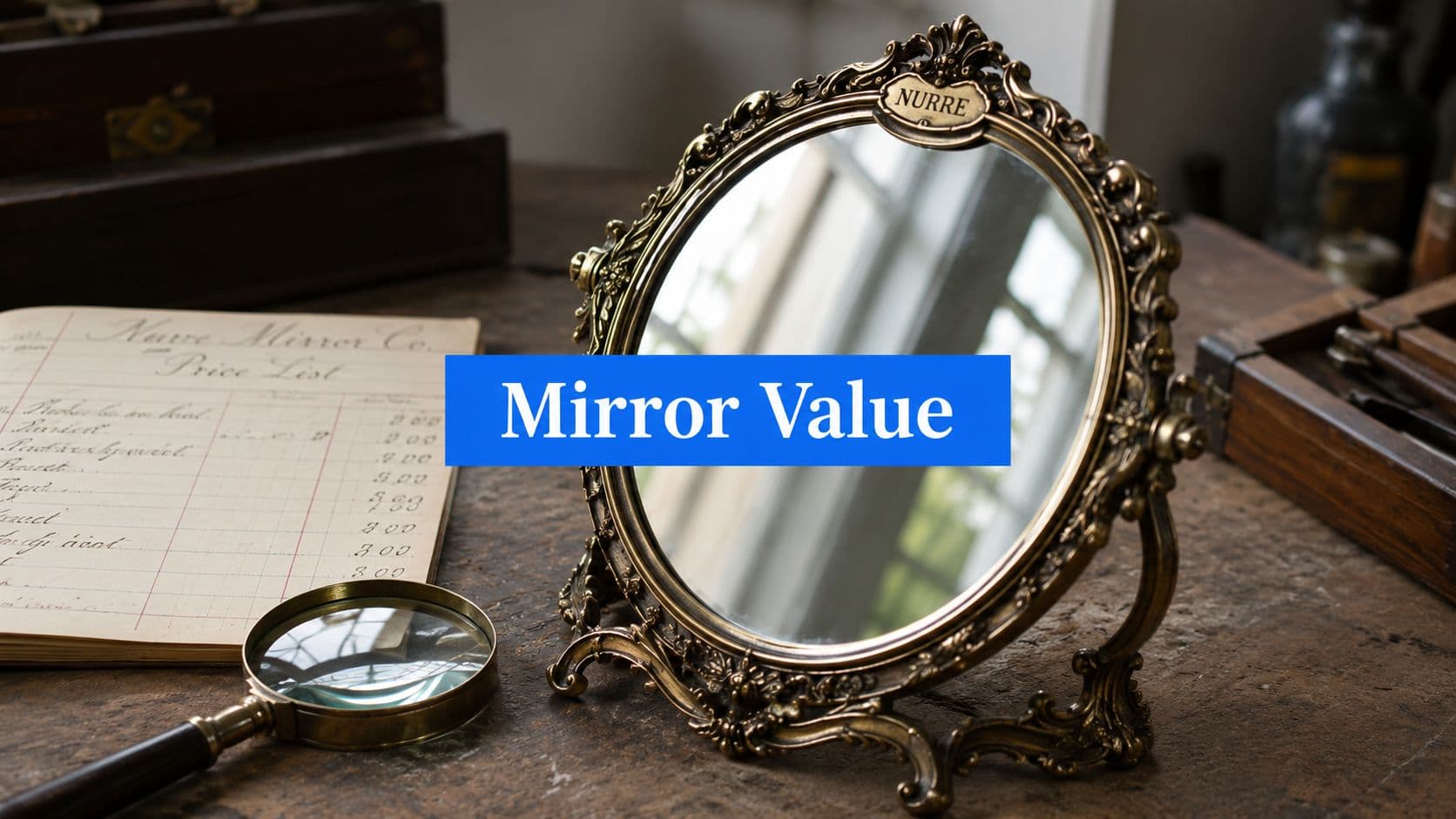
You've got a heavy ornate mirror in front of you, the kind that came down from a parent's house or surfaced during an estate cleanout, and the only question that matters is simple, what's it worth? A Nurre mirror can sit anywhere between ordinary wall decor and a piece that serious buyers want to inspect closely, so guessing by style alone usually leads to a bad listing price or a rushed selloff. The right move is to treat it like a crafted antique first, because mirrors have been high-status objects for thousands of years, long before modern glass changed how reflection was made, with polished obsidian mirrors at Çatalhöyük dated to around 6000 BCE, polished copper mirrors in Mesopotamia from about 4000 BCE, and in ancient Egypt from around 3000 BCE mirror history.
Understanding Nurre Mirror Value and Why It Matters
A common estate-sale mistake is to see a decorative mirror and stop there. A Nurre piece deserves a closer look because value isn't driven by appearance alone, it comes from identity, age, construction, and condition. The market keeps rewarding buyers who can tell the difference between a later wall mirror and an authentic older example, especially when the piece still shows period materials and original structure.
The historical context matters because mirrors were never just casual household objects at the start. They were crafted from stone, copper, and later glass, which means antique examples often carry both material and historical weight. That's why a Nurre mirror that looks “old enough” can still be priced wrong if the backing is replaced or the glass has been swapped.
What value really comes from
For a seller, the job is to separate three things. First, whether the mirror is a Nurre. Second, whether the parts still match its period. Third, whether the condition supports resale or only salvage. When those three line up, the mirror stops being a guessing game and starts becoming a listing with a credible price story.
Practical rule: Don't price a Nurre mirror by decoration alone. Price it by original glass, original backing, and the amount of honest age still visible in the piece.
That's the mindset that keeps sellers from underpricing something collectible or overpricing a mirror that's mostly a later reconstruction. If you're clearing a home or preparing an estate sale, the next step is a careful identification pass before you write a description or set a starting bid.
Identify a Genuine Nurre Mirror

A genuine Nurre mirror needs more than a decorative frame to prove itself. The technical clue that matters is the glass itself, because genuine Nurre mirrors were made of plate glass with surfaces ground and polished to smooth parallel planes Nurre technical description. That kind of construction is different from a modern replacement pane that just looks vintage from across the room.
Start with the glass surface
Run your eye across the reflection in good light. Original plate glass usually reads as flatter and more settled, while a replacement often looks too perfect or too uniform in a way that feels newer than the rest of the piece. If the reflection seems unusually clean but the frame shows age, that mismatch is worth investigating.
Look at the edges too. Period glass can show subtle irregularity, and the surface may carry age marks that don't look like intentional distressing. That doesn't mean damage by itself, it means the mirror may still be carrying the visual evidence collectors want.
Check the backing and attachment points
The backing tells another part of the story. A period-correct backing usually fits the age of the frame and the attachment method, while a later paper backing or obviously modern replacement material can reduce confidence in authenticity. Original hardware, old screws, and wear that matches the back of the frame all help the case.
You can use a quick field test before listing. If the back looks too new, too flat, or too clean compared with the frame, pause before you call it antique.
- Inspect the planes: Hold a straight visual line across the glass and watch for inconsistency in reflection.
- Study the back: Look for old wood, maker marks, and age-consistent attachment methods.
- Compare the parts: The frame, backing, and glass should look like they aged together.
- Flag replacements: Paper backing or obviously fresh hardware usually means later intervention.
For a broader checklist on sorting antiques before you write a listing, the DIYAuctions antique identification guide is useful because it pushes you to verify materials before you assign value.
Assess Condition and Provenance

Condition is where sellers often leave money on the table. A Nurre mirror does not need to look pristine to bring a fair price, but it does need to read as authentically aged. Industry guidance for antique mirrors points to wooden backs and maker marks as positive signs, while paper backing often suggests a later replacement condition guidance.
Use a simple condition score
Start at the back, because that is usually the fastest way to separate original construction from later work. Then move to the glass surface, where cloudy blotches, a slight grey or yellow tint, and small bubbles fit the look of age, while perfectly clear glass often points to a newer piece condition guidance. Finish with the frame, since chips, repairs, and worn gilding show buyers how much of the original surface survived.
Here is the practical breakdown I would use before photographing a Nurre mirror for sale:
- Backing Type: Original wood or period material supports age, paper backing raises suspicion.
- Glass Patina: Look for foxing, cloudy spots, slight tint, and tiny bubbles.
- Frame Wear: Record scratches, chips, repairs, and worn edges accurately.
- Hardware Integrity: Check hanging wires and brackets for stability before any pickup.
Cracks reduce value, but they do not tell the whole story. A crack lowers the price, while oxidation and other age-related imperfections can make a mirror more appealing because they show real wear instead of a surface that was artificially distressed. That is the kind of difference buyers notice immediately.
A mirror with honest patina and original parts usually sells better than a bright replacement that only looks finished.
Provenance adds another layer, even when the mirror itself is the main draw. Keep any labels, dealer tags, family history, or old inventory notes with the piece, because a clear chain of ownership helps buyers feel more comfortable. If you are building a listing, compare what you see against the DIYAuctions guide to determining fair market value so the condition notes and the asking price line up.
If you can document the back, the glass, and the frame in one calm pass, you are no longer guessing. You have a condition report that a buyer can understand and trust.
Find Comparable Sales and Estimate Value
A usable price starts with comparable sales, not optimism. For antique mirrors, the verified market bands are wide enough to matter. Small unadorned shaving mirrors may sell for about $150 to $300, while large ornate pier or overmantel mirrors can bring $2,000 to $10,000+, depending on size, frame quality, and remaining mercury plate. That spread is why the same “old mirror” can be a modest listing or a serious estate item, and it is the reason I start with construction before I start with a number. antique mirror market bands
Read the price band against your mirror
A Nurre mirror with original plate glass and a strong frame sits much closer to the upper logic of the market than a replaced, heavily altered piece. A smaller example with plain styling and replacement backing belongs in the lower band, even if it still looks attractive on a wall. Value tracks originality and presentation together, and buyers notice that quickly when they compare listings side by side.
| Mirror Type | Sale Price Range | Key Value Drivers |
|---|---|---|
| Small unadorned shaving mirror | $150 to $300 | Size, simplicity, condition |
| Large ornate pier or overmantel mirror | $2,000 to $10,000+ | Size, frame quality, remaining mercury plate |
The best comp set comes from sold examples that resemble yours in scale, ornament, and construction. Once you know the mirror's backing, glass, and frame condition, compare it against estate sale results and auction archives with a sharper eye. The DIYAuctions pricing guide for fair market value is useful here because it keeps the process grounded. Identification comes first, then comparable sales, then price.
For a liquidation listing, use a range instead of forcing one number. A mirror with original parts, honest wear, and a clean presentation can sit at the higher end of that range. A piece with replacement backing, heavy repairs, or unclear construction needs a lower anchor, even if the form is attractive. Buyers usually respond better to a realistic price than to a speculative one that invites silence.
If you are packing the mirror before pickup or transport, follow tips from Get n Go Removals Melbourne so the condition you priced is the condition that arrives. For a DIY sale, that matters as much as the estimate itself.
Choose DIY Sale or Professional Appraisal
If the mirror is clearly important, you may be weighing a formal appraisal against a do-it-yourself sale. The right choice depends on how much certainty you need and how much control you want to keep. For inherited items headed to liquidation, the practical question is whether the mirror needs a certified valuation or a defensible selling range.
Compare the two paths
A professional appraisal gives you documented valuation and extra credibility, which can help with unusual or especially significant pieces. A DIY estate sale keeps you in control of pricing, photos, timing, and pickup. DIYAuctions uses a 10% commission model capped at $1,000, which means you keep more of the sale proceeds while running the listing yourself, and that can make sense when the mirror is valuable but not so exceptional that it needs formal certification.

A good rule of thumb is simple. If the mirror has obvious originality, clear age markers, and no unusual historical importance, a DIY path is often enough. If the piece has unclear provenance, unusually strong craftsmanship, or family concern about insurance or estate documentation, a formal appraisal may still be worth it.
For fragile handling before any sale, the practical packing advice in tips from Get n Go Removals Melbourne is relevant because mirrors fail during transport more often than they fail on the wall. Protecting the frame and glass matters whether you're moving the piece to a buyer or staging it for photos.
The decision table is straightforward. DIY works best for common-to-solid antique mirrors where condition and presentation drive demand. Professional appraisal fits the pieces where provenance is part of the price story, not just the object itself.
Maximize Resale Value on DIYAuctions
Photos decide whether a buyer scrolls past or clicks in. For a Nurre mirror, shoot in natural light, because that's where the patina, edge wear, and frame details read true. Don't over-edit the image or hide aging, since buyers who want an antique mirror expect to see the same surface character they'll receive at pickup.
Write for confidence, not drama
A strong listing says what the mirror is, what it isn't, and what parts appear original. Name Nurre in the title, mention the glass if it appears original, and describe the backing with plain language. The DIYAuctions estate sale listing guide is a helpful framework because it keeps the listing organized around clear item details instead of vague sales copy.
A good description should include:
- Identity: State the Nurre attribution clearly if the mark or construction supports it.
- Glass: Note original-looking plate glass, replacement glass, or uncertainty.
- Condition: List foxing, gray tint, chips, repairs, and frame wear without softening the facts.
- Pickup: Say whether the mirror needs careful handling or extra help.
Starting bids should feel attractive but not careless. If you set the floor too high, buyers hesitate. If you set it too low, you can create noise without enough confidence. The best listings make the mirror's age and originality easy to see, then let the bidding reflect that story.
Selling rule: Let the photos prove the patina, then let the description explain why that patina matters.
A single-day pickup also works well for mirrors because it keeps the logistics focused and reduces the chance of damage during a long move period. When the listing is specific and the condition notes are honest, bidders tend to trust the process faster.
Your Nurre Mirror Value Action Plan
Start with the object in your hands, not a guess from the frame style. Confirm whether the glass feels like original plate glass, check the backing for period consistency, and note the patina, wear, and any repairs in a simple condition report. Then compare that report to comparable sales bands, because $150 to $300 and $2,000 to $10,000+ sit in very different parts of the antique mirror market antique mirror bands.
If the piece fits a clear resale profile, list it with precise photos and a straight description. If the provenance feels uncertain or unusually important, bring in a professional appraisal before selling. Either way, the mirror becomes much easier to value once you've separated authenticity, condition, and presentation.
The fastest path from inherited object to cash is a clean listing and a controlled pickup schedule. Create the listing, show the patina, and let buyers respond to the authentic mirror instead of a wishful label.
Ready to turn a Nurre mirror into a saleable estate item? Photograph the back, document the glass, and create your listing with a realistic price range today, then schedule a single-day pickup so the mirror moves safely and you keep control of the sale.
More guides in Selling Antiques & Collectibles
July 31, 2026
Ceramic Christmas Tree Atlantic Mold Seller's Guide
Identify, value, and sell a Ceramic Christmas Tree Atlantic Mold piece with confidence. Covers markings, rarity, condition, pricing, and listing tips.
Read guideJuly 29, 2026
Distinction Deluxe Stainless Steel by Oneida HH: A Complete
Learn to identify, assess, and price your distinction deluxe stainless steel by oneida hh set for maximum profit.
Read guideJuly 27, 2026
How to Price Sports Memorabilia for Maximum Returns
Learn how to price sports memorabilia using real sold comps, grading multipliers, and auction strategies. A practical guide for estate sellers and collectors.
Read guideGet the estate sale pricing guide
Enter your email for pricing ranges, planning notes, and a clearer path to launch.