A Guide to Profitable Garage Estate Sales
Turn clutter into cash with our expert guide to garage estate sales. Learn proven strategies for planning, pricing, and marketing your sale for maximum profit.
Thinking about selling off a bunch of household items? A garage estate sale might be exactly what you need. It’s a smart way to liquidate a home's contents by blending the easy-access feel of a garage sale with the thoroughness of an estate sale. This isn't just about clearing out junk; it's a strategic event designed to maximize profit and make downsizing, relocating, or handling an inheritance a whole lot easier.
Understanding the Modern Garage Estate Sale
Think of a garage estate sale as your blueprint for turning a house full of belongings into cash, and doing it efficiently. Unlike a typical weekend garage sale you throw together with leftover odds and ends, this kind of sale takes more planning. It usually involves a much larger volume of stuff, from big-ticket items like furniture and appliances to collectibles and everyday kitchen gadgets. Essentially, it’s a full home liquidation that you host and control right on your own property.
This hands-on approach has some serious perks:
- Keep More of Your Money: You set the prices and hold onto a much bigger slice of the profit. Traditional estate sale companies often take a hefty 30-50% commission, which really adds up.
- You're in Charge: From the timeline to the pricing strategy, you call all the shots. It’s your sale, your rules.
- Simple Logistics: Selling everything over a weekend saves you from the slow grind of listing items one-by-one online or hauling carloads of stuff to donation centers.
Before you get started, it's helpful to know which type of sale best fits your situation.
Garage Sale vs Estate Sale What Is the Difference
This quick comparison should help you decide whether a casual garage sale or a more structured estate sale is the right move for you.
| Feature | Typical Garage Sale | Organized Estate Sale |
|---|---|---|
| Scope | A few dozen to a hundred items. Mostly small goods, clothes, toys. | The entire contents of a home, including furniture, art, and appliances. |
| Goal | Clear out clutter and make a little extra cash. | Liquidate assets, often due to a major life event like moving or death. |
| Pricing | Low prices, often based on guesswork. Haggling is expected. | Items are researched and priced closer to their market value. |
| Timeline | Minimal planning. Usually set up over a day or two. | Requires weeks of planning, sorting, pricing, and marketing. |
Ultimately, a garage estate sale gives you the comprehensive scope of an estate sale with the DIY control of a garage sale—the best of both worlds.
The Decluttering Connection
The first real step toward a great sale is getting organized. Adopting effective decluttering strategies is essential for sorting through everything before you even think about pricing. It’s no surprise that people are more focused on organized living than ever. In fact, the global garage storage market is on track to hit $45,573.23 million by 2033, which shows just how much we all want clean, functional spaces.
Taking the time to sort properly is the foundation of a successful sale. If you're staring at a mountain of stuff, our guide on how to declutter a garage gives you a clear, step-by-step process to get started.
The whole workflow really boils down to three main stages: sorting, selling, and cleaning.

Breaking it down into this simple, three-part process keeps things from getting overwhelming. Just focus on one stage at a time, and you’ll be able to manage the entire event smoothly, ending up with a clean house and the best possible financial return.
Planning Your Sale and Navigating Local Rules
A profitable garage estate sale is built on a solid foundation of planning. I’ve seen it time and time again—the success of your event often comes down to the small, strategic decisions you make weeks before the first customer even thinks about showing up. Rushing the process is a recipe for stress and, frankly, lost money.
Choosing the right date is so much more than just picking a free weekend. You have to start thinking like a buyer.
Before you circle a date on the calendar, do a little recon. Hop online and check your local community calendars for competing events. Is there a big festival, a parade, or a major sporting event that could pull your potential customers away? Pay attention to holidays, too. A three-day weekend might seem like a great idea, but a lot of families use that time to travel, which can seriously shrink your pool of local shoppers.
Choosing the Perfect Sale Date
Timing your sale can make or break your weekend. A little bit of strategy here can dramatically boost your foot traffic.
Here’s what I always consider before locking in a date:
- Weather Patterns: Always check the long-range forecast. An oppressively hot or rainy weekend can kill turnout, scaring off even the most dedicated bargain hunters. Spring and early fall are usually the sweet spots.
- Payday Weekends: This is a classic pro tip for a reason. Hosting your sale on the first or last weekend of the month often lines up perfectly with when people get paid. Shoppers with fresh cash in their pockets are often more willing to spend.
- Local Sale Culture: Every town is a little different. In some neighborhoods, Friday is the big day for serious pickers and resellers looking for the best stuff. In others, Saturday morning is prime time for families. Spend a few weeks observing local sale listings to get a feel for the rhythm in your area.
A well-timed sale avoids competition and taps into peak local interest. An hour spent researching local events now is far more valuable than hours spent sitting alone at a sale with no customers later.
Understanding Permits and Signage Rules
Nothing shuts down a sale faster than a surprise visit from a code enforcement officer. Trust me, you don't want that headache.
Many cities, and especially homeowner associations (HOAs), have very specific rules you have to follow. Before you do anything else, a quick Google search for "[Your City] garage sale permit" will tell you what you need to know.
You might find out you need to pay a small fee for a permit, or that you're limited to only a couple of sales per year. More importantly, nearly every single municipality has strict rules about where you can place signs. Taping a sign to a utility pole or a stop sign might seem harmless, but it can land you a hefty fine. Always check your city’s official website for the rules on sign placement, size, and how long they can be up.
For a deeper dive into the specific legalities that can impact your event, you can learn more about estate sale laws to ensure you’re fully compliant.
Taking care of this stuff upfront prevents costly fines and makes sure your sale runs smoothly from start to finish. A simple checklist can help break the whole planning process into manageable, bite-sized tasks.
Pricing and Staging: The Keys to a Profitable Sale
How you price and display everything is where the magic happens. This is what separates a disappointing Saturday from a truly profitable one. Good pricing and thoughtful staging don’t just make your stuff look better; they create a real shopping experience that justifies your prices and gets people excited to buy.

You need to shift your mindset from "cluttered garage" to "curated pop-up shop." I promise, that mental switch makes a huge difference in how buyers see the value of what you’re selling.
Smart Pricing Strategies That Actually Work
Pricing is definitely part art, part science. You want to move items quickly, but you also want to get what they're worth. The biggest mistake people make is just guessing. A little bit of research pays off, big time.
Before you stick a price tag on anything, hop onto sites like eBay or Facebook Marketplace and check their "sold" listings for similar items. This tells you what people are actually paying, not just what other sellers are asking for. For a much deeper dive, our comprehensive estate sale pricing guide has more advanced techniques.
Here are a few practical methods I've seen work wonders:
- Color-Coded System: Grab a few different colors of sticker dots and assign a price to each color ($1, $5, $10, etc.). Then, just post a big, clear sign explaining the system. It saves you from pricing every single little thing and makes it easy for shoppers.
- Bundle Up: Group small, low-value things together. Think a bundle of kitchen gadgets for $5 or a bag of kids' books for $10. It feels like a better deal and is way easier than trying to sell dozens of items for 25 cents apiece.
- The Power of $5: It’s a fascinating statistic, but the average item at a garage sale sells for under a dollar. Research actually shows the sweet spot for moving lots of items is $5. It’s a price point that feels like a bargain to the buyer but adds up quickly for you.
Stage Your Space to Sell
Look, presentation is everything. A clean, organized space feels more professional and helps people find what they’re looking for without feeling overwhelmed. Think of it as merchandising your own home for a day.
First things first: clean everything. A simple wipe-down can make an old item look ten times better. After that, arrange your items logically to create a natural shopping flow.
The ultimate goal of an estate sale is to clear out the estate. If you make it easy for people to shop, you make it easy for them to buy. A little effort in staging pays for itself.
Group similar items together. This one simple step transforms a chaotic pile of stuff into a collection people actually want to browse. It makes your sale feel less like a clearance and more like a curated event.
Create Themed Shopping Zones
Organizing your sale into logical sections is a game-changer. It helps shoppers navigate your inventory and often leads them to things they didn't even know they were looking for.
Try setting up a few dedicated zones:
- The Kitchen Corner: Put all the plates, glassware, small appliances, and utensils together. Throw a clean tablecloth over the table to make it feel more inviting.
- Gardening & Tools: Arrange tools, planters, and outdoor gear in one spot, preferably near the garage door for easy loading.
- Living Room Showcase: Display home decor, lamps, and small furniture as if they were in a room. This really helps buyers visualize the pieces in their own homes.
And one last pro tip: have an extension cord and power strip plugged in and ready to go. Making it easy for customers to test electronics builds trust and can lock in a sale on the spot.
Marketing Your Sale to Attract Eager Buyers
You can have the best stuff in the world, but if nobody knows about your sale, you'll be sitting alone in your driveway all weekend. Getting the word out is what separates a blockbuster sale from a total bust. The most effective approach today is a hybrid one—blending the old-school reliability of physical signs with the incredible reach of online marketing.
This two-pronged strategy ensures you catch everyone. You'll get the local bargain hunters who are just driving by, as well as the serious collectors miles away who are searching online for that one specific thing you have.
Start your marketing push about a week before the sale. The idea is to build some buzz and get your event onto people's calendars before they make other plans.
Crafting Can't-Miss Physical Signs
Never, ever underestimate the power of a good, old-fashioned sign. For a huge portion of garage sale shoppers, those bright signs on a street corner are the only way they find out about sales.
Visibility and clarity are everything. This isn't the time for fancy handwriting.
Grab some brightly colored poster board—neon green or hot pink are perfect—and a thick black marker. Keep the message dead simple and bold enough to read from a moving car:
- "ESTATE SALE" in massive letters at the top.
- The full address right under it.
- Dates and times that are big and clear.
- A huge, unmistakable arrow pointing the way.
Blanket your area with these. Put one at every major intersection nearby and at every single turn someone would need to make to get from that main road to your house. You're literally creating a trail of breadcrumbs that leads shoppers right to your door.
Creating Compelling Online Listings
Your online presence is your secret weapon. This is where you'll hook the serious buyers and collectors—the people willing to spend real money on your high-value items. It's how you can pre-sell your best pieces before the first person even shows up.
When you list your sale on places like Facebook Marketplace, Craigslist, or local community groups, your photos do all the heavy lifting. Get your phone out and take well-lit, clear pictures of your "star" items. We're talking quality furniture, unique collectibles, brand-name tools, and anything else that stands out.
Using a platform like DIYAuctions makes this part incredibly easy, letting you build a professional-looking online catalog that draws in a much wider, more serious audience.
When you write your ad, create a title packed with keywords. Something like, "Huge Garage Estate Sale in Springfield - Antiques, Tools, Furniture" works wonders. In the description, call out some of your most desirable items by name. This creates a sense of excitement and gets people invested before they even leave their house.
A well-crafted online ad does more than just announce your sale; it’s a digital preview that gets buyers hooked. A few great photos of key items can pull in niche collectors who would have driven right past a simple street sign.
To really put your sale on the map, you can even explore tools designed for local businesses. Understanding the basics of setting up a Google Business Profile, for instance, can help your sale appear in local search results, maximizing your foot traffic from the moment you open.
Managing the Sale Day Rush and Payments
When your sale day finally arrives, being organized is everything. The moment that first eager shopper pulls up, how you manage the flow of people and money will make or break your day's success. A little prep work here goes a long way in preventing chaos and making sure you don't miss out on a single sale.
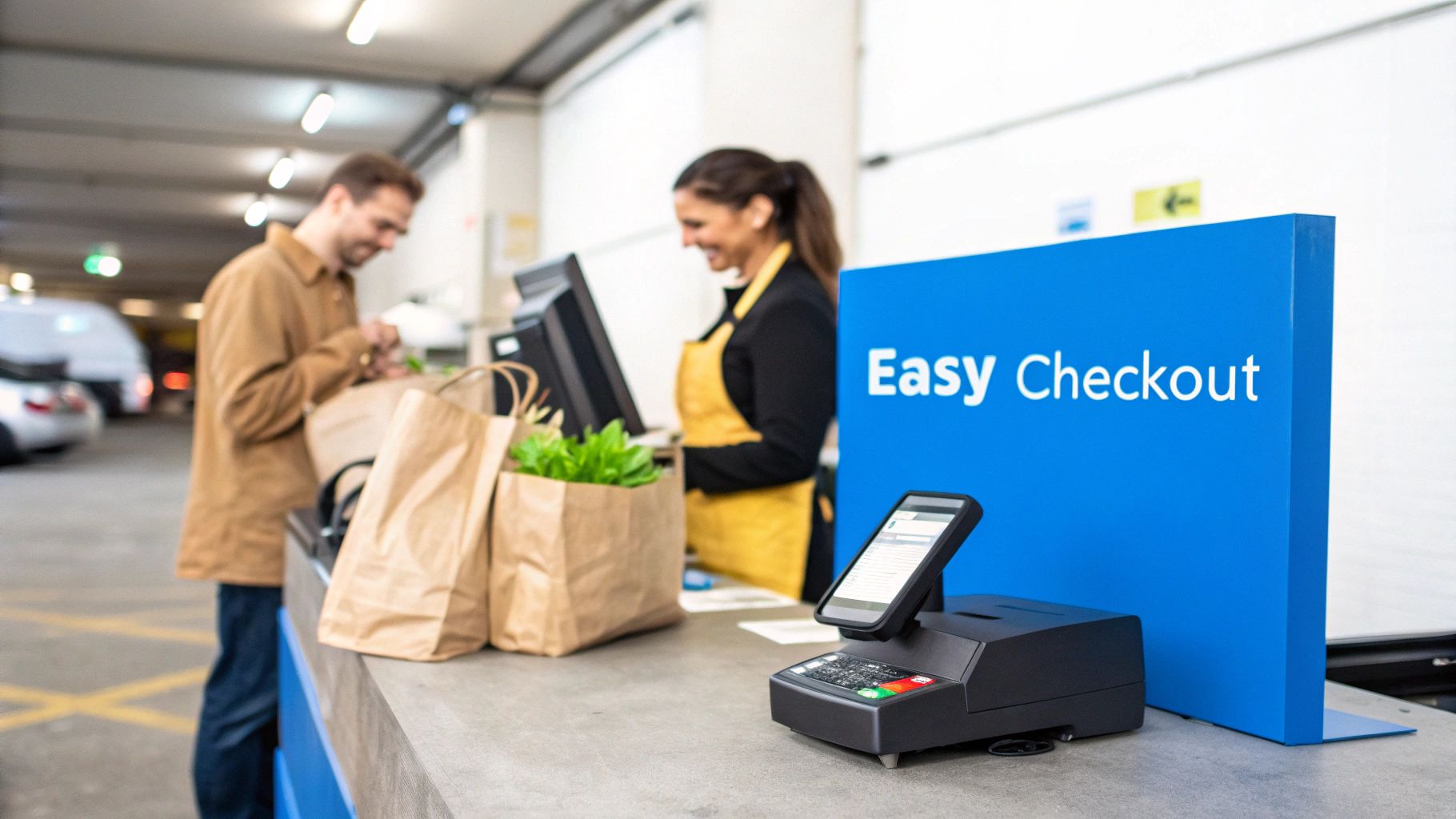
First things first: set up an obvious and efficient checkout station. You don't want people wandering around trying to figure out where to pay you. A dedicated table near the exit is perfect. Make sure you have a comfortable chair, a calculator, and all your payment gear ready to go.
You’ll also need a cash box or even a fanny pack with plenty of small bills and coins. I always tell people to start with at least $100 in ones, fives, and quarters. Running out of change is one of those classic mistakes that can grind your whole sale to a halt. It’s also smart to have a stash of bags, newspaper for wrapping delicate items, and a few boxes on hand. Shoppers really appreciate it, and they’re more likely to buy more if they know they can carry it all home easily.
Embracing Digital Payments and Security
Look, cash is still a big part of garage sales, but refusing digital payments these days is like turning away free money. A lot of shoppers, especially the younger crowd, just don't carry much cash anymore.
Setting up a couple of payment apps is one of the simplest things you can do to boost your total sales. Before the big day, get these ready:
- Venmo or Zelle: These are fantastic for quick, fee-free transfers straight from their bank to yours.
- Square or PayPal: With these, you can take credit cards, which is a massive advantage for those bigger-ticket items like furniture or appliances.
Just make a big, easy-to-read sign with your usernames and QR codes and place it right on your checkout table. It's a simple touch that can save sales that would have otherwise walked away.
Don't let a lack of cash be the reason you lose a sale. Offering multiple payment options is one of the easiest ways to boost your profits and cater to modern buying habits.
Security is another thing you can't overlook. When you set up your tables and displays, try to create clear pathways and get rid of any blind spots. I always keep the high-value, pocket-sized stuff—like jewelry or collectibles—right up by the checkout area where I can see them. If you can, enlist a friend or family member to help out. An extra pair of eyes is priceless for watching the crowd and keeping things from walking off.
Finally, get ready to negotiate. Haggling is just part of the fun, but don't feel pressured to give away your best items for a steal, especially early in the day. A great little trick is to offer bundle deals. If someone is looking at a few things, you can say something like, "Take all three for $20." It keeps inventory moving, makes the shopper feel like they scored a great deal, and keeps the positive energy flowing all day long.
Handling Leftovers and Maximizing Your Profit
The last customer just drove away, but your job isn't quite over yet. What you do with what’s left behind is the final, and most critical, step. It’s what separates a good sale from a great one, ensuring you meet your decluttering and financial goals.
Think of this as the final push. Your mission is to clear the space completely, not just create new piles of "I'll deal with this later" clutter that will haunt you for weeks.
Creating Your Post-Sale Plan
The secret is to sort everything left into three simple buckets. This isn't the time for sentimental deliberation; it's about making quick, decisive choices to wrap things up efficiently.
Here’s the framework:
- Keep: These are the few items you’ve genuinely rediscovered and want back in your life. Be honest with yourself—if you didn't miss it before the sale, you probably don’t need it now.
- Sell Online: This is for your higher-value or niche items that just didn't connect with the local crowd. Think vintage cameras, specific collectibles, or that pristine set of tools.
- Donate or Dispose: Everything else lands here. This pile covers items you can donate for a tax write-off and things that have truly reached the end of their useful life.
This structured approach is more relevant than ever. With secondhand shopping booming—driven by both environmental awareness and savvy economics—people are actively looking to give used goods a new home. This trend is especially strong in cities like Los Angeles and Chicago, and you can learn more about 2025 estate sale trends on acadianagold.com.
Don't let the cleanup drag out. You have momentum on your side, so use it. Make it a goal to have every unsold item sorted and out of the house within 48 hours of the sale's end.
For those valuable items in your "sell online" pile, platforms like eBay or Facebook Marketplace are solid choices for reaching a wider audience. But for a really powerful final clean-out, consider a service like DIYAuctions. It’s like a second-chance sale, letting you sell the remaining inventory to a broad, motivated online audience without the headache of managing dozens of individual listings.
This final step is how you truly maximize your profit and, most importantly, reclaim your space.
Common Questions About Garage Estate Sales
Even with the best-laid plans, you're going to have questions. It’s completely normal, especially if this is your first time steering the ship. Let's tackle some of the most common things people ask when they're running a garage estate sale.
Should I Hire a Pro or Just Do It Myself?
This is the big one, the first major decision you'll make. Bringing in a traditional estate sale company can certainly take a lot of work off your plate, but it comes with a hefty price tag—they’ll often take 30-50% of the final sales right off the top.
The alternative is a DIY approach. Using a modern platform like DIYAuctions puts you in the driver's seat, letting you keep up to 90% of the profit while still getting the professional marketing and secure payment processing you need. The right call really boils down to what you have more of: time or a desire to maximize how much money you walk away with.
The goal is always the same: clear out the home and get the best possible value for what's inside. You just have to weigh the high commission of a full-service company against the control and much higher profit you'll get by managing the sale yourself.
How Many Days Should My Sale Run?
From my experience, the sweet spot for a garage estate sale is two days. A Friday and Saturday combination is usually perfect.
This setup gives the eager "early birds" and serious resellers a shot on the first day, while the more casual weekend bargain hunters can swing by on the second. If you try to stretch it into Sunday, you'll likely see diminishing returns. Your best stuff is gone, and the foot traffic drops off a cliff.
What if I Find Something That Seems Really Valuable?
This happens more often than you'd think. If you stumble upon something you suspect is a high-value item—like genuine antiques, fine art, or rare collectibles—pause before you slap a price tag on it. It’s always a smart move to get an informal appraisal first.
For those truly special pieces, a local garage sale isn't your best venue. Instead, consider listing them through an online auction. This exposes your items to a global audience of dedicated collectors who actually know what they're worth. You're far more likely to get a fair price from a specialist than from a local shopper just looking for a deal.
More guides in Estate Sale Basics
July 28, 2026
Revenue Reporting for Estate Sales and Auctions
Learn revenue reporting essentials for estate sales and auctions. Discover key metrics, templates, and best practices to simplify tracking and compliance.
Read guideJuly 26, 2026
Stamp Collection Valuation: A Practical Step-by-Step Guide
Stamp collection valuation made simple. Learn how to identify, grade, price, and sell your stamps with confidence for estate sales or consignment.
Read guideJuly 23, 2026
Estate Sales Brick NJ: Your 2026 Guide to Success
Planning your estate sales brick nj? Our guide covers permits, pricing, marketing, & running a safe sale with DIYAuctions.
Read guideGet the estate sale pricing guide
Enter your email for pricing ranges, planning notes, and a clearer path to launch.