How to Sell Your Longaberger Canister Set for Top Dollar
A step-by-step guide for estate sellers on how to identify, value, photograph, and sell a Longaberger canister set to maximize your return. Learn pro tips.
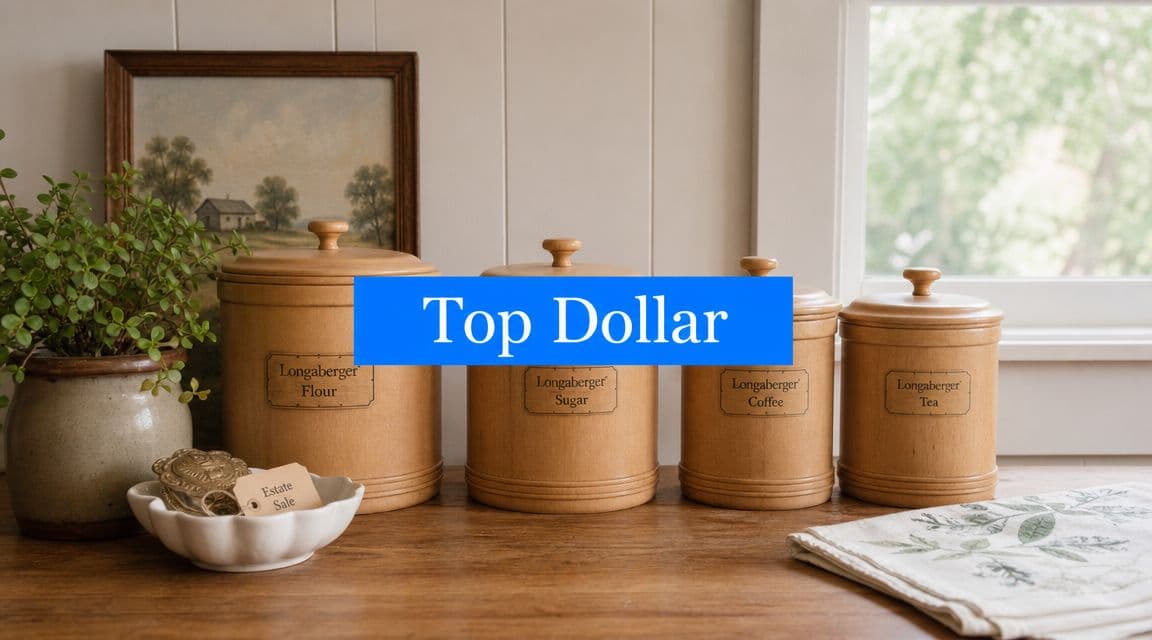
You're clearing a pantry, sorting an attic, or emptying a parent's kitchen and you pull out a nested set of Longaberger canisters with lids still stacked inside. That's the moment most sellers make the same mistake. They either toss the set into a garage sale pile, or they list it fast with a vague title and weak photos.
A Longaberger canister set deserves a more deliberate approach. These pieces sit in the sweet spot between household storage and collectible décor, which means buyers care about details. They want to know whether the set is complete, whether the lids fit correctly, whether inserts or protectors are present, and whether what you're selling is the version your title claims.
When the process is handled correctly, the sale feels simple. Identify it accurately. Document condition accurately. Photograph it well. Write a listing that answers buyer questions before they ask. Then use a selling format that reduces haggling, no-shows, and endless back-and-forth.
Found a Longaberger Canister Set? What to Do Next
The first move is simple. Stop separating the pieces. Keep every canister, lid, insert, protector, and loose accessory together until you know exactly what you have.
That matters because Longaberger has real name recognition. The company was founded in 1973, became especially well known in the 1980s and 1990s, and later declared bankruptcy in 2022, a history that helps explain why its home goods still attract attention in resale markets, as noted in Longaberger company history.

Start with preservation, not cleaning
A lot of attic-find damage happens after the discovery. Sellers scrub too hard, stack lids carelessly, or mix one set into a general box of kitchenware. If you found a Longaberger canister set during an estate cleanout, treat it like grouped inventory.
Use this short first-pass routine:
- Keep the set together. Put all related pieces on one table or in one tote.
- Avoid heavy cleaning right away. Dust is fine for the moment. Broken seals and chipped edges are not.
- Take quick phone photos. Capture the group as found before anything gets moved around.
- Look for obvious mismatches. Lids from another set are common in estate homes.
- Set aside anything loose. Rubber gaskets, inserts, and protectors often get overlooked.
Practical rule: The fastest way to lose money on a collectible kitchen set is to list it before you know whether it's complete.
Why this set is worth handling correctly
Longaberger pieces aren't just “old storage containers.” They come from a brand that built a wide household following, and that history gives resale buyers context. A canister set with all the right parts feels intentional to a buyer. A random lot of baskets and lids feels risky.
That's why the next step isn't pricing. It's identification.
Before you think about value, answer three questions clearly:
- What type is it
- Is it complete
- What condition is each piece in
If you get those right, everything that follows gets easier. Your photos improve. Your listing becomes sharper. Buyers trust the sale. Final pickup goes more smoothly because the winning bidder receives exactly what was advertised.
Identifying Your Canister Set and Its Value Drivers
A seller loses money here all the time. The set looks complete at first glance, gets listed fast, then a bidder asks for a photo of the lid interiors or the base markings and the problems show up. One lid is from another size. A protector is missing. The description says "canister set," but the photos show a basket-based kitchen set that buyers will judge by different standards.
That is why identification has to get specific before you worry about price. The term Longaberger canister set gets used loosely in resale, and buyers know it.
That ambiguity starts with the product type. Longaberger's current brand identity still points buyers toward handmade maplewood baskets, so resale shoppers often use the same search phrase for basket forms, ceramic storage pieces, and mixed sets with added components. Longaberger product identification can be tricky if you rely on the shorthand name alone.

First identify the type
Start with the physical build, not the pattern name or color.
- Ceramic canisters. These sell more like kitchen pottery and buyers focus on chips, crazing, and lid fit.
- Woven basket canisters. These depend on basket shape, weave condition, matching lids, and any original interior parts.
- Mixed or hybrid sets. Some estate sets include baskets paired with protectors, liners, or lids that were assembled over time. They may still sell well, but only if the listing makes that clear.
This step affects everything that follows. It changes which sold listings are relevant, how buyers compare your set, and whether your title attracts the right bidder pool on an online auction platform.
Then confirm completeness
For sellers, completeness means more than counting containers. A set can have the right number of pieces and still be mismatched.
Use a simple inspection checklist:
| What to verify | Why buyers care |
|---|---|
| Exact piece count | A matched group usually gets stronger bidding than leftovers sold as a set |
| Capacity or size progression | Buyers want to see a logical nesting or descending kitchen set |
| Matching lids | Swapped lids are common in estate homes and easy for buyers to spot |
| Gaskets or seals | If present, they add utility and buyer confidence |
| Protectors or inserts | Missing accessories lower perceived completeness |
Check the bottoms, interiors, and lid fit together, piece by piece. If one container looks newer, sits differently, or carries a different finish tone, call that out early. On an auction listing, certainty helps more than optimistic labeling.
What actually drives value
In practice, value comes from how easy the set is to trust and use.
- Correctly matched components. Buyers pay more readily for a set that looks original and consistent.
- Original fitted lids. These matter because replacements rarely fit or photograph the same.
- Usable seals. If the gasket still seats well and the lid does not wobble, say so.
- Consistent color and wear. Even aging across the set usually presents better than one standout replacement piece.
- Included extras. Protectors, inserts, and other original accessories can push a hesitant bidder to participate.
Condition still matters, but identification mistakes hurt more than honest wear. A small flaw with a clear photo is manageable. Uncertainty about whether the set is matched usually suppresses bidding.
What hurts value fast
Overstating the set is the quickest way to cool buyer interest. Avoid calling it rare unless the piece itself gives you a solid reason. Avoid mixing ceramic and basket terms in the title just to catch more search traffic. Avoid assuming every older Longaberger kitchen piece carries strong collector demand.
Clear identification does two things for a seller. It protects you from returns or pickup disputes, and it gives bidders enough confidence to compete instead of waiting for a safer listing.
How to Prepare Your Set for a Profitable Sale
Condition work should be conservative. Your job isn't to make the set look new. Your job is to make it look clean, complete, and accurately represented.
Start with a gentle setup area. Use a stable table, soft towel, and enough room to separate each piece safely.

Clean lightly and inspect closely
For woven components, use a soft dry cloth first. If deeper cleaning is needed, keep moisture minimal. For ceramic or plastic interior parts, use mild soap and water, then dry thoroughly before restacking. Avoid soaking basket materials, harsh scrubbing pads, or oil-based “restorers” that leave residue and make the set look altered.
Most sellers damage resale value during cleanup by trying to improve appearance too aggressively. A canister with original wear photographs better than one with warped material or a loosened lid.
Use a repeatable inspection routine
A documented appraisal approach for these sets includes confirming piece count, verifying quart capacities, testing each lid for gasket compression and wobble, and checking for protectors because missing components or loose lids materially reduce value. A live auction listing also showed that dimensions can vary by production run, with a 3-piece set measured at roughly 7 in x 7 in, 8 in x 7.75 in, and 9.25 in x 8.75 in, which is why sellers should compare measurements to the specific set in hand through this inspection-oriented auction listing.
Use that logic piece by piece:
- Count every component. Don't assume a lid belongs because it fits loosely.
- Check capacity labels or known sizing. Buyers want the set identified correctly.
- Test lid fit. Look for wobble, poor seating, or dry gasket performance.
- Inspect protectors. Cracks, clouding, or missing pieces should be disclosed.
- Review the body. Check weave, finish, stains, chips, or structural weakness.
A short visual walkthrough can help if you want a model for documenting condition carefully before listing.
Write your condition notes as you go
Don't rely on memory after the cleaning session. Create your condition notes while each canister is in front of you.
A useful note might read like this: clean set, all lids present, one protector shows wear, one lid seats slightly loose, no obvious cracks seen, light age-related surface wear. That style works because it's plain, specific, and hard to dispute.
The cleanest sale is the one where the buyer arrives and says, “Yes, this is exactly what I expected.”
Photographing Your Canisters to Attract Buyers
Photos don't just display the item. They answer objections before a buyer has to ask. That's why a rushed gallery costs money even when the item itself is desirable.
A serious buyer wants visual proof of three things. The set is complete, the condition description is honest, and the seller understands what's being offered.
Build a gallery that does the selling for you
Start with a neutral background and soft natural light. A window-lit table, plain wall, and uncluttered surface are enough. Skip patterned tablecloths, crowded countertops, and flash glare on glossy lids.
Your gallery should include:
- A full-set hero shot. Show every canister and lid together.
- Individual front views. One image per canister helps buyers track scale and condition.
- Top and bottom views. Buyers want to inspect lids, bases, and marks.
- Close-ups of special features. Show gasket details, protectors, or inserts clearly.
- Flaw photos. Chips, looseness, stains, and wear need their own images.

Good photos reduce low-ball behavior
When photos are thin, buyers assume the seller is hiding something. They bid defensively or they move on. Clear images create the opposite effect. They let buyers spend their attention on deciding how much they want the set, not guessing what's wrong with it.
That's especially important for kitchen collectibles because fit, finish, and completeness matter. A buyer who sees every lid, every canister, and every noted flaw has less reason to message you with basic questions.
If you want a strong general reference for setup, angles, and presentation, this guide on how to photograph items to sell online is worth reviewing before you shoot the listing.
A simple shot order that works
Use the same order every time. It speeds up cataloging and makes your listings look more professional.
- Group shot first
- Largest piece next
- Work down by size
- Lids and interiors
- Bottoms and identifying marks
- Any flaws last, clearly framed
If a flaw matters to a buyer, it deserves its own photo, not a blurry corner of a group shot.
One more rule from the estate-sale side of the business. Don't use “artsy” angles. Buyers aren't shopping for a mood board. They're checking condition.
Pricing Your Set and Crafting the Perfect Listing
A seller pulls a Longaberger canister set from a pantry shelf, checks a few asking prices online, picks the highest one, and waits. Weeks later, nothing happens. I see that mistake all the time in estate work. The better approach is to price for buyer behavior, not seller hope.
Longaberger canister sets sit in an interesting spot. They are branded, recognizable, and condition-sensitive. Small differences matter. Original lids, tight gaskets, matching color, clean interiors, and a complete set can change how bidders respond. That is why I usually prefer an auction format on a managed platform for this category. It gives the market one clear buying window and cuts down on haggling, stale listings, and one-off messages.
If you want a broader framework before you set your opening bid or reserve, this overview of effective pricing methods is a useful companion to collectible-specific research.
Choose the pricing format that fits the set
Use fixed price only when the set is easy to identify, recent comparable sales are consistent, and you are comfortable waiting for the right buyer. That can work for a clean, complete set with a known pattern and no condition surprises.
Auction is often the stronger choice for estate inventory. It works especially well when you have a desirable color, full piece count, solid presentation, and enough buyer interest to create competition. It also reduces the risk of underpricing a set that looks ordinary at first glance but has the exact features collectors want.
For sellers handling mixed estate contents, grouping strategy and opening-bid logic matter just as much as the title. This guide on how to price estate items gives a practical framework for that decision.
What buyers need to see in the listing copy
The title and first few lines carry most of the work. Buyers should know what they are looking at without opening three tabs or sending a question.
Use the facts you can verify:
- Brand
- Piece count
- Color or pattern name, if known
- Lid count
- Presence of rubber gaskets
- Any protectors, inserts, or accessories
- Measured sizes or capacities, if you confirmed them
- Clear condition notes
If you are not certain on an exact pattern name or capacity, say so plainly. Guessing creates returns, disputes, and weaker trust. In my experience, a precise but modest listing outperforms an inflated one.
A listing formula that gets better bids
Use a structure buyers can scan fast.
-
Title
Start with brand, set size, and the strongest searchable details. Example: Longaberger Canister Set, 4 Pieces, Lids with Gaskets, Sage Color -
Opening line
State exactly what is included. Example: Four Longaberger canisters with matching lids, sold as one lot. -
Details block
Add measurements, capacities if known, material details, and whether the lids fit properly. -
Condition block
Note clean interiors, light wear, crazing, chips, gasket wear, discoloration, or replacement parts. -
Sale terms
State pickup window, shipping status if offered, and whether the lot is sold as found.
That format saves time on both sides. Serious buyers get the information they need, and sellers spend less time answering avoidable questions.
What helps the sale, and what hurts it
What helps:
- Searchable titles with real item details
- Honest condition language
- Clear note of what is included
- Measured information instead of guesses
- Auction timing that concentrates bidder attention
What hurts:
- “Rare” with no support
- Missing piece counts
- No mention of lid fit or gasket condition
- Pricing based on active listings instead of sold demand
- Descriptions that hide flaws until pickup
The best listings read like they came from someone who handled the set, checked the details, and built the sale to close cleanly. That is the standard to aim for if you want stronger bids and fewer problems after the hammer falls.
From Final Bid to Successful Pickup
A profitable sale isn't finished when the bidding ends. It's finished when payment clears, the buyer picks up the correct set, and you're done without friction.
Loose, informal selling usually breaks down. Sellers start texting strangers, chasing payment, answering repeated scheduling questions, and digging through boxes to find the right lid before pickup. That's avoidable if the sale runs through a structured system.
Organize the handoff before pickup day
As soon as the sale closes, pull the winning set and stage it in a protected area. Keep the canisters nested only if you can do it safely. If the lids or protectors are vulnerable, wrap and label them separately so nothing gets chipped during handling.
For padding and wrap supplies, a commercial source like Material Handling USA packaging can be useful when you're preparing multiple estate lots or fragile kitchen inventory for transport and pickup staging.
Use a simple handoff checklist:
- Match the lot to the invoice. Don't rely on memory.
- Label accessories. Loose lids and inserts get separated easily.
- Set pickup instructions early. Buyers respond better to clear windows and direct instructions.
- Keep an access path clear. Pickup gets messy when sold items are buried behind unsold contents.
Why managed platforms make this easier
The advantage of an online auction platform isn't just listing convenience. It's process control. Payment handling, buyer communication, and pickup coordination work better when they run through one system instead of scattered texts and cash arrangements.
That's especially useful in estate work, where the seller may also be managing furniture, household contents, family timelines, and property access on the same day. A clean digital trail protects both sides and reduces the chance of disputes over what sold, what was paid, and what was supposed to be included.
If you're comparing formats for a future sale, this guide on how to do an online auction gives a solid overview of how the process works from listing through pickup.
A smooth pickup is part of the value of the sale. If the buyer leaves satisfied and you get paid without chasing details, the process worked.
If you want a cleaner way to sell a Longaberger canister set without heavy estate-sale commissions, DIYAuctions gives you a structured online auction process, secure payment handling, built-in buyer reach, and a simple path from cataloging to single-day pickup. It's a practical fit for sellers who want to keep control and retain more of the final proceeds.
More guides in Selling Antiques & Collectibles
July 31, 2026
Ceramic Christmas Tree Atlantic Mold Seller's Guide
Identify, value, and sell a Ceramic Christmas Tree Atlantic Mold piece with confidence. Covers markings, rarity, condition, pricing, and listing tips.
Read guideJuly 30, 2026
Nurre Mirror Value: How to Identify and Sell for Profit
Learn to assess nurre mirror value with our step-by-step guide. Identify authentic pieces, estimate price, and sell profitably on DIYAuctions.
Read guideJuly 29, 2026
Distinction Deluxe Stainless Steel by Oneida HH: A Complete
Learn to identify, assess, and price your distinction deluxe stainless steel by oneida hh set for maximum profit.
Read guideGet the estate sale pricing guide
Enter your email for pricing ranges, planning notes, and a clearer path to launch.