Drexel Heritage Sofa: A Guide to Value and Sale in 2026
Unlock the true value of your Drexel Heritage sofa. Our guide covers identification, pricing, restoration, and how to sell it for the best price in 2026.
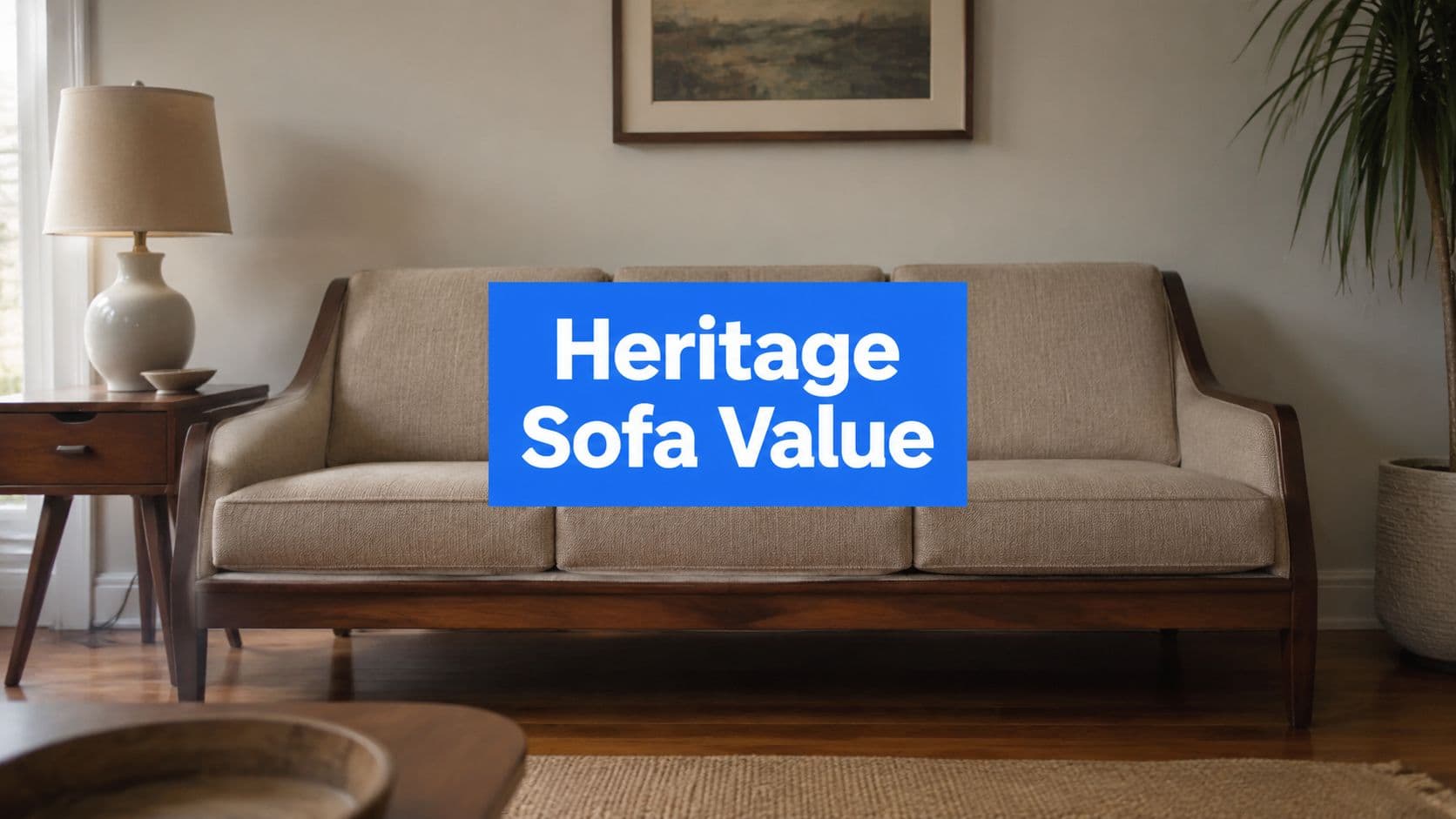
You've got a Drexel Heritage sofa sitting in front of you, and it's probably doing that frustrating thing vintage furniture does, looking too good to toss, but not obviously valuable enough to keep guessing. Maybe it came from an estate, maybe it's been in the family for years, or maybe you found it secondhand and the quality caught your eye before the price did. The problem is never just, “Is it old?” It's, “Is it worth restoring, selling as-is, or moving fast before you spend money in the wrong place?”
That's the right question, because Drexel Heritage pieces sit in a useful middle ground. They're old enough to have real history, yet common enough on the secondary market that condition and originality matter more than sentiment. A buyer who understands what they're looking at will pay for the right piece, but only if the sofa is identified correctly, priced realistically, and presented well.
Your Vintage Sofa Its Hidden Story and Potential
A homeowner once calls about a sofa that “felt expensive” the second they sat on it. The upholstery was tired, the wood trim was still solid, and nobody in the family knew whether it was a keeper or just another bulky inheritance. That uncertainty is normal with a Drexel Heritage sofa, because the brand carries real furniture history, not just a familiar label.
Why the brand matters
Drexel Heritage traces its origins to 1903, and that long run in the U.S. residential-furniture market gives older pieces a place in American design history, especially mid-century modern and earlier traditional styles. The name was no longer used for new furniture after 2020, so anything on the market now is a vintage or secondhand piece with a closed supply. That is one reason these sofas still draw attention from buyers and sellers who know what they are looking at.
Practical rule: if a sofa feels substantial, looks older, and still has structural integrity, don't treat it like generic used furniture until you've identified the exact piece.
That history can work in your favor, but only if you read the piece correctly. A clean-looking example may still bring a stronger result than expected because buyers pay for construction, era, and original design details. The brand name alone does not guarantee value, and it does not make every sofa worth restoring. What matters is the version you have, how complete it is, and whether the sofa still reflects the original design language.
For a seller, the practical question is not just whether the sofa is old. It is whether the piece has enough originality and market appeal to justify restoration costs, or whether an as-is sale through a DIY auction will produce a better net return. A branded asset with a limited supply can still disappoint if repairs run too high or if heavy alterations have already stripped away the value buyers are willing to pay for.
How to Identify Your Drexel Heritage Sofa

Start with the label, because that is usually the fastest way to separate a true Drexel Heritage sofa from a similar-looking vintage piece. Check the back, the underside, and the frame area beneath cushions. On reupholstered sofas, the tag may be tucked inside or partially hidden, so inspect the piece carefully before you assume it is unmarked. For a broader guide to spotting valuable antiques, the guide to spotting valuable antiques is a useful companion reference.
What the construction tells you
Construction is the next place to look. Solid joinery, reinforced corners, and careful woodwork tell you more about value than fabric condition alone. A sofa can look tired on the surface and still have a strong base underneath, while another piece may look presentable but have a weak frame that limits what buyers will pay.
Pay attention to originality. If the piece has been heavily altered, the market treats it differently, even when the sofa still has good bones. Original upholstery, finish, and hardware tend to support stronger buyer confidence, while missing or changed details make the piece harder to place. That matters when you are deciding whether the sofa deserves restoration or whether it is better sold as-is through a DIY auction.
How to place the style
The design language gives you another clear signal. Some Drexel Heritage sofas lean traditional, with heavier lines and classic silhouettes. Others reflect mid-century influence with cleaner profiles and lighter visual weight. Buyers often respond to the era as much as the brand, so a sofa that reads clearly as traditional, mid-century, or transitional usually has a cleaner path to market.
Use a simple three-part check:
- Maker's mark: confirm the Drexel Heritage name or label.
- Frame quality: note solid construction, stable arms, and sturdy joints.
- Design era: decide whether the piece reads as traditional, mid-century, or transitional.
A sofa with a clear identity is easier to sell, because buyers understand what they are looking at. That does not make every example worth restoring. It does give you a practical way to decide whether the piece has enough originality to justify more work, or whether the best return comes from listing it quickly in a DIY auction and letting the market set the price.
Determining Your Sofas Market Value
The first mistake sellers make is pricing the sofa by emotion. The second is pricing it by the original owner's memory of what it cost new. Neither helps. A Drexel Heritage sofa should be priced from current secondary-market reality, not from family lore or the assumption that “it must be worth something.”
The value range you should actually use
When new, Drexel Heritage sofas reportedly retailed for about $2,000 to $5,000 or more. On today's secondary market, they typically sell for about $500 to $2,000, with the final figure driven by condition, style, and the quality of any upholstery work. That range is the most useful baseline for sellers because it keeps you from overinvesting in restoration or underselling a good piece. See the current pricing context in Drexel Heritage market guidance.
Condition is usually the biggest separator. A sofa with intact structure, clean lines, and usable upholstery lands much closer to the top of the range than one with tears, odors, sagging, or heavy wear. Originality matters too. If the hardware, finish, and upholstery are still close to original, buyers tend to read the piece as more authentic. A sofa that's been altered too much may still sell, but the pricing logic changes.
How to think like a buyer
A buyer asks three questions in this order. Is it authentic, is it presentable, and is it worth the effort? If the answer to any of those is weak, the price needs to reflect it. That's why comparable sales matter. Look at recent listings for similar silhouettes, similar upholstery condition, and similar brand markings, then compare those outcomes to your piece.
The best comparison is not just “another Drexel sofa.” It's a sofa with the same visual style, similar dimensions, and a similar restoration level. That gives you a realistic frame for value. A good market estimate starts with the brand, then narrows by design era, then narrows again by condition and presentation.
Rule of thumb: if your sofa looks clean, stable, and complete, it belongs in the upper half of its realistic range. If it needs visible work, price it for the buyer who wants a project.
For a more disciplined pricing process, the fair market value guide is worth using alongside your own comparable checks. That keeps you from anchoring on a hopeful number instead of a sellable one.
The Restore or Sell As-Is Dilemma

Sellers frequently encounter financial losses. A sofa can look promising, but once you price reupholstery, the math gets serious very fast. The key question for owners is whether a sofa worth $500 to $2,000 justifies a potentially expensive reupholstery job. Drexel Heritage's own FAQ guidance makes the point plainly, a premium brand name doesn't automatically make restoration economical, and if the work exceeds likely resale value, selling it in its current condition is often the smarter move. See that framing in the restoration decision FAQ.
When restoration makes sense
Restore the sofa only if the structure is strong and the improvement will clearly change its market position. That usually means the frame is solid, the silhouette is attractive, and the upholstery issue is the main problem. In those cases, a cleaner presentation can make the piece much easier to place with buyers who want usable vintage furniture rather than a project.
Restoration is weaker when the piece has already been modified heavily or when the frame itself is questionable. If the sofa needs both structural work and upholstery, the costs stack quickly, and the resale upside is much less predictable. That's why a solid but dated sofa can sometimes be more profitable unsold than over-restored.
When as-is is the better financial choice
Sell as-is when the piece is structurally sound but the cosmetic work would push you past likely resale value. That's the contrarian move many sellers miss. Buyers who shop vintage furniture often accept fabric wear if the bones are good, especially when they want a project they can finish themselves. In those cases, clean presentation and honest disclosure can outperform expensive repair.
For a practical outside perspective on this exact calculation, this upholstery-focused breakdown gives a useful way to think about restoration costs before you commit.
The test is simple. If a repair improves desirability enough to justify the spend, proceed. If not, preserve your margin and sell the sofa in honest condition. Buyers can handle wear. They don't forgive overpricing.
Preparing Your Sofa for a Successful Sale
A prepared sofa sells better because it tells buyers the piece was respected, not neglected. That doesn't mean disguising flaws. It means presenting the sofa cleanly, accurately, and in a way that makes it easy for buyers to say yes. For vintage furniture, trust is often worth more than polish.
Clean it without making it look overworked
Start with gentle cleaning. Remove loose dust, vacuum seams, and clear debris from under cushions. If the frame has visible wood, wipe it carefully so the finish looks cared for without appearing stripped or glossy in a way that feels wrong for the era. Skip aggressive methods that could make an older sofa look over-restored or damage original materials.
If the upholstery is tired but usable, focus on removing surface dirt and odors rather than trying to make it look new. Buyers of vintage pieces expect age, but they don't want grime. Keep the work honest and light. The goal is a sofa that looks ready for the next owner, not a sofa pretending to be new.
Photograph what buyers need to see
Good photos do half the selling. Use natural light, shoot from multiple angles, and show the whole sofa, not just flattering sections. Include close-ups of the label, the arms, the legs, seams, and any wear. If there's a flaw, photograph it clearly. That sounds risky, but it reduces wasted messages and builds confidence with serious buyers.
A strong photo set usually includes:
- Full front view: shows scale and overall style.
- Side angle: helps buyers judge proportions.
- Close-ups of marks: proves authenticity when visible.
- Condition shots: shows any wear, stains, or repairs.
Staging matters too. Place the sofa in a clean room, leave space around it, and include something nearby that shows scale, like a coffee table or armchair. That helps buyers imagine the piece in their home without clutter competing for attention.
Write the listing like a report, not an ad
List the brand, approximate era, materials, dimensions, and condition. If the sofa has original upholstery, say so. If it's been reupholstered, say that too. If the frame is sturdy but the fabric shows age, say that plainly. Buyers trust specifics more than adjectives.
A good description is short, clear, and complete. Don't hide the flaws, and don't oversell the history. State what's known, what's estimated, and what condition issues are visible. That approach attracts buyers who understand vintage furniture and filters out the ones who will complain later.
Choosing the Right Way to Sell Your Sofa
Selling a vintage sofa is mostly about choosing the channel that protects your margin. Some methods maximize convenience, some maximize control, and some create more fees than they're worth. For a Drexel Heritage sofa, the best option is usually the one that preserves value while reaching serious local buyers who want to move furniture.
| Method | Potential Profit | Seller Effort | Control & Timeline |
|---|---|---|---|
| Consignment store | Lower after commission | Moderate to low | Less control, timeline depends on store traffic |
| Private sale | Variable, often inconsistent | High | Full control, but you manage every message and pickup |
| DIY online auction | Strong profit potential with low commission | Moderate | High control over pricing and schedule |
What each channel does well
Consignment can be convenient, but the seller usually gives up a meaningful share of the sale price. Private sale gives you control, but it also gives you the burden of answering questions, screening buyers, and dealing with no-shows. A well-run auction format sits between those extremes. It gives you structure, visibility, and a defined closing point, which matters when you're selling a large item that needs one clear pickup event.
A DIY online auction model is especially useful for estate furniture because it creates a competitive environment without the overhead of a traditional estate company. DIYAuctions' own model is built around letting sellers keep up to 90% of the profit, with a 10% commission capped at $1,000, while they set prices and schedule the sale themselves. For a practical overview of how that works for furniture, see online auctions for furniture.
The right selling method is the one that gets the sofa in front of motivated buyers without surrendering too much of the upside.
If you've already identified the sofa, checked the condition, and decided against unnecessary restoration, a controlled auction format usually offers the cleanest path from inherited item to cash in hand. It keeps the process organized and gives the market a fair chance to set the price.
Turn Your Vintage Find into Real Value
A Drexel Heritage sofa stops being a mystery once you identify the mark, judge the construction, and price it against today's market. The smartest sellers don't guess, and they don't sink money into restoration just because the brand sounds premium. They decide based on condition, expected resale value, and the easiest path to a profitable sale. If you're ready to move forward, start by cataloging the piece, then use DIYAuctions to run a well-structured sale that keeps more of your proceeds where they belong, with you.
More guides in Selling Antiques & Collectibles
July 31, 2026
Ceramic Christmas Tree Atlantic Mold Seller's Guide
Identify, value, and sell a Ceramic Christmas Tree Atlantic Mold piece with confidence. Covers markings, rarity, condition, pricing, and listing tips.
Read guideJuly 30, 2026
Nurre Mirror Value: How to Identify and Sell for Profit
Learn to assess nurre mirror value with our step-by-step guide. Identify authentic pieces, estimate price, and sell profitably on DIYAuctions.
Read guideJuly 29, 2026
Distinction Deluxe Stainless Steel by Oneida HH: A Complete
Learn to identify, assess, and price your distinction deluxe stainless steel by oneida hh set for maximum profit.
Read guideGet the estate sale pricing guide
Enter your email for pricing ranges, planning notes, and a clearer path to launch.