Garage Sale Long Beach: Your 2026 Success Guide
Plan your successful garage sale long beach event! Our 2026 guide covers permits, pricing, & marketing for a profitable sale. Get started now!
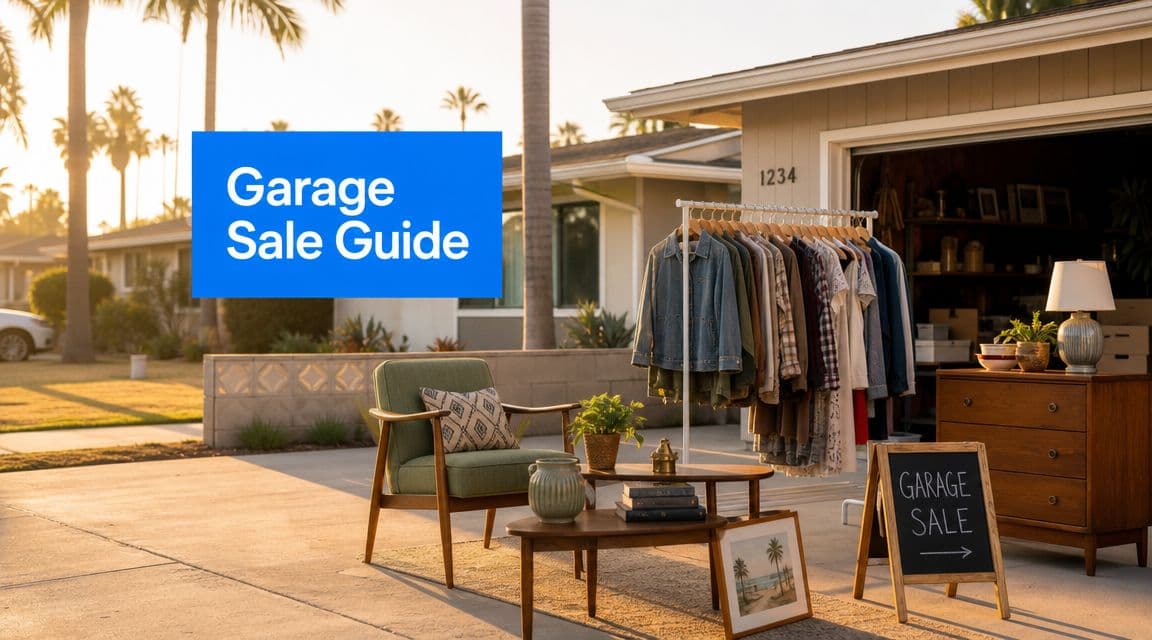
You're probably looking at a garage, side yard, or spare room that got away from you. There's the chair you meant to refinish, the box of kitchen duplicates from the last move, kids' gear nobody needs anymore, and a pile of “maybe sell someday” items that has evolved into its own furniture category.
In Long Beach, that pile is usually worth dealing with. This city has a real garage-sale culture, not the halfhearted kind where three signs go up and nobody shows. Buyers here know how to shop neighborhoods, compare listings, and spot value fast. Sellers who treat a garage sale like a short retail event, not a casual cleanup day, usually do much better.
Your Ultimate Long Beach Garage Sale Blueprint
A solid garage sale in Long Beach starts before you drag a single table into the driveway. The people who make decent money usually do the same handful of things well. They choose a focused mix of items, set up cleanly, market clearly, and respect how local buyers move through neighborhoods like Belmont Shore, Bixby Knolls, Los Altos, and North Long Beach.
Long Beach is a strong market for this. One national ranking placed Long Beach at 13.4 listings per capita, and noted Southern California as an especially active region for garage-sale participation and inventory depth, which is exactly why a well-run local sale can attract steady buyer attention according to this listing analysis. That doesn't guarantee sales. It does mean there's an established local habit of shopping them.
What works here is simple. Don't try to sell everything to everyone. Build the sale around visible categories that pull people out of their cars: furniture, tools, plants, records, decor, kitchenware, kids' items, and clean clothing in obvious sizes. Then use lower-value filler to increase basket size once people stop.
What a practical Long Beach plan looks like
- Start with a hard sort: Keep, donate, garage sale, and list separately online. If an item needs detailed explanation, measurements, delivery, or specialist interest, it may belong outside the driveway sale.
- Choose your headliners early: A vintage lamp, clean patio set, power tools, surf gear, better housewares, and mid-century pieces get attention in many Long Beach neighborhoods.
- Think like a shopper: Buyers want fast visual scanning. If they can't tell what you have from the curb, they keep driving.
- Use the driveway for convenience, not strategy: A good garage and estate sale guide can help you separate what belongs in a quick local sale from what deserves a more structured selling process.
Local reality: In Long Beach, the sale that looks organized from the street gets the first stop. The sale that looks picked over at opening often loses traffic all day.
If you approach a garage sale Long Beach style, as a short, neighborhood retail event with local habits in mind, clutter turns into cash a lot faster.
Navigating Long Beach Rules and Smart Scheduling
Before pricing or marketing, handle the city rules. In Long Beach, a garage sale is regulated, and the basics matter. The City of Long Beach requires a garage sale permit, charges $17.00 per permit, limits single-family homes to 2 sales per year, and requires sales to operate only between 8:00 a.m. and 3:00 p.m. under the city's garage sale permit rules.

That's not red tape to ignore and hope for the best. Those limits shape your whole plan. If you only get a couple of sale dates each year at a single-family home, each one should count.
The non-negotiables
Handle these first:
-
Get the permit before advertising Long Beach requires it. Don't print signs or publish posts until your date is locked.
-
Build your day around the official hours The city's sale window is fixed. That means your setup needs to be finished before the allowed start time, not during it.
-
Treat your annual limit seriously If your first sale is weak because you rushed it, you don't have endless do-overs at the same property.
Scheduling that actually helps
The city rules tell you when you're allowed to operate. They don't tell you which day will work best in your neighborhood. That part takes judgment.
In Belmont Shore and nearby coastal areas, casual foot traffic can help, but parking pressure can hurt if your signage is confusing or your layout spills into the wrong spaces. In Bixby Knolls, a clean early setup and visible furniture near the curb tends to matter more because many shoppers are driving route-style between sales. In denser parts of Long Beach, nearby community events can be either a gift or a distraction depending on whether they increase passing visibility or choke parking.
Scheduling rule: Pick a date when buyers can park, see your signs clearly, and move through your block without confusion. A busier day isn't always a better day.
A simple timing filter
Use this checklist before locking your date:
- Check your block first: If neighbors are doing landscaping, moving, or hosting a big gathering, access can get messy.
- Think about neighborhood flow: Main feeder streets matter more than whether your exact address is “fancy.”
- Plan setup backward: Tables, cash station, bags, and signs should all be ready before sale hours begin.
- Use your stronger date for your stronger inventory: If you have better furniture, collectibles, or tools, don't waste that mix on a poorly chosen weekend.
A legal sale is easy. A legal sale with smart timing is where the money starts.
Pricing Your Items to Sell Fast

Pricing is where most garage sale profit gets made or lost. In Long Beach, shoppers are experienced. If you overprice, they move on without debating you. If you underprice, the first serious buyer snaps up the value and you spend the rest of the day realizing what you gave away.
A practical starting point is this: new, unopened items at 50% of retail, lightly used items at around 30%, and more heavily used goods at 10% based on this garage sale pricing guidance. That framework isn't perfect for every item, but it gives you a disciplined baseline.
Apply the pricing rule by category
Here's how I'd use that rule in a real garage sale Long Beach setup.
| Category | Better approach | What usually fails |
|---|---|---|
| Clothing | Group by size, keep only clean pieces, price simple | Mixed piles with no sizing |
| Books | Sort by type or interest, bundle common titles | Pricing every paperback like a collectible |
| Small kitchen goods | Stage in clean sets or matched groups | Random bins with no visible prices |
| Electronics | Test them, label what works, keep cords attached | “Untested” with premium pricing |
| Furniture | Clean it, measure it, display it where cars can see it | Hiding it behind boxes |
The point isn't to copy a rigid formula. The point is to remove hesitation for buyers.
Build in room to negotiate
Garage sale shoppers expect some haggling. That doesn't mean every price should be inflated. It means your sticker price should leave enough room for a reasonable offer without making you resent the sale.
A few practical moves help:
- Use rounded prices: Clean numbers move faster than awkward ones.
- Create bundles: Kitchen lot, craft lot, toy lot, office lot. Buyers like solving a whole need at once.
- Color-code if you have volume: One color for standard household goods, another for clothing, another for half-off later if you choose to do that.
- Separate premium pieces: Better lamps, clean side tables, branded tools, and quality decor need space, not bargain-bin treatment.
If you want to move items quickly, make the buying decision easy. Visible condition, visible price, and a clean display beat long explanations every time.
Common Long Beach pricing mistakes
People usually trip over the same things:
- They price by memory, not condition: “I paid a lot for it” doesn't matter if it's worn, dated, or incomplete.
- They mix thrift-store value with collector value: Most household items are just household items.
- They bury the good pieces: Better items should stop traffic from the curb.
- They leave no negotiation space: If every item is marked at your absolute minimum, every buyer interaction feels annoying.
The fastest-selling garage sale in Long Beach usually isn't the cheapest one. It's the one where prices feel fair, obvious, and easy to act on.
Marketing Your Sale to Attract Long Beach Buyers
A good sale with weak promotion feels dead by mid-morning. In Long Beach, signs alone aren't enough, and online posts alone aren't enough either. The strongest turnout comes from using both, because local buyers shop in layers. Some cruise neighborhood routes by car. Others plan from listings the night before. Serious pickers do both.

Street signs still do heavy lifting
In neighborhoods off busier roads like 7th Street, Bellflower, Lakewood Boulevard, Atlantic, or Pacific Coast Highway, directional signs matter because they catch buyers already in motion. If your signs are handwritten, tiny, or overloaded with words, people miss the turn and keep going.
For stronger visibility, borrow a few tips for creating outdoor displays from American Goose. The useful takeaway is simple: bold text, readable contrast, weather-resistant materials, and minimal clutter help people understand your sign at a glance.
Good signs should answer three things fast: garage sale, direction, and distance. That's it.
Your online post should do one job
Your listing doesn't need to sound clever. It needs to get the right buyers to show up.
A strong post usually includes:
- Neighborhood reference: Mention Belmont Shore, Bixby Knolls, California Heights, Los Altos, Naples, or North Long Beach if it helps people place you quickly.
- Clear lead items: Furniture, tools, records, baby gear, art, patio items, kitchenware, or vintage decor.
- Clean photos: Use daylight, show the best items first, and avoid wide messy shots.
- Useful details: Cross streets, start time, payment options, and whether you've got large items.
If you want a sharper process for writing listings and choosing what photos to feature, this garage sale marketing guide is a practical place to start.
One strong listing beats five vague ones. Buyers will drive across Long Beach for a sale that clearly shows what's there.
Neighborhood-specific tactics that work
Long Beach buyers don't all behave the same way. A few local patterns matter.
- Belmont Shore and Naples: Lead with decor, beach gear, bikes, furniture, and clean higher-end household pieces.
- Bixby Knolls and California Heights: Mid-century furniture, records, tools, books, and garden items often deserve top billing.
- Family-heavy pockets: Kids' gear, toys, strollers, and clothing sizes should be visible in your first photo and first line.
- Collector-friendly sales: If you have vintage audio, cameras, art, or branded tools, say so plainly.
What doesn't work is the classic lazy post: “Multi-family garage sale. Lots of stuff.” Long Beach has too many options for that.
Market for traffic quality, not just volume
You don't need everyone. You need buyers who are likely to purchase. A sign gets impulse traffic. A detailed online post brings intent. Together they create the best flow, especially in a city where people regularly map several sales into one morning.
Managing Sale Day for Smooth Sailing and Safety
Sale day rewards calm systems. Once buyers arrive, you won't have time to redesign the layout, hunt for change, or untangle extension cords. The setup needs to make sense the moment the first car slows down.
Set the space like a small shop
Start with the curb view. Put your strongest visual pieces where passing drivers can recognize them without getting out of the car. Furniture, plants, larger decor, bikes, and boxed items with obvious value should be up front. Smaller goods belong farther in, organized on tables by category.
A reliable flow looks like this:
- Front zone: Eye-catching items that stop traffic
- Middle tables: Housewares, books, toys, linens, and smaller decor
- Protected area: Better electronics, jewelry, tools, and anything easy to pocket
- Checkout point: One clear payment station with bags, wrapping paper, and a chair
Don't make shoppers ask where to pay. If they can't find the checkout quickly, they set items down and drift off.
Handle people, not just merchandise
Early birds show up in Long Beach. Some are polite. Some act like your setup is already open because they saw one table outside. Decide your line before the day starts. If you're not ready, say so clearly and keep unpacking.
For payment, cash is still useful, but plenty of shoppers prefer digital options. If you accept digital payments, post that clearly near checkout and confirm payment before handing over larger items. Keep your phone charged. Keep cash on you or in a controlled spot, not in an open box on a side table.
If you're moving bins, table stock, or leftover heavier items during setup and breakdown, a sturdy cart helps a lot. If you don't already have one, this guide to find your perfect outdoor wagon is useful for comparing what matters when you're hauling awkward loads across driveways and sidewalks.
Protect your home while staying friendly
The easiest mistake is getting so busy selling that you forget strangers are moving around your property. Keep side gates closed if possible. Don't let buyers wander into garages, backyards, or inside the house unless that's intentionally part of the sale and controlled.
A few habits prevent most problems:
- Have two adults if you can: One handles checkout while the other watches the floor.
- Remove personal items: Mail, family photos, keys, paperwork, and spare devices should all be out of sight.
- Use a hold area near checkout: Don't let people scatter claimed items across the property.
- Know your close-down plan: As traffic slows, condense tables so the sale still looks active and supervised.
The smoothest sales feel easy to shoppers because the host already thought through the friction points.
Beyond the Driveway What to Do Next and Better Alternatives
Ultimately, most sellers face the same question. What's worth keeping, what should be donated, and what never belonged in a driveway sale in the first place?
The answer depends on item type, value, and how much energy you want to spend. Basic household leftovers, older clothing, duplicate kitchen goods, and common books usually need a fast exit plan. Better furniture, collections, art, specialty tools, and estate-quality pieces deserve a different channel.
What to do with leftovers
After the sale, move fast. Unsold clutter gets harder to deal with once it sits another week.
A practical post-sale sort looks like this:
- Donate quickly: Good basics that didn't move at garage-sale pricing usually aren't worth storing.
- List a few standout items separately: Only do this for pieces with obvious local demand.
- Dispose of broken or incomplete goods: If it didn't sell and it's a hassle item, let it go.
- Save only what has a real plan: “Maybe later” is how the next garage sale starts.
When a traditional garage sale isn't the right tool
A driveway sale is built for convenience and quick turnover. It's weaker for higher-value items because buyers expect bargains, haggling is constant, and your audience is limited to whoever sees your signs or local posts.
That's where an online sale format can make more sense.

For sellers dealing with better pieces, inherited property, downsizing, or a larger household liquidation, online yard sale options near you can be a better fit than a standard curbside setup. One example is DIYAuctions, an online platform for running estate-style sales yourself. It lets sellers catalog items, set pricing and timing, and use a single pickup event while the platform handles marketing to local buyers, payment processing, and fraud protection. According to the publisher information provided for this article, sellers can retain up to 90% of their profits, with a 10% commission capped at $1,000.
Some items need foot traffic. Others need a wider buyer pool and a format that lets buyers compete instead of haggle.
A practical comparison
| Sale type | Better for | Usually weaker for |
|---|---|---|
| Traditional garage sale | Fast cleanup, lower-priced goods, neighborhood traffic | Premium pricing, specialty buyers, fragile logistics |
| Online estate-style sale | Higher-value items, curated inventory, wider reach | Low-end everyday clutter |
If your goal is to clear space, a garage sale Long Beach residents can shop in person still works well. If your goal is to maximize value on selected items, especially furniture, collectibles, art, or estate pieces, the driveway may be the wrong stage.
The smartest sellers use both. They move the everyday clutter locally and reserve the stronger inventory for a selling format that gives those items a better chance.
More guides in Estate Sale Basics
July 28, 2026
Revenue Reporting for Estate Sales and Auctions
Learn revenue reporting essentials for estate sales and auctions. Discover key metrics, templates, and best practices to simplify tracking and compliance.
Read guideJuly 26, 2026
Stamp Collection Valuation: A Practical Step-by-Step Guide
Stamp collection valuation made simple. Learn how to identify, grade, price, and sell your stamps with confidence for estate sales or consignment.
Read guideJuly 23, 2026
Estate Sales Brick NJ: Your 2026 Guide to Success
Planning your estate sales brick nj? Our guide covers permits, pricing, marketing, & running a safe sale with DIYAuctions.
Read guideGet the estate sale pricing guide
Enter your email for pricing ranges, planning notes, and a clearer path to launch.