Selling Your Honor Built Cedar Chest: A 2026 Guide
Learn how to identify, price, and sell your vintage Honor Built cedar chest for top dollar on DIYAuctions. Our guide covers assessment, photos, and logistics.
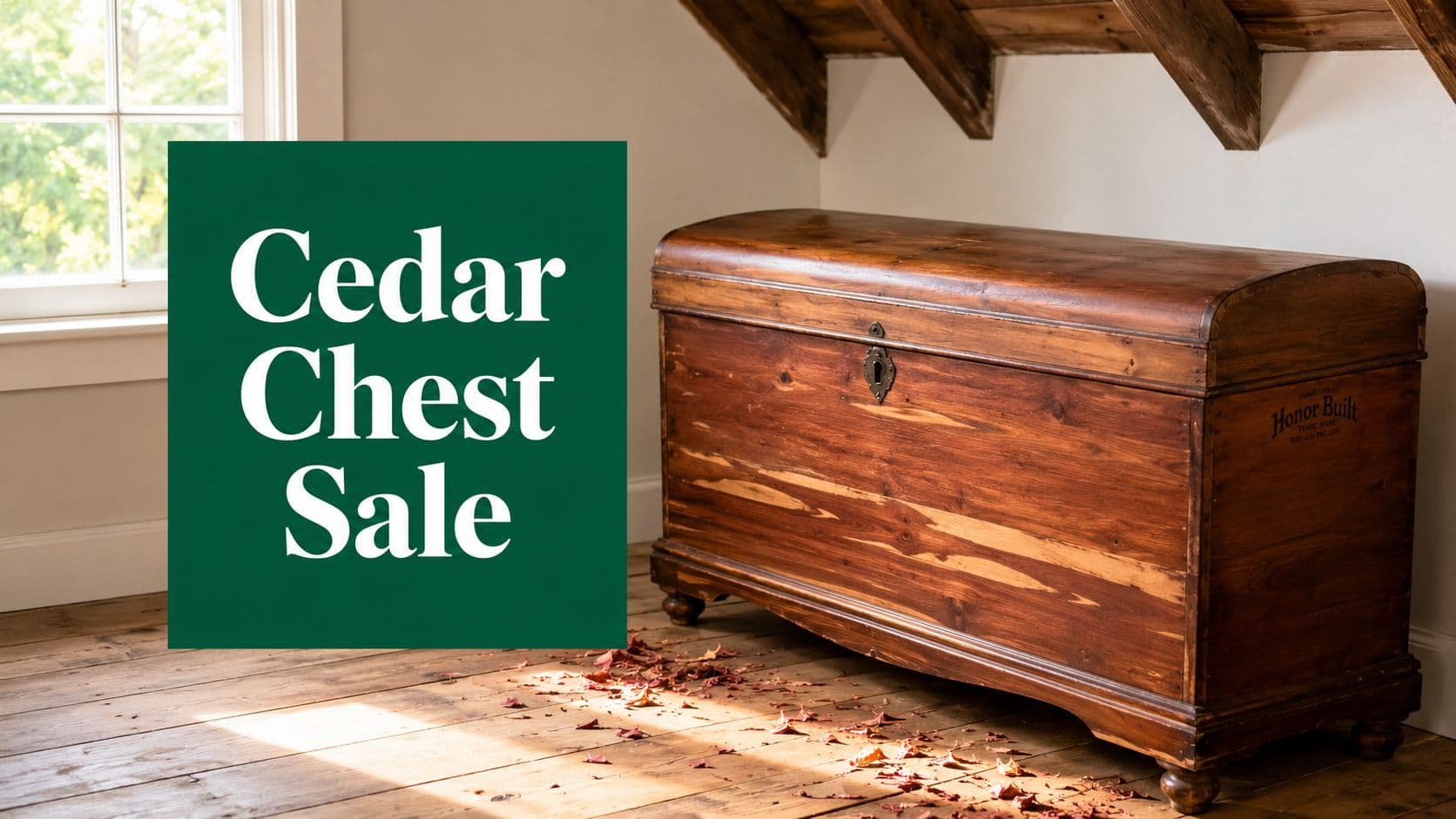
A lot of Honor-Bilt cedar chests come to market the same way. A family opens an attic, a spare room, or the back corner of a basement and finds a handsome old chest that still smells faintly of cedar when the lid lifts. It's too good to toss, too bulky to ignore, and too sentimental to price carelessly.
That's where most sellers get stuck. They know it's vintage. They suspect it has value. But they don't know whether to clean it, refinish it, list it as-is, or hold out for a collector. On an online estate auction platform, those choices matter because buyers judge quickly, pickup is usually compressed into a single handoff window, and the wrong listing can leave money on the table.
A well-sold Honor-Bilt chest isn't just “old furniture.” It's a documented American furniture type with a long lineage, and it rewards careful handling. If you want the highest realistic return, you need a workflow that covers identification, condition grading, auction pricing, photography, description writing, and pickup logistics in one clean sequence.
Your Vintage Treasure Uncovered
You lift the lid in a garage cleanout, catch that dry cedar smell, and realize this is not a throwaway storage box. It is a sellable furniture piece with a known buyer pool. On DIYAuctions, that changes the job immediately. The goal is not to post a quick classified and hope. The goal is to present the chest so bidders can judge style, condition, and pickup practicality in a minute or two.
Honor-Bilt chests sit in a category buyers already understand. They show up in bedrooms, guest rooms, entryways, and staged interiors because they offer storage and decorative value at the same time. That matters in an online estate auction because recognizable furniture types pull stronger search traffic and better bidding than vague listings. "Honor-Bilt cedar chest," "waterfall cedar chest," "hope chest," and "blanket chest" are the kind of terms that help the right bidders find your lot, especially when they are scanning dozens of listings in one session.
History helps the sale only if you use it properly. In practice, it gives you searchable keywords, styling language, and a clearer way to position the piece without overstating it. A bidder is more likely to save a listing titled "Vintage Honor-Bilt cedar chest with walnut veneer, waterfall form, cedar-lined interior" than one called "old wooden chest." If you need a broader framework for spotting furniture details that affect value, this guide to identifying valuable antiques before you list them is a useful reference.
Why sellers miss profit
Sellers often make three mistakes, and all three show up fast on an auction platform.
- They clean past the safe point. Dusting, vacuuming the interior, and wiping grime off hardware usually help. Stripping finish, scrubbing veneer edges, or oiling everything before photos often hurts. I would rather sell an honest original surface with visible wear than a freshly altered one that raises questions.
- They fail to document the weak spots. Missing key, lid stay issues, cracked veneer, loose trim, odor, ring marks, and scratches all need photos. Online bidders will forgive damage sooner than they will forgive a surprise at pickup.
- They list it like a casual local sale. That means soft dimensions, one dark photo, and no plan for load-out. On a single-day pickup schedule, those omissions cost real money because bidders factor hassle into their max bid.
The sellers who get the best results reduce uncertainty.
A strong auction listing answers the buyer's practical questions before they ask. What is it. How big is it. What damage is present. Does the lid work properly. Can one person carry it, or should the buyer bring help. That is the difference between a chest that gets watched and a chest that gets bid on.
Handled well, an Honor-Bilt chest sells as a documented, easy-to-pick-up piece of vintage furniture. Handled casually, it turns into weeks of price resistance, fussy messages, and a buyer who arrives unprepared.
How to Identify Your Honor Built Chest
A bidder on DIYAuctions will decide fast whether your chest is a documented piece of vintage furniture or a family story with weak proof. Identification needs to answer that question before the auction closes, because buyers cannot walk up, open the lid, and inspect it themselves.
Start where the evidence usually survives. Check the underside of the lid, the interior side walls, the back panel, and the bottom for a paper label, ink stamp, metal tag, or retailer mark. If you find one, photograph it straight on and then again from a slight angle so the text stays readable. If you do not find one, do not force the attribution. Build the case from construction, style, and materials instead.
Then look at how the chest is made. Many Honor-Bilt chests were built with a mix of solid wood parts and veneered surfaces, especially on the lid and front where appearance mattered most. That matters on an auction platform because your listing should say “veneered exterior with cedar-lined interior” if that is what you have, rather than calling it solid cedar and inviting returns, complaints, or pickup disputes.

Joinery and hardware help, too. Dovetailed corners, original hinges, lock plates, and period pulls do not prove the brand on their own, but they support the age and quality level. If you want a broader reference for reading those clues, this guide on how to identify valuable antiques is a useful companion.
Style is your next sorting tool, and it affects how buyers search.
Waterfall examples usually have rounded front corners, a softer top profile, and more decorative veneer work. Buyers who want that Art Deco look will care about the symmetry of the grain and the shape of the front edge.
Mission-style examples are straighter and plainer. They usually attract buyers who care more about function, sturdiness, and how the piece fits with other early American furniture.
Use that style call carefully. “Honor-Bilt waterfall cedar chest” is a stronger title than “old cedar chest,” but only if the shape supports it. Family memory is helpful background. It is not catalog evidence.
Before you list, build a simple ID file from the chest in front of you:
- Brand evidence such as labels, stamps, or tags.
- Style description based on the profile and trim.
- Exterior dimensions taken with a tape measure, not estimates.
- Material notes that separate veneer surfaces from solid wood parts.
- Hardware details including lock, hinges, pulls, and key status.
- Interior details such as cedar lining, trays, dividers, or odor.
This record does more than make the description easier to write. It lets you photograph the right details, title the lot accurately, and answer bidder questions without guessing. On a timed online auction with single-day pickup, that clarity raises bidder confidence and cuts down on post-sale friction.
Assessing Condition Like a Pro
A bidder will forgive age. They will not forgive surprises at pickup.
That matters more on DIYAuctions than it does in a casual marketplace listing. Buyers are committing from photos, short condition notes, and a single pickup window. If your inspection is thin, the bidding stalls. If your inspection is clear, the chest attracts the right buyer and the handoff goes smoother.

I inspect an Honor-Bilt chest in the same order every time. Exterior first. Then structure and hardware. Then the interior. That sequence keeps small cosmetic issues from distracting you from the defects that change bidder behavior.
Exterior first
Most Honor-Bilt chests show wear in predictable places. Check the lid front, the top corners, the lower feet, and the front veneer field before anything else. On waterfall examples, the curved front corners and book-matched veneer deserve extra attention because those are the areas buyers study hardest in photos.
Look for these problems in sequence:
- Finish wear such as scratches, water rings, cloudy patches, or sun fade
- Veneer trouble including lifting edges, chips, bubbling, cracks, or past repairs
- Edge damage at the lid lip, base, corners, and feet
- Missing trim or replaced parts that break the original look
- Movement such as a lid that sits unevenly, loose joints, or wobble on the floor
A chest with light finish wear can still sell in the decorator lane. A chest with active veneer loss or a twisted lid moves toward project pricing fast.
Photograph defects straight on, then from an angle that shows depth. Online bidders need both views. If you want a useful framework for how condition affects bidding range, DIYAuctions has a solid guide on determining fair market value for estate sale items.
For a quick visual review, this restoration video helps you see the kinds of details worth noting before sale.
Hardware and interior utility
Hardware tells buyers whether the chest is ready to use or headed for repair. Check the lock, hinges, lid support, casters if present, and any interior tray hardware. Open and close the lid several times. Listen for binding. Watch whether the lid tracks square or shifts to one side.
Be precise in the listing. “Lock present, no key.” “Key included, lock turns.” “Hinges secure, lid opens fully.” Those short notes answer the exact questions that hold bidders back.
Inside, inspect the cedar lining for splits, stains, drilled holes, loose panels, or replacement boards. Then do the smell test. A clean cedar scent helps. Heavy mustiness, mildew odor, or sharp chemical smell needs to be disclosed because buyers often decide on a cedar chest for practical storage, not just looks.
Interior completeness matters too. If the chest once had a tray, divider, or label and it is gone, say so plainly. Missing interior parts do not kill a sale, but hidden omissions create complaints on pickup day.
Grade it honestly
I sort most pieces into three seller-friendly buckets:
| Condition tier | What it looks like | Best buyer fit |
|---|---|---|
| Project piece | Veneer loss, hardware issues, visible repairs needed | DIY buyer or restorer |
| Good vintage | Attractive wear, usable interior, stable structure | Decorator or home buyer |
| Strong collector presentation | Clean veneer, good hardware, intact cedar lining, complete look | Collector or premium vintage buyer |
Use the lower bucket if the chest sits between two grades. That habit protects your reputation and usually helps the auction perform better anyway. Serious bidders respond well to accurate descriptions, especially when they know they have one pickup day to inspect, pay, and load the piece.
If a flaw affects function, put it near the top of the description. If a flaw is cosmetic, show it clearly in photos and describe it in plain terms. Calm, exact language gets better results than sales language.
Pricing Your Cedar Chest for an Online Auction
Pricing a vintage cedar chest for auction isn't the same as pricing it for a fixed-price marketplace. On an auction platform, your job is to create momentum without making the item look weak. Sellers who miss that distinction usually either start too high and get no energy, or start too low without giving bidders enough confidence in the piece.
Think in buyer lanes, not wishful value
An Honor-Bilt chest usually fits one of these lanes.
The first is the project lane. That includes veneer damage, missing trim, lock issues, or a rough finish that pushes the buyer toward restoration work. This buyer wants room in the numbers for labor, materials, and risk.
The second is the decorator lane. This chest presents well in photos, functions as storage, and looks right in a bedroom, hall, or guest room without major intervention.
The third is the collector lane. That buyer wants stronger originality, more complete hardware, better veneer condition, and a listing that proves the seller knows what they have.
Price against real friction
One of the most useful realities to remember is that broad demand in vintage furniture has shifted toward smaller, easier-to-place pieces, and cedar chest buyers are selective about condition, hardware, and cosmetic wear. For estate sellers, the key question isn't just what the item is worth in theory, but what it's worth after fees, repairs, and pickup logistics (estate auction note on current resale strategy and buyer selectivity).
That means bulky pieces need cleaner execution. If the chest is large, heavy, or awkward to carry, your listing needs to reduce every other form of buyer uncertainty.
Here's the lens I use:
- If condition is rough, keep expectations practical and let bidders compete for a project.
- If condition is solid, present it as ready-to-use furniture, not as “antique maybe.”
- If the chest is especially decorative, make sure your photos and title earn that premium attention.
A fair pricing process starts with comparable sales, but those comps only matter if they match your chest's actual condition, dimensions, finish quality, and style. This overview of how to determine fair market value is helpful if you need a structured comp method.
Set the auction up to work
For online auction platforms, I generally prefer a starting point that encourages entry rather than a defensive opening bid that scares away the first round of interest. Bidders engage when the listing feels active and credible. They don't engage when it feels like the seller is trying to force a retail number from the first click.
A chest with average photos and a proud starting price often stalls. A chest with sharp photos, complete dimensions, honest condition notes, and easy pickup terms attracts stronger bidding behavior.
Don't price from sentiment. Price from buyer workload. Every missing key, veneer chip, awkward stair carry, and narrow pickup window changes the actual value of the piece. Sellers who price with that in mind usually finish the auction with fewer surprises and a cleaner close.
Creating a Listing That Attracts Bidders
A bidder opens your Honor-Bilt listing on a lunch break, gives it ten seconds, and decides whether it feels worth chasing. On DIYAuctions, that decision usually comes down to three things. Clear photos, specific facts, and pickup details that make the chest feel easy to buy.
Photograph it like auction inventory
Furniture photos need to answer buyer questions before the first message comes in. I treat a cedar chest like tagged estate inventory. Clean background, open space around the piece, steady light, and enough angles to remove doubt.
Use this minimum shot list:
- Full front view so bidders can read the style right away
- Both side views to show profile, feet, and finish consistency
- Top and lid detail if veneer pattern, scratches, or sun fade show there
- Interior view with the lid fully open
- Hardware close-up including lock, hinges, and key if present
- Flaw photos of veneer loss, dents, trim damage, staining, or lining wear
- Label or mark photo if any branding remains
- Dimension photo with a tape measure when useful

Skip styling props. A folded quilt, lamp, or plant may look nice, but it hides scale and distracts from condition. Buyers on estate auction platforms want to inspect, not browse a room scene.
If your images are a little soft or undersized, it can help to enhance e-commerce images before uploading, especially for hardware and veneer detail shots where clarity affects buyer trust.
For more platform-specific photo basics, this guide on how to photograph items to sell online covers the fundamentals well.
Write the description buyers wish sellers would read
Good descriptions read like a condition tag from a careful dealer. They are specific, plainspoken, and easy to scan on a phone. That matters because many bidders on DIYAuctions are deciding fast, then circling back near closing time.
Include these facts in the body:
| Listing element | What to include |
|---|---|
| Item name | Honor-Bilt cedar chest, plus style if known |
| Exterior dimensions | Exact width, depth, and height |
| Construction notes | Veneer areas, cedar-lined interior, hardware status |
| Condition summary | Finish wear, veneer loss, key status, interior condition |
| Use case | Storage, bedroom bench, blanket chest, vintage décor |
| Pickup note | Ground floor or stairs, help needed, vehicle size guidance |
State dimensions exactly, then describe the usable interior in plain language if it helps. Interior storage is always smaller than the outer footprint, especially on chests with thicker walls, trays, or heavier lid construction. If the lock works, say so. If the cedar aroma is still present, say that too, but keep it factual.
A simple model works well: what it is, how it presents, what flaws it has, and what the buyer should plan for at pickup.
Use searchable terms without sounding salesy
Your title needs to match how bidders search. Maker, form, style, and one honest condition cue usually do the job better than a string of hype words.
Useful terms include:
- Vintage Honor-Bilt cedar chest
- Waterfall cedar chest
- Cedar-lined blanket chest
- Hope chest
- Original lock
- Book-matched veneer
A strong example looks like this:
“Vintage Honor-Bilt cedar chest with cedar-lined interior, waterfall styling, original hardware, and veneer wear at front edge. See photos and dimensions.”
That kind of copy gets bids because it sounds credible. It also reduces the back-and-forth that slows down auction momentum, especially when pickup is limited to a single day and buyers need to decide quickly whether the chest fits their vehicle, their space, and their workload.
Managing the Pickup and Getting Paid
The sale isn't finished when the bidding ends. It's finished when the chest leaves the property safely and the money is settled cleanly. With a bulky furniture piece, pickup planning affects buyer confidence almost as much as the listing itself.
Make pickup easy to understand
A cedar chest is awkward, even when it isn't extremely large. Buyers want to know whether they need a second person, whether there are stairs, and whether the lid should be secured for transport.
Before pickup day, send a short confirmation that covers:
- Exact pickup window and how arrival should be handled
- Location details including driveway, garage, apartment access, or stair issues
- Loading expectations such as whether the buyer should bring help
- Basic transport prep including blankets, straps, and a suitable vehicle

Tape the lid shut lightly or secure it with removable wrap so it doesn't fly open during carrying. Remove loose trays if the chest has them. Put the key in a labeled envelope and hand it over directly rather than leaving it inside the chest.
Protect the final handoff
Single-day pickup works best when the seller thinks like a warehouse manager, not a casual host. Have the chest near the exit if possible. Clear a walking path. Keep your photos and listing notes handy in case the buyer wants to confirm a condition detail before loading.
If a buyer needs transport help, it can be useful to point them toward an insured man and van support option or a comparable local service so they arrive prepared rather than improvising at the curb.
The smoother the pickup feels, the less likely a buyer is to reopen condition debates at the last minute.
Payment should be completed through the platform's secure process rather than through improvised cash arrangements or side-app negotiations. That protects both parties and keeps the transaction documented. For estate sellers, that clean paper trail matters just as much as the final bid.
A cedar chest sale goes well when every stage supports the next one. Identification makes the listing credible. Condition notes make the pricing believable. Good photos support bidding. Clear pickup instructions protect the close. Run the process that way, and an Honor-Bilt cedar chest becomes one of the more satisfying furniture categories to sell online.
If you're ready to sell an Honor-Bilt cedar chest without turning it over to a traditional estate sale company, DIYAuctions gives you a way to run a professional online estate auction with seller control, secure payments, and a single organized pickup day.
More guides in Selling Antiques & Collectibles
July 31, 2026
Ceramic Christmas Tree Atlantic Mold Seller's Guide
Identify, value, and sell a Ceramic Christmas Tree Atlantic Mold piece with confidence. Covers markings, rarity, condition, pricing, and listing tips.
Read guideJuly 30, 2026
Nurre Mirror Value: How to Identify and Sell for Profit
Learn to assess nurre mirror value with our step-by-step guide. Identify authentic pieces, estimate price, and sell profitably on DIYAuctions.
Read guideJuly 29, 2026
Distinction Deluxe Stainless Steel by Oneida HH: A Complete
Learn to identify, assess, and price your distinction deluxe stainless steel by oneida hh set for maximum profit.
Read guideGet the estate sale pricing guide
Enter your email for pricing ranges, planning notes, and a clearer path to launch.