Selling Estate Jewelry Online: A Practical Guide
Learn how to start selling estate jewelry online with our step-by-step guide. We cover valuation, photography, secure shipping, and how to maximize your profit.
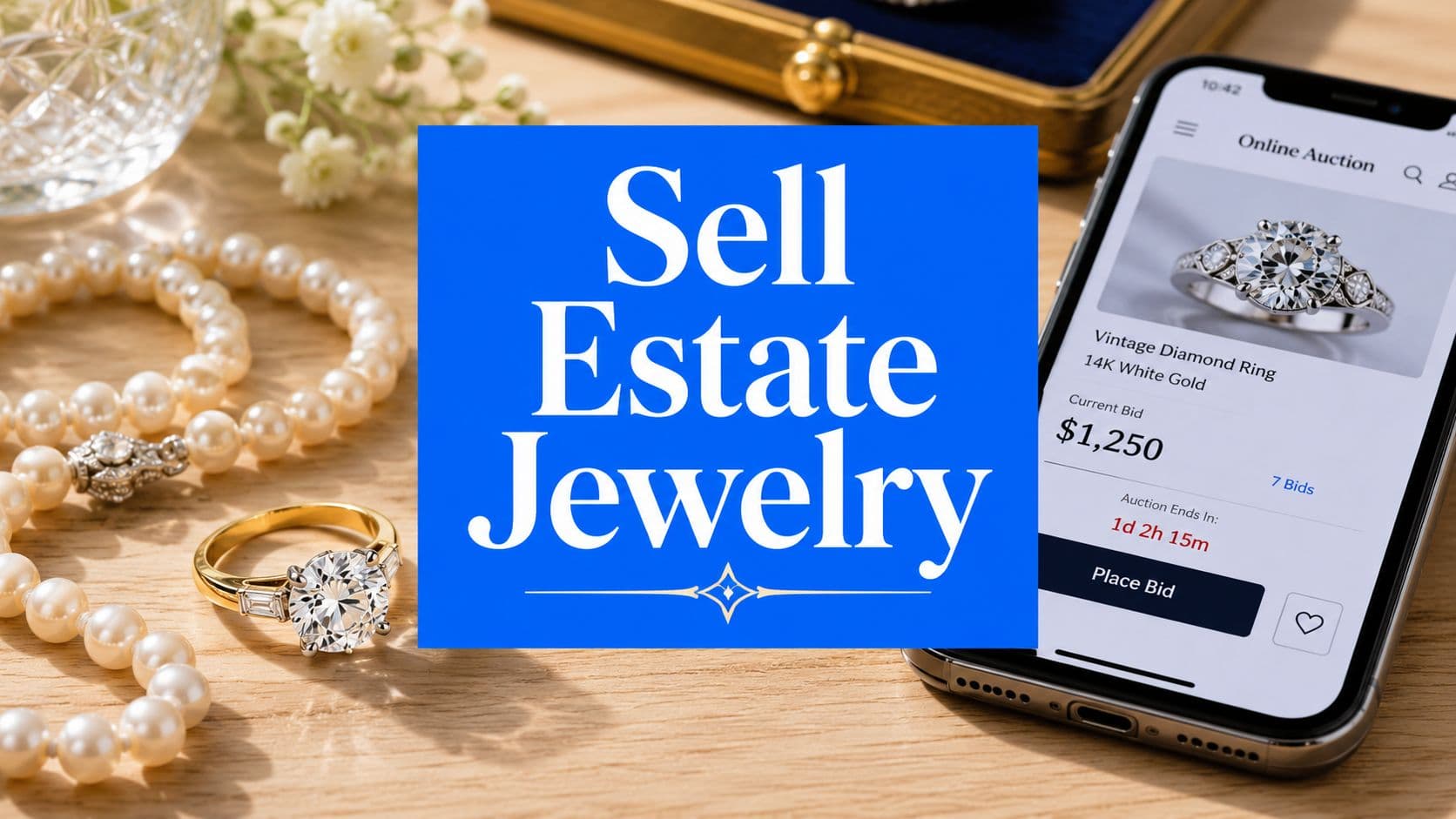
You may be looking at a ring box from a parent's dresser, a tray of brooches from an estate cleanout, or a handful of gold pieces you've carried from house to house because deciding what to do with them felt bigger than a simple sale. That's normal. Estate jewelry is personal first and inventory second.
But when it's time to sell, sentiment can't do the pricing work for you. Selling estate jewelry online pays better when you treat it like a controlled business process. Every decision matters. The appraisal you choose, the keywords in the listing, the platform, the reserve, the packaging, the records. Handle those well and you protect both value and peace of mind.
Prepare and Value Your Pieces for Maximum Return
A seller cleans a ring, snaps two quick photos, and lists it as “estate diamond ring.” Then the messages start. What metal is it. Has the stone been graded. Is the shank original. Any repairs. No serious buyer wants to guess, and every unanswered question cuts into your price or slows the sale until the listing goes stale.
The best return usually comes from work you do before the item ever goes online. Estate jewelry sells on proof. Provenance, condition, maker, measurements, and paperwork all reduce buyer risk. Lower risk brings stronger offers and lets you keep control of the sale instead of accepting the first low bid that feels easy.
Start by gathering every piece of support material you still have. Look for boxes, receipts, old appraisals, repair slips, certificates, gift notes, and any family record that ties the jewelry to a maker, era, or original owner.

Sort before you price
Do not value a jewelry box as one blended group. Sort it into selling categories first, because each category has a different buyer and a different pricing logic.
- Signed designer pieces such as Tiffany or Cartier
- Diamond or gemstone pieces that may justify formal grading
- Heavy gold items where metal content sets a floor
- Costume or mixed lots that often perform better as grouped listings
- Pieces with original boxes or paperwork that deserve separate handling
This step prevents expensive mistakes. I have seen sellers price a signed piece like scrap because they focused on weight and ignored the maker. I have also seen broken chains held back for months because the owner priced them like finished jewelry instead of recognizing that metal value was the actual benchmark.
Know the two values that drive the sale
Most pieces have two pricing tracks. One is intrinsic value, usually tied to precious metal content. The other is market value as jewelry, which depends on design, maker, age, condition, rarity, and buyer demand.
Your job is to decide which track should lead.
A plain, damaged gold bracelet may sell off its melt floor. A period brooch with strong workmanship may be worth far more than its metal content. A branded necklace with the original box can attract collector money that scrap math will never capture. If you skip this distinction, you either leave money on the table or overprice the item and lose momentum.
If you need a baseline before choosing a sales route, this guide on how to determine fair market value is a useful place to start.
Practical rule: Do not list a gold piece until you know whether you are selling jewelry value, scrap value, or both.
Decide when documentation pays for itself
Not every piece needs formal paperwork. Some absolutely do.
If the center stone drives the value, independent grading can widen your buyer pool and reduce the discount buyers build in for uncertainty. The same is true for signed pieces where original packaging, receipts, or older appraisals support authenticity and ownership history. Missing paperwork doesn't kill a sale. Missing clarity does.
Use a simple sequence:
- Check hallmarks for metal purity, maker's marks, and country stamps.
- Record condition accurately, including resized shanks, chipped stones, thinning, solder repairs, and replaced parts.
- Measure and weigh the piece so you can compare dealer feedback against actual specs.
- Get more than one opinion before setting an asking price.
- Order formal grading or appraisal only when the added credibility is likely to raise your net after fees and time.
That last point is where sellers protect profit. A lab report on a modest piece can cost time and money without changing the final number enough to matter. On a stronger diamond ring or a high-confidence branded item, documentation can remove buyer hesitation and support a firmer ask. The goal is not to collect paperwork for its own sake. The goal is to spend where the return is real.
Crafting Listings That Attract Serious Buyers
A buyer finds your ring at 11:30 p.m., compares it against six others, and decides in under a minute whether yours deserves a closer look. Your listing has to answer the questions a jewelry counter clerk would answer in person. If it leaves gaps, the buyer either moves on or offers less to cover the risk.
Start with photos, because weak images cut your final number fast. Use a clean background, even light, and a steady surface. Lead with one sharp image that shows the whole piece clearly, then add the views that reduce doubt: front, side, back, clasp, hallmark, stone close-up, and any visible wear or repair.

A phone camera is usually enough if you work carefully. Keep the frame tight. Keep reflections under control. Show flaws with the same clarity you give the best angle. Serious buyers do not expect perfection from estate jewelry, but they do expect honesty.
What to show in every listing
Good estate jewelry listings make the piece easy to evaluate from a screen. Include:
- Scale and size with dimensions, ring size, chain length, bracelet inner circumference, or earring drop
- Material details such as 14K, 18K, sterling, platinum, or mixed-metal construction
- Stone information if known, and a clear note if stones are untested or estimated
- Hallmarks and signatures with readable close-up photos
- Condition notes covering wear, repairs, replacements, missing stones, dents, thinning, or resizing
- Provenance and extras such as the original box, receipt, older appraisal, or grading report
Search wording matters. Buyers do not type "beautiful old necklace." They search by the terms they recognize: maker, metal, era, style, stone, and form. That is why titles should be specific without slipping into sales language.
A weak title: Gold bracelet vintage
A stronger title: Vintage 14K Gold Bracelet, Signed Tiffany, Original Box
Specific words bring in better-fit buyers. Better-fit buyers ask fewer basic questions, challenge the price less often, and are more likely to complete the purchase.
Write for the buyer who knows jewelry
Descriptions work best when they sound calm, precise, and complete. Skip filler like "gorgeous" or "must-have." Give facts a collector or informed buyer would use to compare your piece against another listing.
A simple structure works well:
| Listing element | What belongs there |
|---|---|
| Title | Brand, era, material, item type, notable feature |
| Opening lines | What it is, who made it if known, what makes it distinct |
| Specs | Measurements, weight if available, metal, stones, marks |
| Condition | Honest notes on wear and repairs |
| Included items | Box, pouch, report, receipt, appraisal copy |
Unsigned pieces need even more precision. Use design terms buyers search, such as cluster ring, filigree, Mid-Century, floral spray, or mesh bracelet, but only if they accurately describe the piece. Mislabeling may get you more clicks, but it usually lowers trust, invites returns, and cuts net profit.
For practical help with lighting, angles, and setup, review this guide on how to take professional product photos before you publish your listing.
A short demonstration helps more than theory. This video covers product-photo fundamentals that translate well to jewelry work:
If a buyer has to message you for basic facts, you have not finished the listing.
Choosing the Right Platform to Sell Estate Jewelry
A family often starts with one question. Where should we list it? The better question is narrower and more profitable. Which sales channel gives this specific piece the best balance of control, exposure, and net return?
That choice matters more than many sellers expect. A signed Cartier bracelet, a heavy gold chain valued mostly for melt, and a mixed tray of inherited pins should not be sold the same way. Good Fortune Jewelry makes this point well in its guide to selling estate jewelry. Different categories attract different buyers, fee structures, and levels of scrutiny.
Match the venue to the item
Use the piece to pick the channel, not the other way around.
| Item type | Often suits | Main trade-off |
|---|---|---|
| Signed designer jewelry | Specialist marketplace, auction, or curated consignment | Better buyer targeting, slower payout possible |
| Scrap-heavy gold | Direct buyer or local dealer comparison | Fast sale, but collectible upside may be lost |
| Diamond-centered pieces | Venue that supports strong documentation and trust | More prep required before listing |
| Mixed estate lots | Marketplace or estate-sale format | Lower per-piece storytelling, higher convenience |
Sellers under emotional pressure often choose speed first. That is understandable. It also cuts into proceeds if the venue is wrong for the item.
The practical trade-offs by channel
A local jeweler is often the fastest route. You avoid shipping, sit across from a real buyer, and can get an answer the same day. The trade-off is simple. You are usually negotiating with one buyer who needs room for resale profit.
Consignment suits sellers who can wait and who are comfortable giving up some control. It can produce a stronger result for the right piece, especially if the store already serves the type of buyer you need. It also means someone else may control timing, markdowns, and how much attention your item gets after intake.
Auction houses are useful for exceptional pieces with clear collector appeal. They are less useful for ordinary estate jewelry that needs sharp retail presentation, patient buyer questions, and flexible timing. Fees, scheduling, and reserve decisions can also narrow your margin.
Large marketplaces give you reach and control at the same time. They also put the work on your side. You handle buyer screening, listing quality, fraud precautions, packing, and customer service. That extra effort can be worth it if keeping more of the sale proceeds matters to you.

Keep your eye on net, not headline price
I tell sellers to compare four things before they choose a platform: net proceeds, time to sale, risk, and effort. A higher offer does not always leave you with more money after commissions, discounts, returns, and shipping costs. Full control is valuable, but only if you use it well.
One option in this category is DIYAuctions, which lets sellers run their own online estate sale with a 10% commission capped at $1,000 and states that users can retain up to 90% of their profits while controlling pricing and scheduling. If you are comparing self-managed sales with traditional estate-sale companies, this guide to online estate auction websites gives a useful side-by-side view of how those formats differ.
A platform earns its place by fitting the item, the buyer, and your margin target.
If you have one strong signed piece and a group of lower-value items, split the strategy. Put the premium item where presentation and buyer targeting are strongest. Move the rest through a format that saves time without sacrificing too much of the return. That is how sellers keep control of the asset and protect net profit instead of handing both away for convenience.
Pricing Strategies and Securely Managing the Sale
A ring can appraise well, photograph beautifully, and still sell for less than it should if the pricing is loose or the sale process gets sloppy. This is the stage where sellers either protect their margin or effectively give it away.
Start with closed sales. Asking prices are useful for seeing how sellers position similar pieces, but they are not proof of what buyers will pay. Recent sold listings give you the cleaner signal. Review comparable sales from the same platform, narrow by brand, metal, gemstone, style period, and condition, then build your price from the range real buyers have already accepted.
Use real comparables, not optimistic ones
Good pricing depends on honest matching. A signed Cartier brooch with original box and papers belongs in a different bracket than an unsigned lookalike with visible wear. A freshly serviced watch is not the same item as one sold “as found.” Small details change the buyer pool and the return rate, which changes your net.
If the piece is difficult to identify, improve the description before you set the number. Reverse image search, hallmark research, old catalog language, and gem paperwork can all sharpen the comparison set. Better terminology does two jobs at once. It helps buyers find the listing, and it keeps you from pricing against the wrong inventory.
A practical pricing routine:
- Review recently sold comparables
- Remove obvious outliers
- Set your minimum acceptable net
- Price according to demand, condition, and platform fees
That last step matters. A higher sale price on the wrong platform can still leave you with less money after commission, payment processing, insured shipping, and returns. Sellers who want full control, including those using self-managed formats such as DIYAuctions, usually do better when they set the floor first and treat everything else as negotiation strategy.
Choose the format that protects your downside
Auction works best when the piece has clear demand, strong presentation, and enough buyer interest to create competition. Fixed price works better when the item has solid comparables and you are willing to wait for the right buyer. For certain pieces, the safest approach is to start at fixed price, test interest, then move to auction only if the market response supports it.
Do not start an auction below the amount you can live with. Hope is not a pricing plan.
Strong pricing protects net profit before the first offer even arrives.
Manage buyers like a seller, not a supplicant
Online jewelry sales go wrong in predictable ways. The buyer asks to move the conversation off-platform. They want a private payment link. They claim they sent extra by mistake and ask for a refund before funds clear. They pressure you to ship to a different address “just this once.” Each of those moves shifts risk from the buyer to you.
Keep communication and payment inside the platform. Confirm cleared payment before release. Save screenshots, invoices, messages, and photos of the piece before it leaves your possession. Clear records matter if there is a dispute over authenticity, condition, or delivery.
For higher-value pieces, presentation and documentation should match the risk. A ring listed with detailed images of the setting, hallmarks, stone measurements, and condition notes is easier to defend than a vague listing with two soft photos. If you sell a substantial stone, review how professionals think about expert coverage for diamond rings and apply that same discipline to your records before the item ships.
A clean process usually includes:
- On-platform messages only
- Verified payment before shipment
- Photos of condition before packing
- Saved copies of all sale records
- Return terms stated clearly where the platform allows
Estate jewelry often carries family history with it. Treat that emotional value with respect, but price and manage the sale like a business transaction. That balance is what preserves control and gets you closer to the return the piece deserves.
Finalizing the Transaction Shipping Insurance and Taxes
The sale isn't done when the buyer clicks purchase. It's done when the piece arrives safely, the transaction stays dispute-free, and your records are organized well enough that you're not reconstructing everything months later.
Jewelry is small, valuable, and easy to damage through lazy packing. A loose ring in a padded envelope is asking for trouble. The safer approach is to immobilize the item inside a small presentation box or protective inner container, then place that inside a properly sealed outer shipper.

Pack like you expect rough handling
Verified technical guidance on online estate jewelry selling recommends standardized 6x4x4 inch boxes or bubble mailers with internal craft jewelry boxes to reduce damage risk during shipping. The point isn't elegance. It's stability.
A reliable packing sequence:
- Place the jewelry in a small inner box so it can't slide freely.
- Wrap the inner box so it doesn't rattle inside the shipment.
- Use a sturdy outer package with clean seams and strong tape.
- Remove obvious luxury cues from the exterior.
- Photograph the packed item before sealing the box.
For higher-value rings, it also helps to review specialized insurance thinking around shipping and ownership changes. This image-based resource on expert coverage for diamond rings from First Class Insurance is a useful reminder that standard assumptions about coverage can leave gaps.
Insurance and delivery discipline
Insurance is not optional for valuable estate jewelry. Neither is tracking. Signature confirmation often makes sense as well, especially for branded, diamond, or one-of-a-kind pieces.
Before you ship, verify that the declared value, destination, and service level match the protection you think you're buying. Carriers and third-party policies don't all treat jewelry the same way. Read the exclusions. Keep the receipt. Save the tracking record and delivery confirmation.
Keep records as if you'll need them later
You probably will.
Create a folder for each sold piece and keep:
- The original listing
- Photos used in the listing
- Any appraisal or grading documents
- Buyer messages
- Proof of payment
- Shipping receipt and tracking
- Delivery confirmation
- Any refund or return correspondence
I'm not giving tax advice, and you shouldn't treat any general article as a substitute for your accountant. But I can tell you this. Sellers who keep clean records have a much easier time when they need to answer questions about basis, proceeds, inherited property documentation, or sale timing.
Good records protect profit after the package leaves your hands.
Selling heirloom jewelry can feel heavy at first. Done carefully, it becomes less about parting with something and more about handling it responsibly. You respect the piece by pricing it fairly, presenting it accurately, choosing the right venue, and closing the transaction with care.
If you're comparing ways to sell specialty estate items while keeping control of pricing and timing, DIYAuctions offers practical resources for self-managed online estate sales at DIYAuctions.
More guides in Estate Sale Basics
July 28, 2026
Revenue Reporting for Estate Sales and Auctions
Learn revenue reporting essentials for estate sales and auctions. Discover key metrics, templates, and best practices to simplify tracking and compliance.
Read guideJuly 26, 2026
Stamp Collection Valuation: A Practical Step-by-Step Guide
Stamp collection valuation made simple. Learn how to identify, grade, price, and sell your stamps with confidence for estate sales or consignment.
Read guideJuly 23, 2026
Estate Sales Brick NJ: Your 2026 Guide to Success
Planning your estate sales brick nj? Our guide covers permits, pricing, marketing, & running a safe sale with DIYAuctions.
Read guideGet the estate sale pricing guide
Enter your email for pricing ranges, planning notes, and a clearer path to launch.